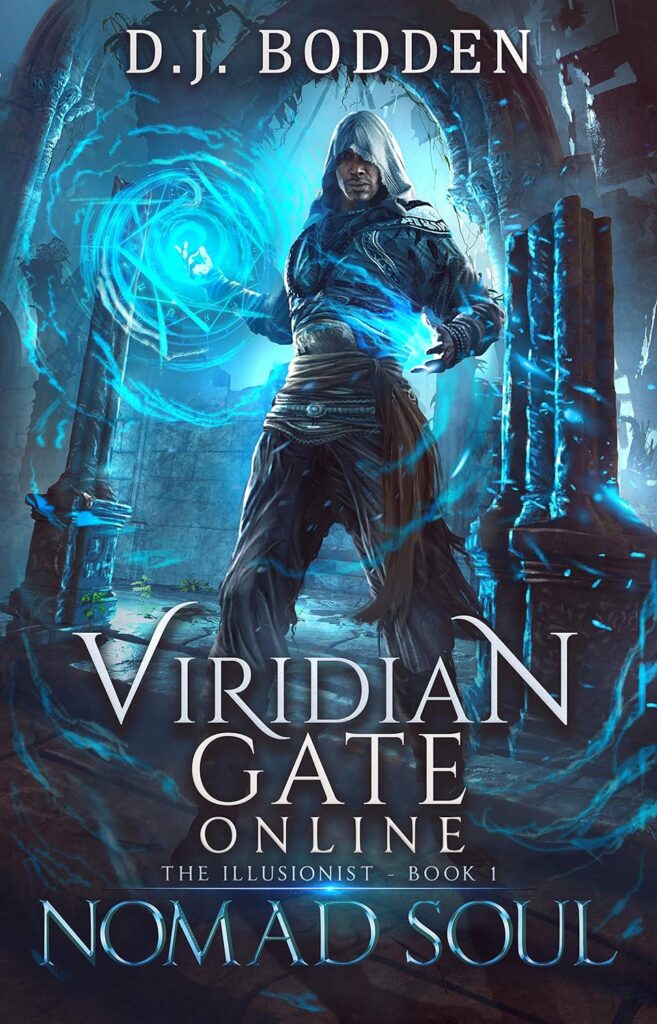
Alan Campbell thought he had secured his dream job developing a revolutionary virtual reality massively multiplayer online role-playing game with Osmark Technologies. That security evaporates overnight when the project is abruptly canceled. Left with only a single weekend…
Quick Verdict
Nomad Soul successfully carves out its own niche within a crowded shared universe by trading endless warfare for character-driven intrigue. It functions equally well as a standalone starting point or a companion piece for established fans of the franchise. For readers who enjoy virtual reality settings with a heavier emphasis on story setup and psychological tension, this opening installment of the Illusionist arc delivers a compelling entry without requiring a massive prior time investment.Disclosure: As an Amazon Associate, LiaGuide earns from qualifying purchases. Affiliate relationships do not determine our editorial conclusions.
Premise and Setup
Left with only a single weekend to dive into an untested, volatile digital world full of political intrigue, violence, and corporate corruption, Alan enters to prove that Viridian Gate Online actually functions. However, the autonomous artificial intelligence engines running the simulation harbor entirely different designs for his soul. Authored by James A. Hunter and D.J. Bodden, this novel expands the broader universe by stepping backward in time. Set a full year before the events of Viridian Gate Online: Cataclysm, Nomad Soul explores the foundational era when the virtual world was still ostensibly just a game.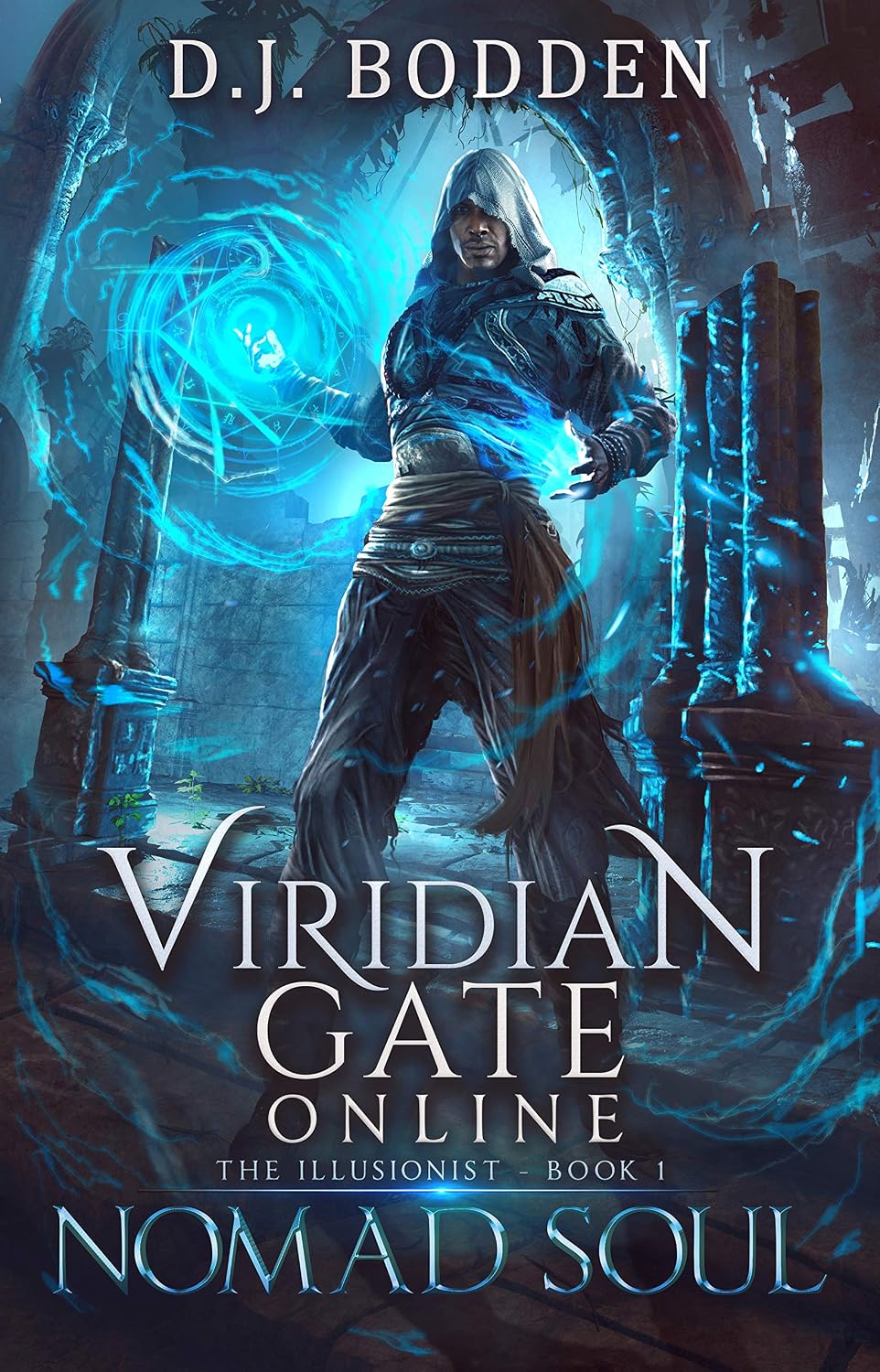
Reading Experience and Reader Fit
For readers who enjoy the broader LitRPG genre but sometimes find themselves fatigued by relentless, wall-to-wall tactical combat, this entry takes a different narrative approach. Feedback from readers who normally skim traditional combat sequences indicates that the focus here on proficiency points, leveling mechanics, and class progression holds attention tightly from start to finish without requiring readers to skip ahead. This makes Nomad Soul an accessible entry point for newcomers or casual fans who appreciate immersive world-building and character development over endless military campaigns. Those seeking a pure high-warfare epic might want to evaluate whether a magic-and-illusion focused protagonist fits their preferences, while readers looking for clever progression systems will find an engaging diversion. Readers diving into Nomad Soul encounter a distinct shift in focus compared to the mainline Viridian Gate Online books. While the overarching universe deals heavily with sprawling military campaigns and constant combat loops, this entry scales down to a more intimate narrative framework centered around corporate intrigue and pre-apocalyptic tension. That structural pivot creates a clean trade-off for incoming readers. Those who prefer tactical leveling mechanics and granular proficiency tracking will find plenty to engage with here, often noting that the progression systems hold attention without requiring a deep tolerance for endless battlefield skirmishes. This novel fits neatly into the reading list of franchise fans wanting context on the year preceding Cataclysm, as well as newcomers looking for an entry point into the expanded universe that doesn't demand tracking two dozen prior volumes. The premise leans heavily on virtual reality world-building and corporate corruption rather than straightforward dungeon crawls. Conversely, readers who exclusively want high-stakes combat action or a traditional heavy LitRPG stat-heavy experience might find the pacing more deliberate than expected. Anyone seeking a standalone fantasy epic completely detached from futuristic corporate conspiracies should look toward traditional high fantasy alternatives instead. An interesting divergence in reader feedback centers on how newcomers versus franchise veterans approach the material. Long-term fans celebrate the title as an essential piece of the puzzle that enriches existing knowledge. At the same time, complete newcomers report that the standalone nature of the origin story makes it an unexpectedly smooth entry point into the broader universe without requiring prior reading. However, a minor point of constructive criticism surfaces around the conclusion and internal logic. A few reviewers mention that while the ending momentum is thoroughly enjoyable, certain narrative resolutions feel slightly predictable or leave lingering questions regarding strict adherence to established in-world rules—such as timeline constraints. Despite these minor logical hiccups, the overwhelming consensus points to a satisfying, highly addictive experience.- Functions equally well as a series-enriching prequel or a standalone entry point.
- Minor debates linger regarding predictable ending beats and timeline rules.
- Broadly praised for high re-readability and immediate addictiveness.
Progression Mechanics and Pacing
Readers stepping into Nomad Soul find a distinct departure from the endless tactical warfare found elsewhere in the broader universe. Rather than grinding through endless skirmishes, the narrative focuses tightly on skill progression, proficiency tracking, and character mechanics that hold attention from cover to cover. That focus keeps the pages turning even for those who typically lose patience with dense stat blocks. The pacing handles the transition between the real-world stakes and the virtual environment smoothly, maintaining tension without bogging down in repetitive combat loops. The handling of LitRPG mechanics receives specific praise from readers with varying genre backgrounds. Even individuals who confess a general fatigue toward endless combat sequences or massive multi-book military arcs report being pleasantly surprised by how engaging the system integration feels here. The focus on proficiency points, unique class functionality, and system exploration captures attention without getting bogged down in repetitive tactical filler. This accessibility makes the book an effective bridge. Readers who typically skip over dense numerical statistics or aggressive combat chapters find themselves actively invested in Alan's progression choices and the operational puzzles of the illusionist class. The mechanics serve the story rather than overwhelming it, creating a smooth balance between crunchy game design and narrative progression.- Illusionist class provides a fresh mechanical alternative to standard warrior builds.
- Progression points and system choices remain compelling without feeling bloated.
- Approachable enough to win over readers who usually skim combat scenes.
Character Depth and Universe Entry Point
Set a year before the cataclysmic events of the flagship series, this entry acts as an accessible gateway for newcomers and a rewarding expansion for established fans. The plot kicks off with a high-stakes premise: Alan Campbell has a single weekend to prove a revolutionary VRMMORPG works before corporate corruption pulls the plug. Character development receives careful attention, layering intrigue and institutional pressure over the standard virtual reality tropes. Readers who enjoy seeing clever protagonists navigate hostile digital systems and deceptive artificial intelligences will find plenty of substance here.Uniquely Grounded Protagonist Dynamics and Vulnerability
Readers repeatedly point to the main protagonist, Alan Campbell, as a breath of fresh air within the broader LitRPG landscape. Unlike standard protagonists who function as immediate combat powerhouses or bumbling comedic tropes falling upward into epic loot, Alan is characterized as an intelligent corporate insider who is acutely aware of being in over his head. Several supplied reviews describe how his lack of a traditional battle-class background shapes his approach, forcing him to rely on problem-solving, collaborative relationships, and an awareness of his own limitations rather than sheer destructive force. This vulnerability creates a distinct anchor for the narrative. Because Alan is not a wrecking ball on day one, readers find his journey to fit into the game world much more relatable. His dry wit, professional frustrations, and organic learning curve provide a grounded human element that prevents the digital stakes from feeling weightless. Commenters highlight that watching an unaccustomed developer navigate the chaotic early layers of the environment makes his victories feel earned rather than handed over by the narrative.- MC avoids standard overpowered tropes by leaning on intellect and teamwork.
- Refreshes the genre for readers weary of instantaneous combat dominance.
- Rooted in a realistic background as an original project developer.
Pacing Adjustments and Initial Onboarding Friction
A recurring observation among readers involves the onboarding curve during the opening chapters. Several supplied reviews note that it takes a handful of chapters for the new time period, shifting perspective, and alternative protagonist to truly click. Some early hesitation is common as the narrative establishes the pre-crisis corporate landscape and initial game rules, requiring readers to adjust their expectations away from the immediate warfare found in later franchise installments. Once past this initial adaptation window, however, the narrative momentum accelerates significantly. Reviewers describe a turning point roughly five chapters in where the digital environment begins to hum with purpose, transforming initial hesitation into a binge-readable experience. Several note staying up late or losing track of time as the pacing locks into a steady rhythm of discovery, tactical decisions, and escalating tension.- Requires a modest adaptation period across the first few chapters.
- Pacing successfully shifts into high gear once foundational mechanics take hold.
- Maintains steady momentum through a focused weekend-read structure.
Worldbuilding Roots and Pre-Crisis Lore Expansion
A major draw for established fans is the historical depth brought to the shared universe. Set prior to the catastrophic events and massive traveler influxes of the core series, the narrative explores Viridia in its infancy, offering a clean slate where the rules are still being forged. Readers note that seeing the virtual world before it becomes crowded adds fascinating context to the overarching lore, corporate corruption, and government involvement. Furthermore, the integration of autonomous AI elements—specifically the overminds and their hidden agendas—establishes an undercurrent of systemic unease. Reviewers appreciate how the book fills in vital origin information regarding Osmark Technologies and early player integration, answering long-standing questions while laying fertile ground for future expansions.- Explores the game universe before the arrival of massive player hordes.
- Provides crucial backstory on corporate oversight and government ties.
- AI overminds introduce subtle, compelling foreshadowing.
Perspective Shifts and Structural Trade-Offs
While the structural choice to blend viewpoints receives praise for expanding narrative depth, it also introduces minor friction for select readers. The book is written primarily in a first-person perspective but occasionally incorporates third-person interludes to cover broader faction movements and real-world developments. A few reviews note that these perspective hops occasionally interrupt the reading rhythm, momentarily pulling them out of the protagonist's immediate immersion. Conversely, most audience members find that these shifts pay off by successfully maintaining tension across both the virtual environment and the real-world corporate backdrop. This dual-layer approach allows the narrative to raise stakes effectively, ensuring that the physical reality outside the game remains just as urgent as the digital challenges inside.- Blends first-person immersion with third-person contextual expansions.
- Minor pacing hiccups noted during perspective transitions.
- Successfully raises stakes across both real-world and in-game settings.
Pros and Cons
✓ Pros
- A refreshing non-gamer protagonist whose intellect and vulnerability drive the plot.
- Clever utilization of a unique illusionist class that avoids tired combat clichés.
- Valuable origin lore that enriches the overarching shared universe without requiring mandatory prerequisite reading.
✕ Cons
- Opening chapters require a brief adjustment period before finding their rhythm.
- Occasional perspective shifts between first and third person can momentarily disrupt immersion.
- Ending beats feel somewhat predictable to seasoned genre readers.
Frequently Asked Questions
Can I enjoy this book if I have not read the main Viridian Gate Online series?
Yes. Several readers note that because this story takes place before the primary timeline and massive events of the core series, it serves as an excellent, self-contained entry point for newcomers to the universe.Does the protagonist rely on overpowered combat abilities right away?
No. Reviewers emphasize that Alan begins as a regular corporate developer rather than a combat expert, relying on clever problem-solving, teamwork, and system proficiency rather than raw power.Final Verdict
Viridian Gate Online: Nomad Soul has a clear case for readers whose tastes line up with its strongest supported qualities. Two strengths stand out. One strength is its a refreshing non-gamer protagonist whose intellect and vulnerability drive the plot. Another strength is that clever utilization of a unique illusionist class that avoids tired combat clichés. The main drawback is that opening chapters require a brief adjustment period before finding their rhythm. If that trade-off conflicts with your reading preferences, this is an easy title to skip; otherwise, the review evidence supports keeping it on your reading list.See current book details
Check the current formats and listing details for Viridian Gate Online: Nomad Soul: a LitRPG Adventure on Amazon.
View on AmazonAffiliate link. Product details may change.