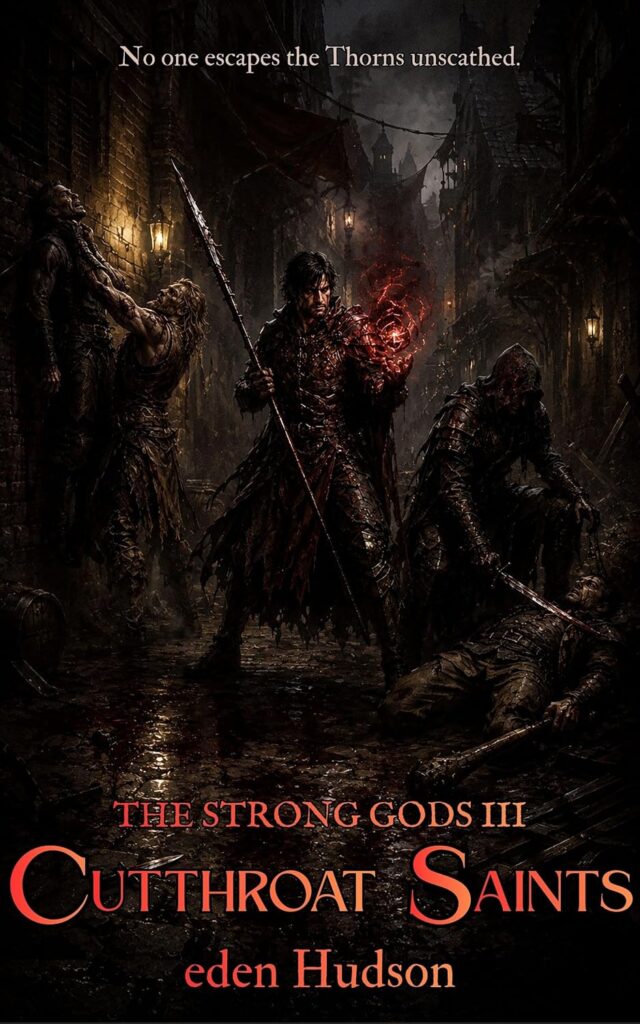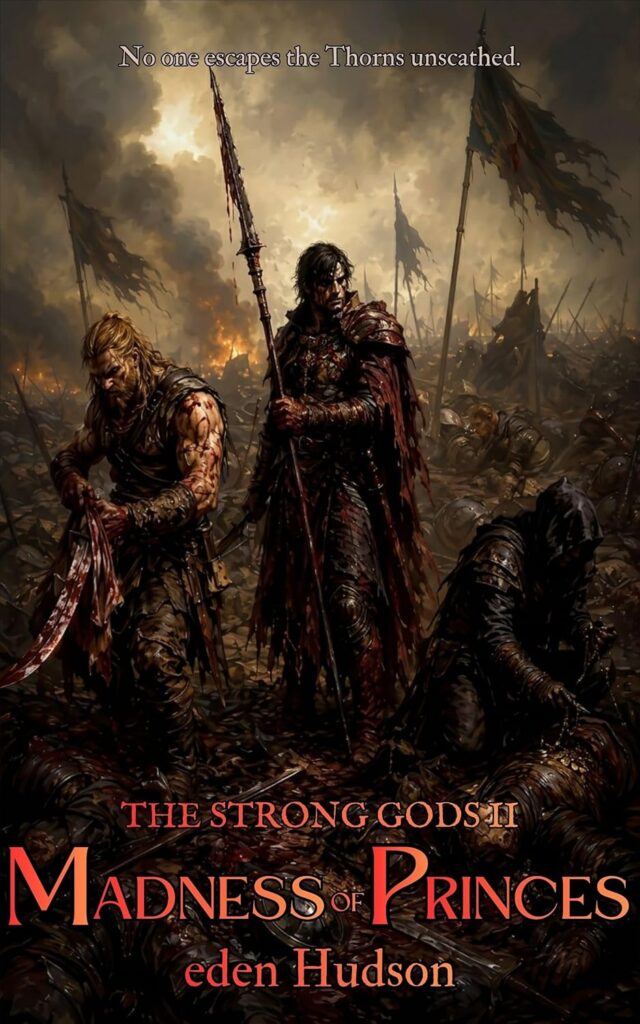
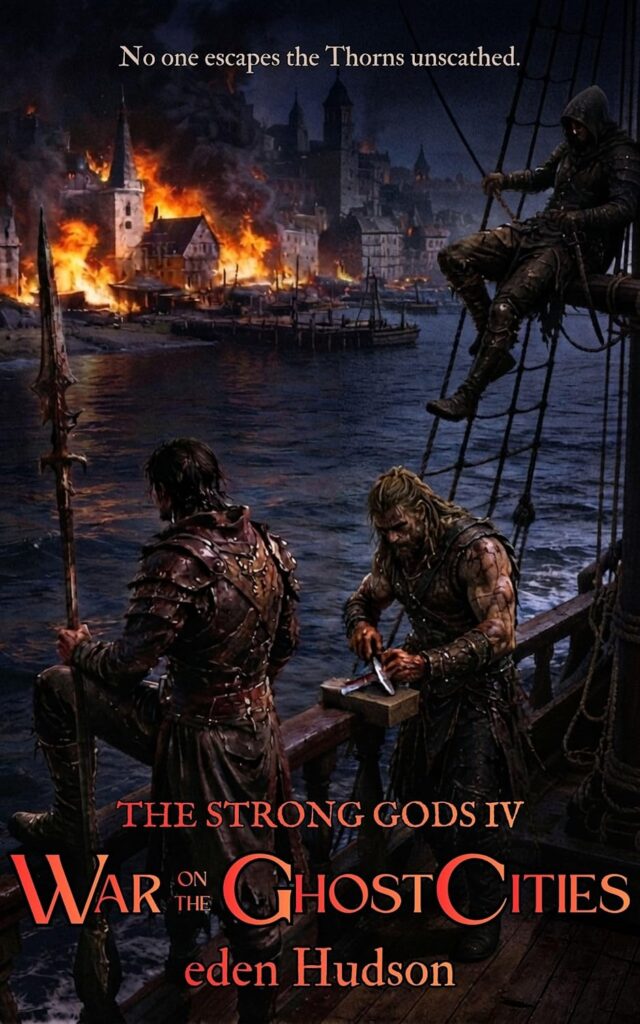
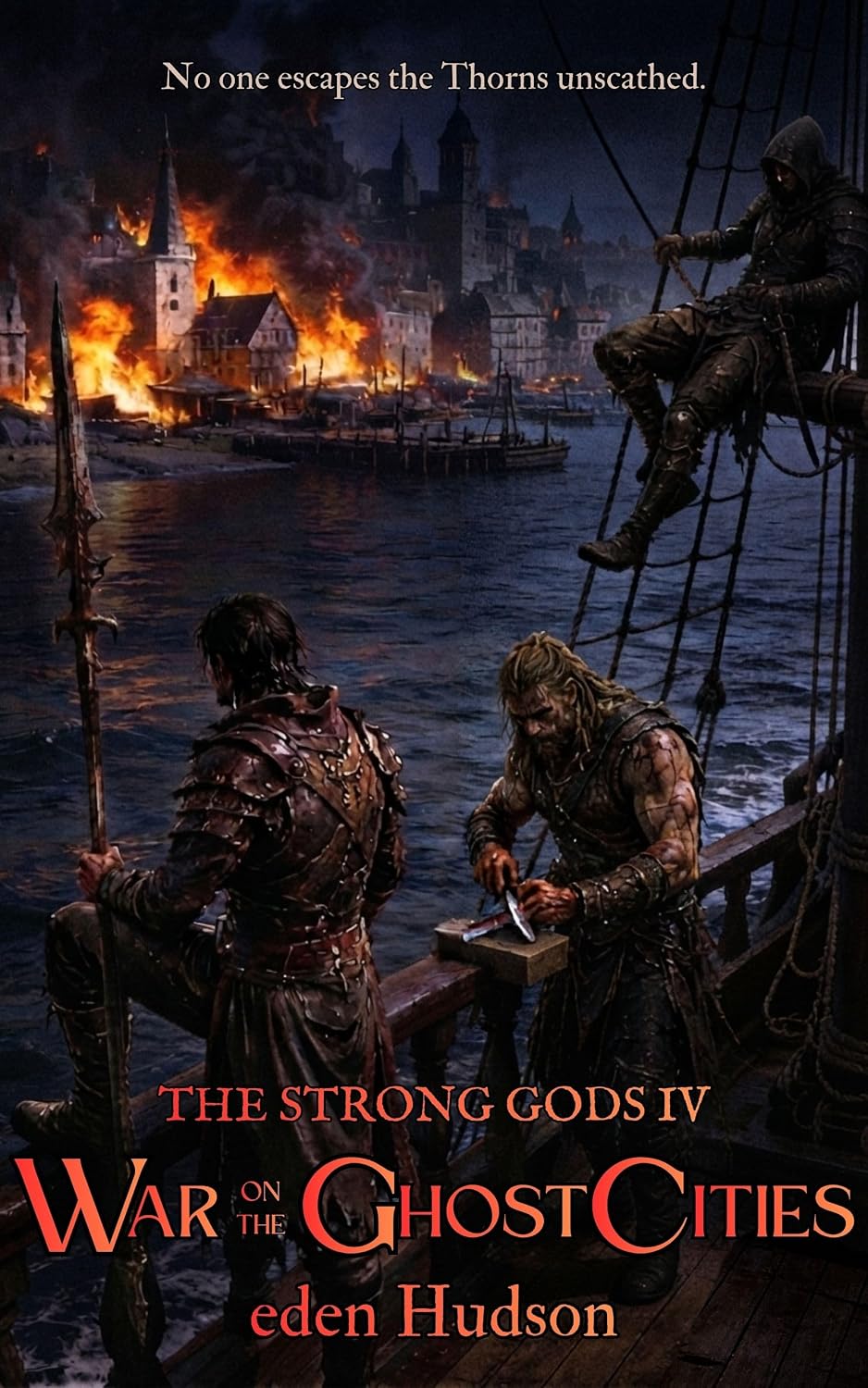
War on the Ghost Cities continues the sword and sorcery narrative arc established in earlier volumes of The Strong Gods series, specifically building on the ongoing conflicts seen in works like Scourge of Thorns and Madness of Princes.…
Quick Verdict
War on the Ghost Cities delivers a compelling continuation for followers of The Strong Gods saga by elevating a familiar royal war into the terrifying shadow of spectral capitals. It trades straightforward battlefield clashes for high-altitude dread, ensuring that the human cost of ambition remains intimately tied to ancient, looming horrors. For established fans of the sequence, it represents a necessary and atmospheric progression.
Disclosure: As an Amazon Associate, LiaGuide earns from qualifying purchases. Affiliate relationships do not determine our editorial conclusions.
Entering the Fourth Chapter of The Strong Gods
Written as the fourth installment, this book steps further into a grim fantasy domain where ancient blasphemies echo through successive generations.
The narrative setup hinges on a familiar yet escalated conflict: sibling pitted against sibling in a relentless struggle for the throne. But the publisher material indicates that earthly battlefields involving princes, soldiers of flesh and bone, and the scarred Thorns are only part of the friction driving the plot forward.
Premise and the Shadow of the Ghostlight
While traditional power struggles unfold on the muddy battlegrounds below, the true epicenter of peril looms overhead. According to the publisher's outline, the ultimate threat to the crown occupies the eerie spectral cities that illuminate the night sky.
This vertical separation introduces a distinct atmospheric backdrop for the fourth book. The kingdom's most dangerous territory lies directly beneath the cold illumination of the ghostlight, suggesting an environment where conventional military tactics and political maneuvering must contend with otherworldly forces. Readers following the series can expect the grim stakes to pivot from simple dynastic rivalry toward an atmospheric confrontation with these suspended urban ruins.
Reader Fit and Series Continuity
Readers who have stayed the course through the previous installments of The Strong Gods will find direct continuation in this volume, which maintains the dark, high-conflict tone characteristic of the sequence. The recurring presence of the Thorns—who escape the conflict visibly marked—signals that physical and psychological toll remains a central thematic anchor.
This installment is built specifically for established fans of gritty sword and sorcery who appreciate sustained world-building across a multi-book arc. Those looking for a standalone entry point should start earlier in the series rather than diving directly into this fourth volume, ensuring the underlying dynastic rivalries and supernatural elements carry their intended narrative weight.
Pacing, Progression, and the Overhead Threat
As the fourth entry in The Strong Gods series, War on the Ghost Cities maintains the relentless momentum that fans of the sequence expect. The narrative wastes no time dragging its feet through exposition, choosing instead to drop readers directly into the visceral consequences of ancient blasphemies and fractured familial bonds. Where earlier installments focused heavily on earthly politics and the brutal realities of mud-and-blood warfare among princes and soldiers, this volume elevates the physical and metaphysical stakes by shifting the focal point upward.
The introduction of the eerie spectral cities hanging overhead changes the tactical geography of the conflict. This looming, nocturnal presence acts as a constant atmospheric pressure on the progression, ensuring that earthly struggles for the throne never feel isolated from a grander, more terrifying backdrop. Readers looking for a deliberate, slow-burn political drama will find instead a swift, high-pressure campaign where the environment itself feels actively hostile and every tactical advance carries an immediate weight.
Atmospheric Tone and Narrative Stakes
The overarching mood of the book leans heavily into classic sword and sorcery darkness, underscored by the publisher's warning that no one escapes the Thorns unscathed. This thematic bleakness is handled with a consistency that anchors the high-fantasy spectacle in genuine grit. The contrast between mortal ambition—sibling fighting sibling for a contested crown—and the silent, indifferent menace of the ghostlight overhead creates a compelling psychological tension for the characters caught below.
While the narrative maintains its gritty edge, it avoids descending into mindless pessimism by keeping the focus sharp on personal endurance and tactical survival. Those who appreciate sword and sorcery fiction that treats peril as an ongoing, inescapable condition rather than a temporary plot hurdle will find the atmospheric execution hits precisely the right notes.
Navigating the Architectural Trade-offs
Readers opening War on the Ghost Cities enter a narrative landscape where the scale of conflict shifts dramatically from traditional terrestrial skirmishes to looming celestial domains. The publisher notes that ancient blasphemies reignite sibling rivalries over a disputed throne, grounding the emotional core in familiar dynastic struggle. However, the primary narrative weight diverts away from ordinary mud-and-blood warfare toward the eerie spectral metropolises suspended overhead.
This vertical expansion creates a distinct atmospheric trade-off. While terrestrial factions like princes, soldiers, and Thorns maintain their grim physical presence, the true gravitational pull of the plot rests beneath the ghostlight. Those expecting a traditional boots-on-the-ground campaign will find themselves navigating a much stranger, more ethereal tier of world-building where survival is far from guaranteed and nobody escapes unscathed.
Audience Alignment and Series Positioning
As the fourth installment in The Strong Gods series, this volume suits devoted sword-and-sorcery readers who have followed the escalating escalation of divine and royal corruption thus far. The pacing rewards those deeply invested in the ongoing sibling feuds and the dark, atmospheric consequences tied to the Thorns. It is less suited for casual newcomers looking for a standalone entry point, given the rich backlog of accumulated factional hostility.
Fans of grim fantasy who appreciate high-concept architectural threats—such as cities hanging ominously in the night sky—will find plenty to dissect here. Readers preferring lighthearted heroics or self-contained episodic quests should look toward traditional heroic fantasy alternatives instead.
Final Verdict
War on the Ghost Cities: A Sword and Sorcery Adventure has a clear case for readers whose tastes line up with its strongest supported qualities.
See current book details
Check the current formats and listing details for War on the Ghost Cities: A Sword and Sorcery Adventure on Amazon.
View on AmazonAffiliate link. Product details may change.