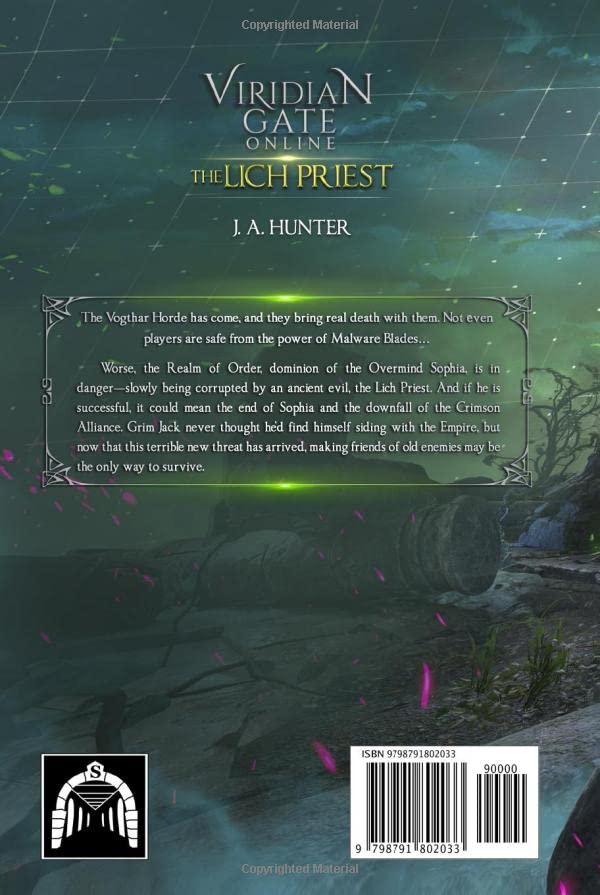
The fifth installment of James A. Hunter's popular litRPG epic thrusts readers back into a digital sanctuary under siege. The Vogthar Horde has arrived, bringing with them a lethal brand of permanent consequence via deadly malware blades that…
Quick Verdict
Viridian Gate Online: The Lich Priest delivers a high-stakes, fast-paced expansion of the universe that rewards longtime followers of Grim Jack's journey. By raising the threat level to include divine corruption and deadly malware blades, the narrative successfully injects fresh tension into an established epic framework. Ultimately, this installment fits seamlessly into the broader reading list for fans of immersive litRPG worlds who appreciate character growth alongside tactical progression. If you have followed the series this far, continuing past the threshold of the Lich Priest's domain is well worth the time investment.
Disclosure: As an Amazon Associate, LiaGuide earns from qualifying purchases. Affiliate relationships do not determine our editorial conclusions.
Premise and Setup
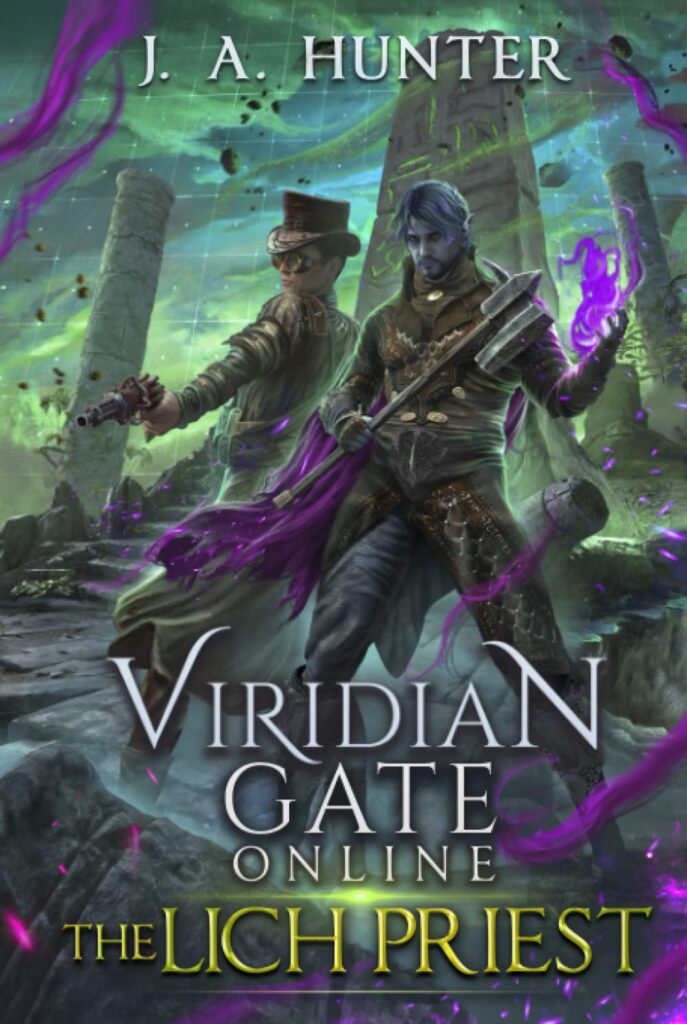
The fifth installment of James A. Hunter's popular litRPG epic thrusts readers back into a digital sanctuary under siege. The Vogthar Horde has arrived, bringing with them a lethal brand of permanent consequence via deadly malware blades that threaten even experienced players. Meanwhile, the Realm of Order, governed by the Overmind Sophia, faces an insidious corruption engineered by an ancient entity known as the Lich Priest.
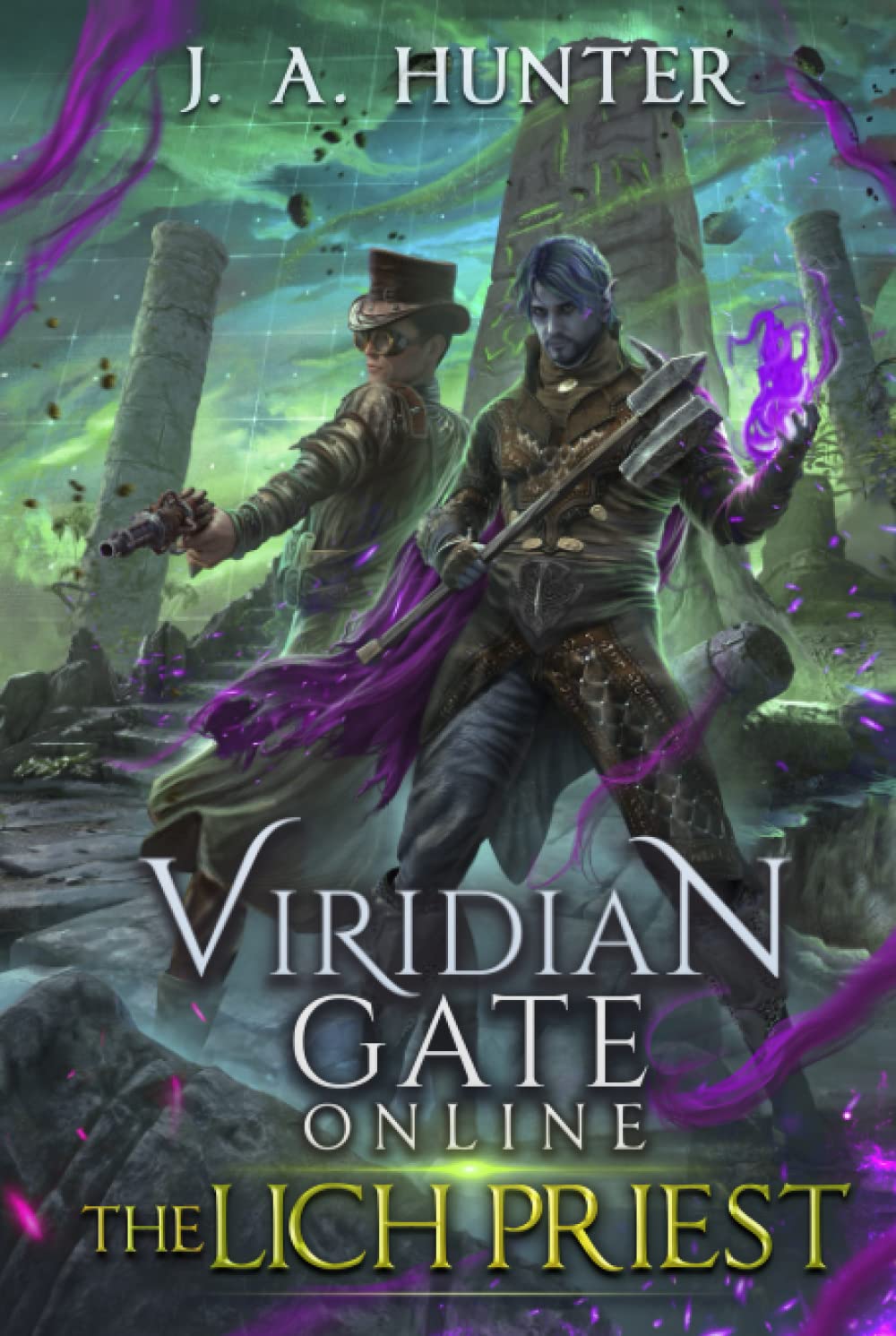
Protagonist Grim Jack finds himself navigating an uneasy political landscape where survival requires partnering with old rivals. As the boundaries blur between the Crimson Alliance and former foes, the narrative pivots away from isolated survival toward high-stakes coalition-building against a threat capable of destabilizing the entire digital pantheon.
Reading Experience and Reader Fit
Readers stepping into this volume can anticipate a breakneck narrative tempo. Evidence from early reader feedback points to an action-heavy installment that moves swiftly from its opening chapters, prioritizing continuous momentum over exhaustive world-building exposition.
Beyond the structural pacing, the text places heavy emphasis on character evolution. Long-standing participants in the series undergo notable shifts in interpersonal dynamics, offering depth that balances the relentless external conflict. Those who appreciate character arcs that soften rigid rivalries will find plenty to engage with here.
This volume serves best as a straightforward continuation for established fans of the Viridian Gate Archives. Newcomers starting mid-series will miss critical foundational context regarding the factions and game mechanics, making it a poor entry point for absolute beginners to the franchise.
Pacing and Plot Progression
This fifth installment wastes no time setting its stakes, dropping readers straight into high-velocity conflict as the Vogthar Horde brings immediate, tangible peril to the digital world. The narrative momentum rarely dips, trading slow-burn exposition for relentless forward drive that keeps the pages turning rapidly.
While fast pacing ensures an exciting ride through dangerous new territory, it occasionally rushes the broader logistical mechanics of the realm. Readers looking for meticulous breakdowns of every stats page or deep dives into system architecture might find the plot prioritizes immediate survival and large-scale faction politics over granular inventory management.
Character Evolution and Dynamics
Longtime followers of the series will notice a distinct shift in how relationships are handled here. Grim Jack and his companions find themselves forced into uneasy alliances with former rivals, creating genuine friction that grounds the high-concept fantasy elements in emotional realism.
Reader feedback highlights a rewarding sense of depth as established figures display new vulnerabilities and strengths. Even antagonists from earlier books receive nuanced treatment, making their evolving motivations feel earned rather than forced by the script.
Navigating the Narrative Trade-offs
Readers diving into the fifth installment of James A. Hunter's epic series must weigh a fast-moving, high-stakes plot against the complexities of expanding lore. The arrival of the Vogthar Horde and dangerous malware blades pushes the story into immediate, relentless motion from the opening pages. For fans who prioritize rapid pacing and constant action, this momentum is a major asset that keeps the pages turning quickly.
On the other hand, the heavy focus on shifting alliances and deep-seated realm corruption requires careful attention to shifting loyalties. Grim Jack is forced into uneasy cooperation with former rivals, which reshapes character dynamics and softens old antagonisms. Readers who prefer straightforward hero-versus-villain structures might find the moral gray areas and complex character evolutions demand more patience than a standard popcorn adventure.
- Ideal for readers who enjoy high-velocity combat paired with political maneuvering among former enemies.
- May test the patience of those looking for standalone episodic arcs rather than sweeping, interconnected series arcs.
Pacing, Momentum, and the "Side Quest" Narrative Structure
Readers repeatedly point out that this installment hits the ground running, plunging the audience directly into the middle of the conflict with virtually no introductory slowdown. Several supplied reviews describe tearing through the fast-paced novel in just a few days, driven by a relentless stream of dungeon dives, seemingly unbeatable boss monsters, and high-stakes chaos. This perpetual motion creates an undeniable page-turning momentum, though individual reactions to this breathless rhythm vary.
At the same time, a recurring observation among the readership frames this story as a massive, highly significant side quest rather than a direct continuation of the overarching main plot. While this structural pivot allows the narrative to explore fresh scenery and localized dangers, one detailed review notes that it doesn't quite hook the reader with the same gravitational pull as earlier entries. Even so, the sheer volume of action—featuring relentless combat and desperate bids for survival—largely compensates for the shift in macroscopic focus, carrying readers through to a clever and satisfying narrative payoff.
- Opens immediately with high-intensity action and combat scenarios
- Structured more like a colossal, high-impact side quest than the main story arc
- Maintains brisk pacing that encourages rapid reading speeds
Character Evolution, Faction Dynamics, and Humanizing the Enemy
One of the most widely praised elements across the reader feedback is the deepening of character relationships and personal evolution. Readers observe that the cast feels increasingly like a group of old friends, complete with relatable flaws and strengths that make their struggles feel grounded. Particular attention is drawn to characters like Osmark and Cutter, whose developments stand out during forced alliances that test long-standing animosities.
A major thematic highlight for the audience is the deliberate blurring of lines between heroes and villains. Several supplied reviews praise the narrative for giving its antagonists genuine humanity, leading to a much more realistic shades-of-grey view of the game world. Characters previously despised or cast strictly as rivals begin to earn a degree of reader fondness as the text delves deeper into their personal histories and forces former enemies to work side by side under divine coercion.
- Humanization of former villains creates complex, shades-of-grey dynamics
- Forced alliances between rival factions drive compelling interpersonal friction
- Cast members display meaningful internal and relational growth
Worldbuilding Expansion, Lore Threats, and Divine Vulnerability
The expansion of the game world receives significant praise for mixing familiar environments with striking new scenery and lore-heavy threats. Readers note that the narrative successfully raises the stakes by demonstrating that even the gods and goddesses of the realm—such as the patron deity Sophia—are not immune to the growing corruption. This mortal peril facing divine figures adds genuine weight to the ongoing conflict against the Lich Priest and the creeping menace of malware blades.
Despite the expansive scope, some readers express a desire for more explicit worldbuilding regarding these new antagonists. One detailed review points out that while the capabilities of the new enemy force are felt, the faction itself could have been fleshed out further, leaving curious fans wanting deeper explanations about how malware-infused weaponry was introduced into the virtual ecosystem in the first place.
- Raises stakes by placing divine figures and goddesses in direct jeopardy
- Expands lore through corrupting forces and ominous malware threats
- Some readers desire deeper background on the origin of new enemy factions
LitRPG Mechanics, Crunch, and Reader Disagreements on Detail Density
When it comes to the technical implementation of LitRPG systems, the readership exhibits a sharp, clear division, illustrating a classic genre trade-off. On one hand, certain readers revel in the intricate gamer details, complex skill trees, and technical descriptions of lairs and monster encounters, praising the deep crunch that grounds the virtual world in rules and numbers.
On the other hand, this heavy mechanical focus is a distinct stumbling block for a different segment of the audience. One reader admits to skipping full chapters out of boredom due to an excess of gamer minutiae. Additionally, another group notes that this particular installment feels slightly lighter on stats and mechanics because the protagonist spends significant time working on a new abilities tree, which ironically alienates hardcore crunch fans while paradoxically offering a slight reprieve to those who prefer narrative over spreadsheets.
- Deep mechanical focus on skill trees and abilities satisfies hardcore LitRPG fans
- Heavy gamer detail leads some readers to skip technical chapters out of boredom
- Trade-off between crunchy game theory and pure adventure narrative splits opinions
Humor, Tone, and Strategic Combat Tones
The emotional landscape of the book is characterized by a deft balancing act between heavy, world-ending threats and well-timed humor. Readers repeatedly highlight how the author mixes in lighthearted wit to keep the pages turning without undermining the genuine danger facing the characters. This emotional fluctuation—described by one reviewer as sharp shifts between contrasting feelings—keeps the audience constantly engaged.
Furthermore, combat encounters are frequently defined by tactical cleverness rather than brute-force power scaling. Reviewers note that victory often goes to the strategic thinker rather than the most over-leveled character, elevating dungeon crawls and boss fights past standard hack-and-slash tropes into genuinely engaging tactical puzzles.
- Humor effectively balances the dark, corrupting threats in the plot
- Combat emphasizes clever strategy and problem-solving over simple stat advantages
- Emotional beats range from high tension to whimsical character interactions
Pros and Cons
✓ Pros
- Compelling humanization of former antagonists and rivals
- Fast-paced narrative that moves rapidly from action to action
- Clever strategic combat that rewards tactical thinking over brute force
- High-stakes plot involving vulnerable divine entities and game-breaking threats
✕ Cons
- Uneven pacing regarding LitRPG mechanics alienates some readers
- Certain new enemy factions and weapons lack sufficient background detail
- Can feel more like a side quest than a progression of the main storyline
Frequently Asked Questions
Is this book heavy on stats and LitRPG crunch?
Reader reactions are split on this point. While some appreciate the intricate gamer details and skill tree developments, others find the technical explanations excessive, and some general readers note that this specific installment is actually a bit lighter on hard stats than previous books.
Can I enjoy this book if I haven't loved the villains in past installments?
Yes. Reviewers heavily praise the book for humanizing former antagonists and forcing rival factions to work together, which deepens characters you may have previously disliked and provides a nuanced, shades-of-grey perspective.
Final Verdict
Viridian Gate Online: The Lich has a clear case for readers whose tastes line up with its strongest supported qualities. Its clearest strengths are compelling humanization of former antagonists and rivals and Fast-paced narrative that moves rapidly from action to action. The main reason to hesitate is uneven pacing regarding LitRPG mechanics alienates some readers. If that trade-off conflicts with your reading preferences, this is an easy title to skip; otherwise, the review evidence supports keeping it on your reading list.
See current book details
Check the current formats and listing details for Viridian Gate Online: The Lich on Amazon.
View on AmazonAffiliate link. Product details may change.