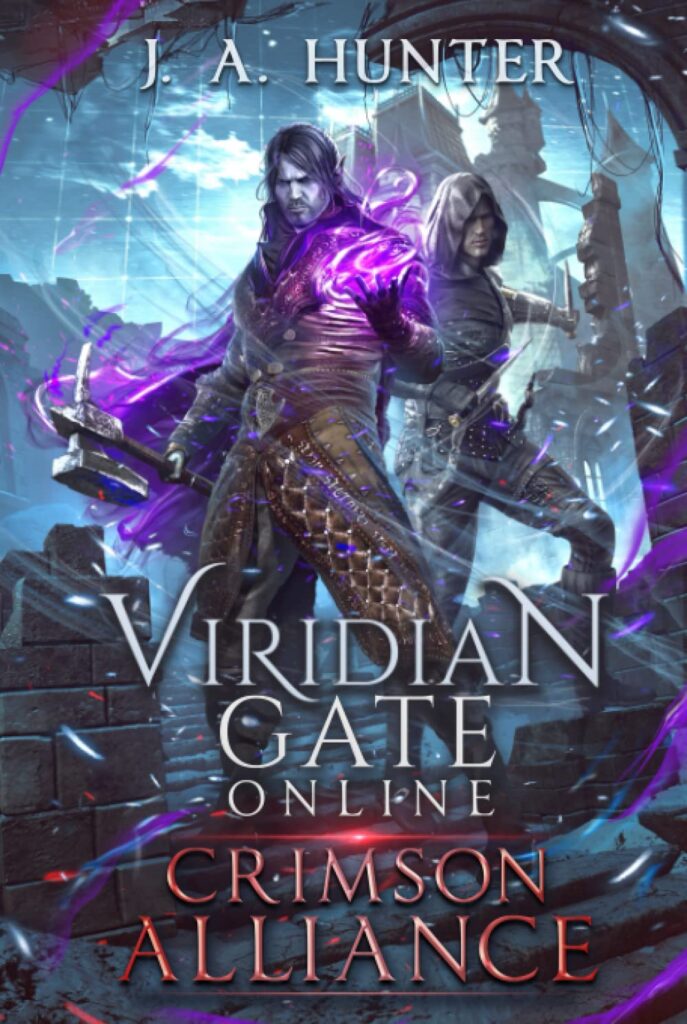
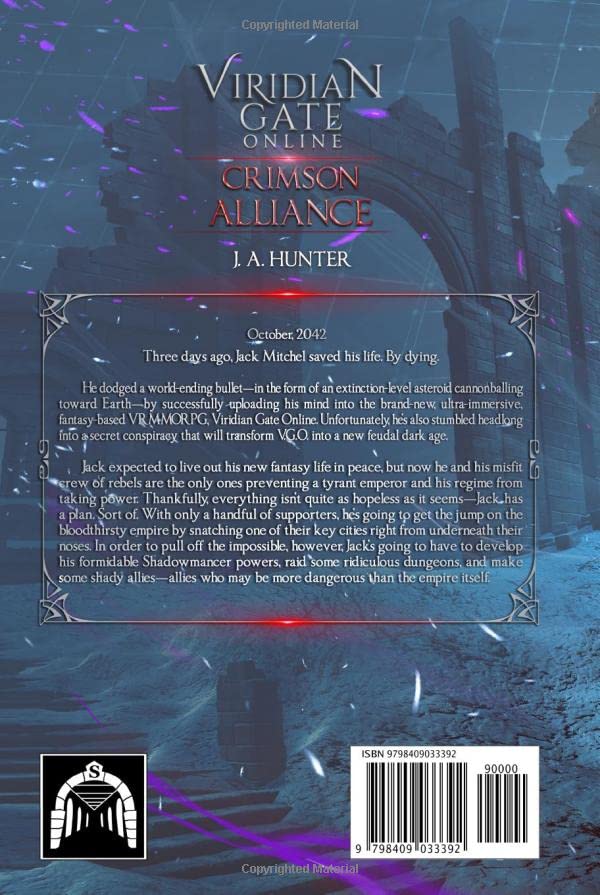
James A. Hunter’s Viridian Gate Online: Crimson Alliance drops readers into a desperate digital frontier where Earth’s final days collide with virtual survival. Protagonist Jack Mitchel escapes an extinction-level asteroid by uploading his consciousness into Viridian Gate Online,…
Quick Verdict
Crimson Alliance delivers an entertaining blend of virtual reality survival and rebellious strategy, leaning heavily on character dynamics and escalating conflict. While it trades away some granular loot tracking for narrative speed, it remains a fast, engaging installment for followers of the Viridian Gate Archives looking for high-stakes adventure.
Disclosure: As an Amazon Associate, LiaGuide earns from qualifying purchases. Affiliate relationships do not determine our editorial conclusions.
Premise and Setup
James A. Hunter’s Viridian Gate Online: Crimson Alliance drops readers into a desperate digital frontier where Earth’s final days collide with virtual survival. Protagonist Jack Mitchel escapes an extinction-level asteroid by uploading his consciousness into Viridian Gate Online, an ultra-immersive fantasy VRMMORPG. What was meant to be a quiet digital refuge quickly spirals out of control as Jack stumbles into a brewing conspiracy engineered to lock the game world in a feudal dark age.
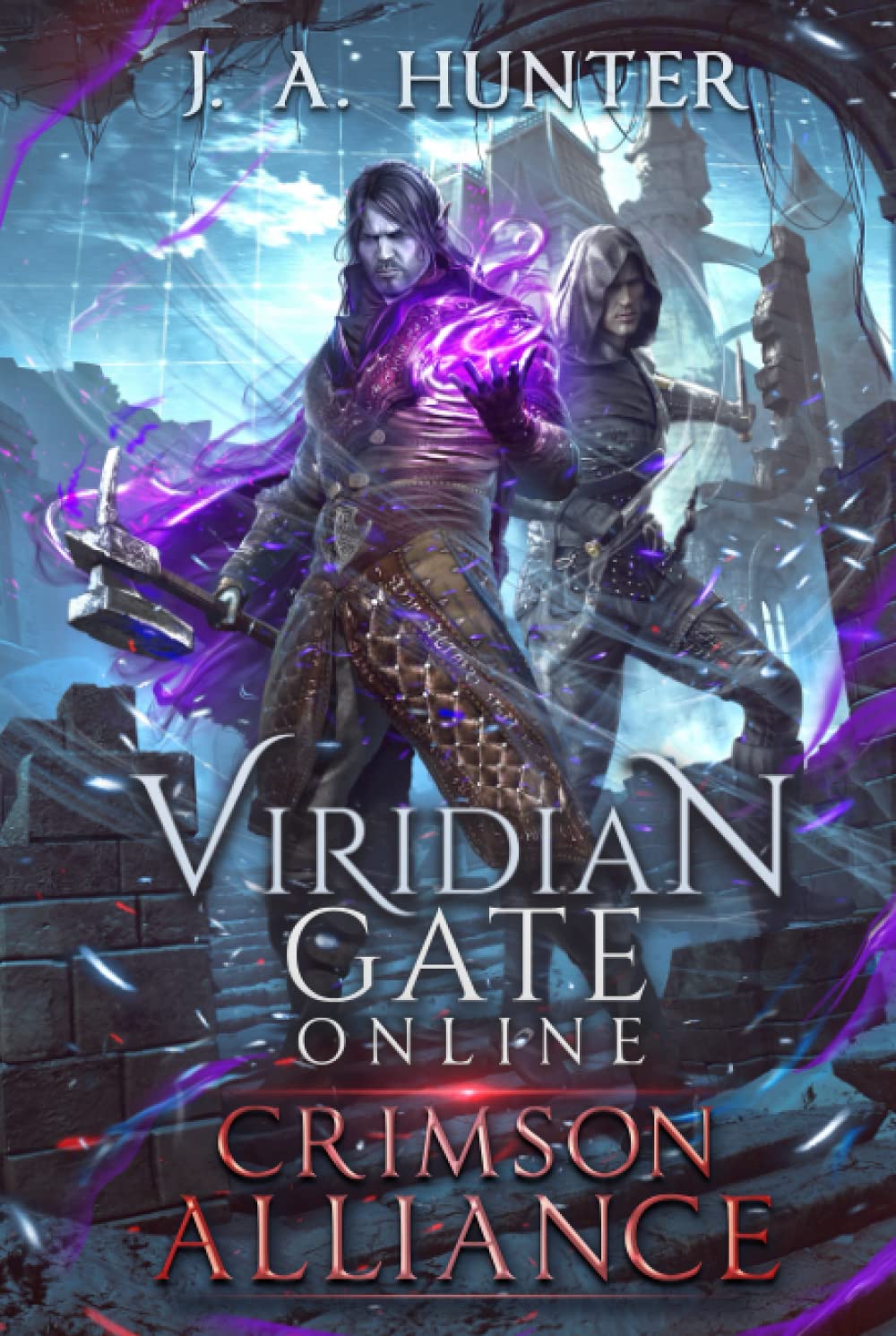
Rather than enjoying a peaceful digital retirement, Jack and a mismatched crew of rebels find themselves standing against a tyrannical emperor’s regime. According to the publisher’s setup, the narrative pivots away from solitary survival toward high-stakes insurgency. Armed with little more than a loose plan and a handful of supporters, the group sets out to seize a key imperial city from underneath the regime's nose, forcing Jack to master volatile Shadowmancer abilities, navigate treacherous dungeons, and forge alliances with forces potentially more dangerous than the empire itself.
Reading Experience and Reader Fit
For readers hesitant about fiction heavy on spreadsheet mechanics or stat blocks, reader feedback suggests this installment strikes an accessible balance. First-hand impressions from non-gamers indicate that the gaming elements do not obstruct the narrative flow, allowing the title to read as easily as traditional fantasy while maintaining the high-energy pacing typical of the litRPG genre.
The pacing favors momentum over sprawling world-building bloat. Audience feedback points out that the book hits an appealing middle ground in length—substantial enough to feel like a complete adventure without dragging into an exhausting epic. It appeals strongly to fans of underdog rebellion arcs, fast-paced action sequences, and character-driven fantasy campaigns, making it a natural fit for readers wanting brisk progression fantasy without dense technical overhead.
Pacing, Mechanics, and Accessibility
James A. Hunter structures Crimson Alliance around a high-stakes rebel offensive, pushing the protagonist Jack Mitchel to seize a key imperial city with minimal resources. For readers evaluating the LitRPG mechanics, the progression leans into class development—specifically expanding the Shadowmancer powers—coupled with dungeon raiding and fragile alliances that complicate the political landscape. The narrative balances the underlying virtual-reality rulesets with traditional fantasy pacing, keeping the focus on tactical execution rather than bogged-down menu math.
Reader feedback highlights a notable bridge across genres: even individuals who typically avoid video-game-inspired fiction find the pacing accessible. The gaming elements function to drive the plot forward without halting momentum for excessive statistical breakdowns. At the same time, readers deeply invested in the loot-and-gear progression side of the genre may notice that material rewards take a backseat to tactical survival and plot maneuvering, making it an engaging read for standard fantasy fans who might otherwise skip virtual-world settings.
Character Dynamics and Structural Flow
The supporting cast plays a central role in keeping the rebellion grounded, moving away from a solitary hero journey toward a tight-knit misfit crew dynamic. Jack's reliance on allies who pose internal threats as much as external ones creates friction that carries the middle acts. Furthermore, audience responses consistently point to the overall length of the book as a distinct practical advantage, striking a balance that prevents narrative fatigue while offering enough substance to dive straight into subsequent installments without feeling rushed.
Weighing the Trade-offs
James A. Hunter structures this entry around fast-paced rebellion plotting, pushing Jack Mitchel and his crew straight into high-stakes territory as they attempt to swipe a key empire-held city. For readers who prioritize continuous momentum, quick pacing, and accessible fantasy action over dense statistical rulebooks, this narrative focus hits the right notes. Non-gamers find an entry point here because the virtual reality framework supports the adventure rather than bogging down the page with endless stat blocks and spreadsheet mechanics.
That same structural choice introduces a distinct compromise for hardcore genre enthusiasts. Readers looking deep into the mechanics of loot distribution, item drop rates, and granular character sheet progression may find those elements taking a backseat to political posturing and rebel skirmishes. If your primary motivation for picking up a LitRPG is tracking optimized gear upgrades and meticulous numerical growth, the lighter emphasis on traditional video game economies might leave you wanting more tangible rewards.
Reader Fit and Alternatives
This novel suits fiction fans transitioning into game-lit elements, alongside established series followers who appreciate character-driven survival stakes, underdog alliances, and sweeping virtual dark ages. The narrative length hits a comfortable middle ground, offering enough depth to sink into an afternoon without requiring the heavy time investment of an epic fantasy brick.
Readers who prefer traditional high fantasy devoid of interface prompts, respawn mechanics, or digital status overlays should skip this specific title in favor of standard epic fantasy novels. Conversely, those seeking hyper-technical rulesets and exhaustive min-maxing might prefer pure-stat crunch progression series or tabletop rulebook adaptations.
Narrative Progression and Pacing Balance
Readers frequently observe that the story maintains a brisk, streamlined rhythm, avoiding overly dense political detours or sluggish explanations. Several supplied reviews describe the narrative momentum as a workshop in efficient storytelling, keeping pages turning without bogging down the audience in heavy exposition. Because the foundational worldbuilding was largely established in the opening installment, this continuation moves with greater freedom, relying on tight action sequences and swift transitions.
At the same time, this brisk momentum draws mixed reactions regarding how side quests and secondary elements are handled. A number of readers feel that the central conflict—specifically the looming confrontation with the drug-king antagonist from the first book—overshadows some of the broader roleplaying potential. Some feedback notes that hints of deeper lore and gaming mechanics are occasionally shuffled to the background in favor of immediate plot urgency, leaving certain audience members wishing for more unhurried exploration.
- Fast-paced storytelling that avoids lengthy political explanations
- Streamlined progression built directly on prior worldbuilding
- Occasional tension between overarching plot urgency and side-quest exploration
LitRPG Mechanics, Crunch, and Gamer Appeal
For enthusiasts of virtual reality and gaming fiction, the integration of digital mechanics is a primary point of discussion. Multiple reviews highlight how successfully the story awakens the desire for gamification, capturing the appeal of leveling, skill acquisition, and virtual progression. Readers point out that the gaming elements do not overwhelm the narrative, allowing individuals who typically avoid video game fiction to enjoy the core adventure just as easily as dedicated genre fans.
However, a segment of the readership desires a heavier dose of traditional LitRPG crunch. A recurring criticism from more mechanically focused reviewers is a perceived shortage of classic loot drops, detailed dungeon crawls, and extensive inventory management. While the setting is undeniably rooted in an MMO framework, some readers advocate for a more explicit return to core gaming loops rather than leaning heavily into traditional fantasy survival tropes.
- Accessible mechanics that appeal to both gamers and non-gamers alike
- Strong focus on skill progression and virtual reality immersion
- Desire from some readers for more traditional loot and dungeon-crawling focus
Character Dynamics and Faction Development
Character growth and interpersonal relationships receive considerable attention across reader feedback. The protagonist manages to walk a careful line between being formidable and remaining grounded, avoiding the pitfall of unchecked omnipotence that plagues many progression fantasies. Supporting figures, particularly Cutter and the broader crew, earn praise for providing emotional anchor points and undergoing meaningful development as the faction expands.
Despite these strengths, some observations suggest an imbalance in character focus. A few readers remark that while supporting cast members like Cutter receive rich development, the main protagonist occasionally functions more as a passive lens observing the environment rather than undergoing internal transformation. Additionally, readers frequently express an appetite for broader perspectives, suggesting that shifting viewpoints to secondary figures or opposing forces would further enrich the narrative texture.
- Protagonist maintains a balanced power level without feeling overly dominant
- Strong supporting cast contributions and faction-building dynamics
- Desire for more internal progression from the point-of-view character and expanded secondary perspectives
Worldbuilding Consistency and the Antagonist Debate
The underlying construction of the virtual universe earns widespread acclaim for its stability and inventive genre-blending. Reviewers note that the world feels tangible and consistent, successfully marrying dark, gritty fantasy elements with the lighter social and psychological experiences of an online multiplayer community. The exploration of how permanent virtual death and high-stakes faction politics operate adds genuine tension to the digital landscape.
Yet, not all structural choices escape scrutiny, highlighting a notable reader disagreement regarding antagonist scaling. One detailed review argues that the antagonist Carrera's rapid rise and power accumulation feel like an unearned narrative shortcut, introducing sudden escalation that tests reader suspension of disbelief. Conversely, other reviews praise the logical steps taken to resolve overarching structural concerns by the time the volume reaches its conclusion, proving that even contentious plot hurdles can ultimately land on satisfying ground.
- Inventive blending of dark fantasy atmosphere and MMO social dynamics
- Solid and consistent digital worldbuilding that addresses permanent virtual consequences
- Debate over antagonist power scaling and narrative convenience versus logical resolution
Audiobook Presentation and Format-Specific Reactions
Format choices play a distinct role in how audiences experience the material, particularly regarding audio adaptation. Listeners highlight the strong collaborative synergy between the author's writing style and the narrator's vocal delivery, noting that the spoken presentation elevates the pacing and emotional beats of the story. For many, the audiobook format successfully highlights the kinetic energy of the action sequences.
At the same time, reading format preferences divide the audience on matters of book length and structural division. Several readers note that the narrative structure feels compressed, suggesting that adjacent installments could easily be combined or expanded with additional side content. Non-gaming readers, however, find the current length to be an ideal sweet spot—substantial enough to immerse oneself in, yet compact enough to finish without feeling fatigued.
- Engaging audiobook narration that enhances the pacing and dialogue
- Mixed reader perspectives on optimal book length and structural division
- Appreciation from non-gamers for a readable length that avoids excessive bloat
Pros and Cons
✓ Pros
- Strikes a rare balance for a protagonist who is formidable without crossing into unearned overpowers
- Successfully bridges traditional fantasy storytelling with accessible virtual reality gaming elements
- Streamlined prose avoids sluggish exposition and maintains high narrative momentum
✕ Cons
- Some purists feel sidelined by a shortage of traditional dungeon crawling and loot drops
- Occasional plot conveniences involving antagonists can test reader suspension of disbelief
- Main viewpoint character sometimes receives less internal development than the supporting cast
Frequently Asked Questions
Do I need to be a regular video game player to enjoy this book?
Not at all. Multiple readers who identify as non-gamers emphasize that the gaming mechanics are handled smoothly and do not overshadow the core fantasy narrative, making it accessible to general fiction readers.
Does the story focus heavily on stats and menus, or more on story?
Readers generally agree that the book leans toward streamlined storytelling, character relationships, and faction politics rather than bogging down the audience in heavy statistical crunch.
Final Verdict
Viridian Gate Online: Crimson Alliance has a clear case for readers whose tastes line up with its strongest supported qualities. Its clearest strengths are strikes a rare balance for a protagonist who is formidable without crossing into unearned overpowers and Successfully bridges traditional fantasy storytelling with accessible virtual reality gaming elements. The main reason to hesitate is some purists feel sidelined by a shortage of traditional dungeon crawling and loot drops. If that trade-off conflicts with your reading preferences, this is an easy title to skip; otherwise, the review evidence supports keeping it on your reading list.
See current book details
Check the current formats and listing details for Viridian Gate Online: Crimson Alliance: on Amazon.
View on AmazonAffiliate link. Product details may change.