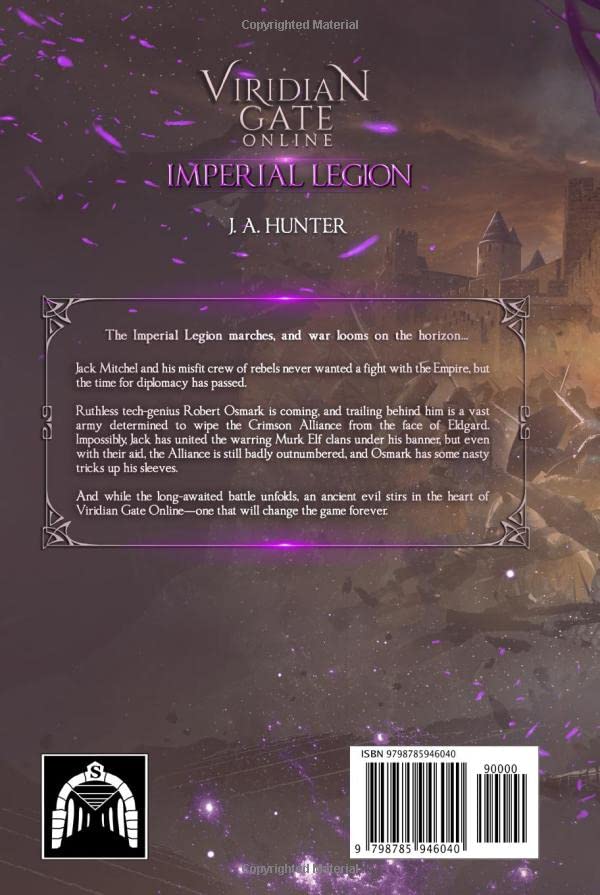
War arrives on the doorstep of Eldgard as the Imperial Legion advances, forcing Jack Mitchel and his crew of rebels into a conflict they tried to avoid. Diplomacy has run its course, and tech-genius Robert Osmark is marching…
Quick Verdict
Imperial Legion successfully escalates the overarching conflict of the series, offering a satisfying blend of large-scale tactical warfare and crunchy LitRPG progression. While minor continuity bumps regarding skill stats exist, the engaging characters and deepened antagonist context make it a worthy continuation for returning readers.
Disclosure: As an Amazon Associate, LiaGuide earns from qualifying purchases. Affiliate relationships do not determine our editorial conclusions.
Premise and Setup
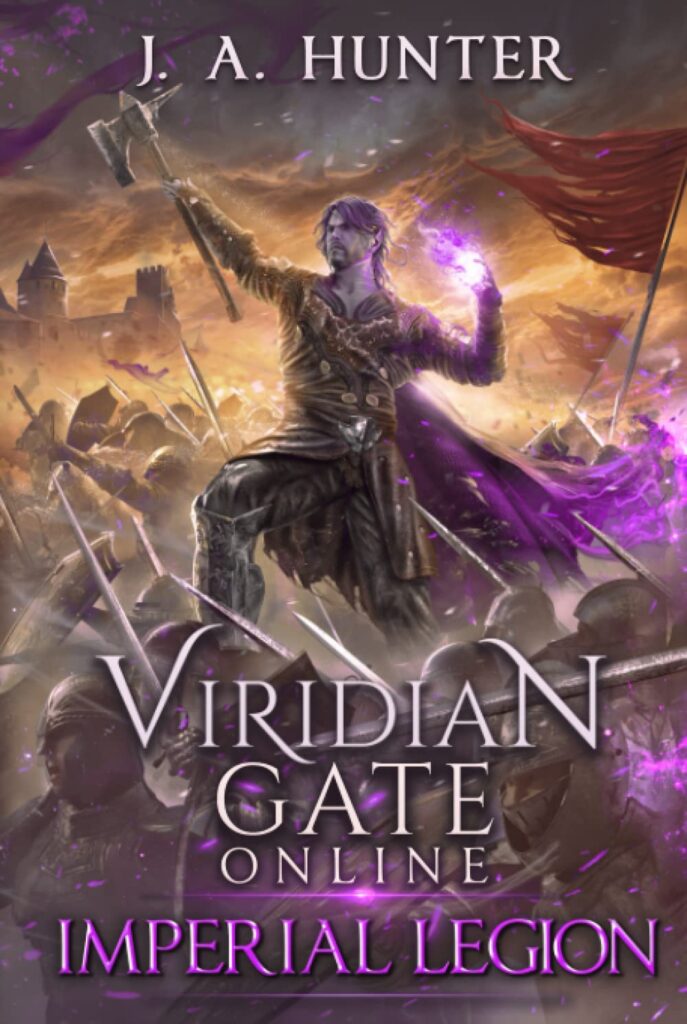
War arrives on the doorstep of Eldgard as the Imperial Legion advances, forcing Jack Mitchel and his crew of rebels into a conflict they tried to avoid. Diplomacy has run its course, and tech-genius Robert Osmark is marching a massive army toward the Crimson Alliance with total annihilation in mind. Even though Jack has successfully brokered an alliance with the warring Murk Elf clans, numerical inferiority remains a constant threat against Osmark's tactical maneuvers and hidden traps.
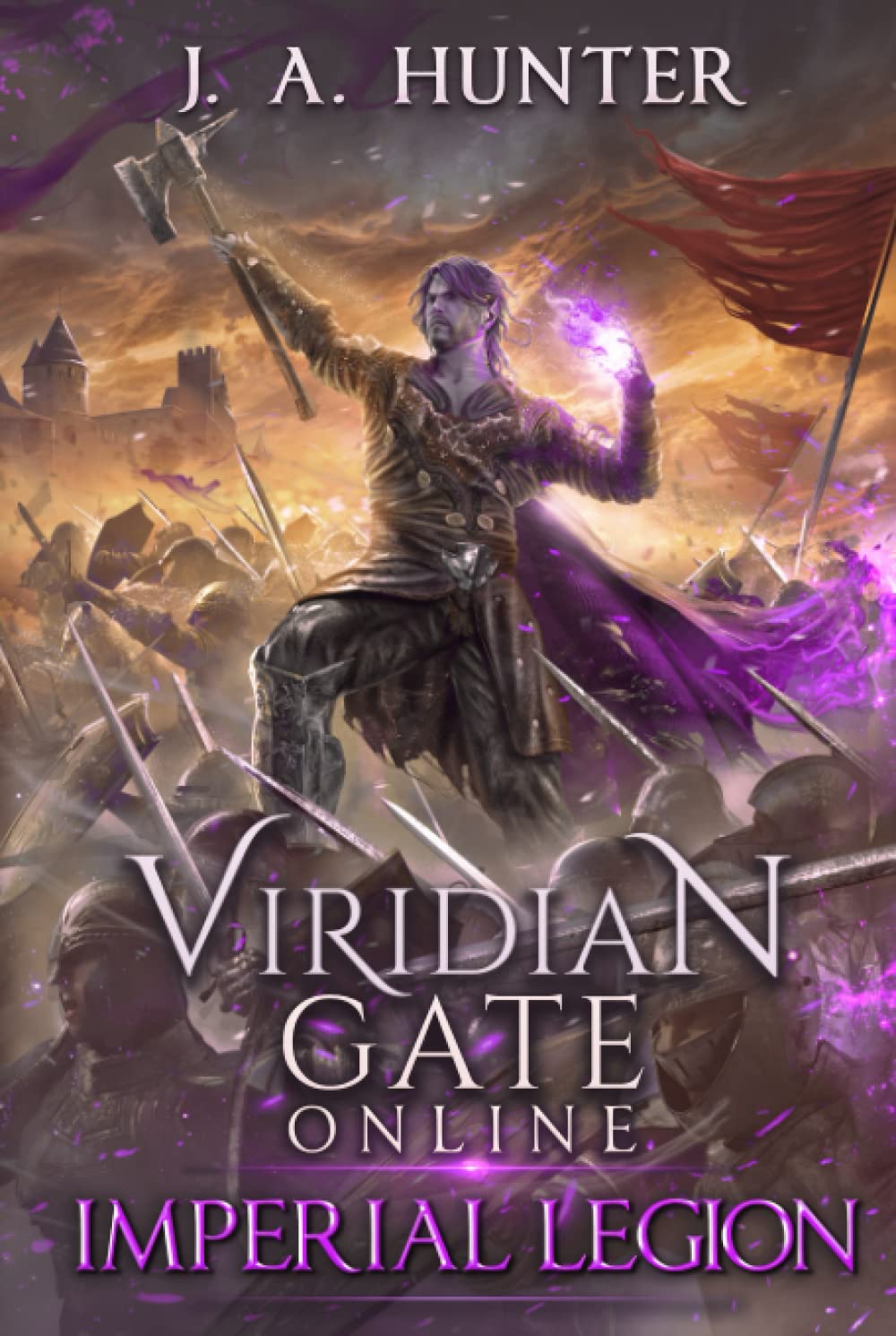
Beneath the unfolding military campaign, an older, foundational threat awakens deep inside the virtual world of Viridian Gate Online. This underlying mystery promises to reshape the entire game environment permanently, shifting the narrative stakes beyond a simple territorial war.
Reading Experience and Progression
Readers stepping into this installment encounter a narrative rhythm heavily driven by large-scale tactical preparations and impending conflict. The pacing leans into the logistics of rallying outnumbered factions and exploring the antagonist's background more deeply, which helps ground the villain beyond a standard megalomaniac archetype.
Character progression remains a central pillar of the experience. Feedback indicates that the protagonist maintains an impactful presence without feeling artificially overpowered, though readers tracking mechanics closely may occasionally notice minor tracking inconsistencies regarding skill cooldowns or cast timers during intense action sequences.
Reader Fit and Decision Signals
This book suits established followers of the series and fans of virtual reality progression fantasy who appreciate detailed faction politics paired with large-scale strategic warfare. Those who prefer tightly edited mechanical consistency without occasional numerical discrepancies in ability stats may find minor friction points.
Readers who enjoy standalone progression novels with self-contained plots should look toward alternative standalone fantasy adventures rather than diving mid-series into an ongoing multi-book arc.
Progression, Mechanics, and Character Scaling
James A. Hunter structures this installment around high-stakes military escalation, pitting the Crimson Alliance against Robert Osmark's advancing forces. For readers tracking the underlying rules of Eldgard, the narrative balances large-scale faction politics with traditional progression mechanics. The protagonist remains formidable without tipping entirely into unearned invincibility, preserving the tactical friction that makes LitRPG conflict engaging.
Reader feedback points to minor continuity slips regarding technical specifications, such as occasional fluctuations in skill cooldown times and cast durations. While these small tracking inconsistencies can momentarily pull mechanically minded readers out of the immersion, they do not disrupt the broader rhythm of the campaign or undermine the satisfaction of the protagonist's growth.
Villain Motivation and Pacing Dynamics
A recurring critique of genre fiction is the flat, one-note antagonist, but this entry works to ground its opposition. By expanding on Robert Osmark's background and strategic calculus, the narrative shifts him away from a generic megalomaniac archetype toward a more calculated, understandable threat. This contextual depth improves the narrative tension as the two factions head toward inevitable military collision.
The pacing maintains a brisk momentum, satisfying readers who dislike drawn-out stalling between major plot beats. Because the series releases at a reliable cadence, it suits serial fiction enthusiasts who prefer minimal downtime between installments while still delivering a substantive narrative chunk.
Series Trade-Offs and Minor Inconsistencies
James A. Hunter maintains a rapid release schedule for the Viridian Gate Archives, which satisfies readers who prefer minimal downtime between installments. However, this brisk output comes with minor editorial slip-ups noted by long-term followers. Specifically, sharp-eyed readers occasionally spot isolated continuity hiccups regarding mechanical specifications, such as minor discrepancies in skill cooldown timers or cast durations for core abilities.
On the narrative front, expanding the scope to large-scale military campaigns shifts the focus away from tight, solo dungeon crawling. Readers who preferred the intimate survival stakes of earlier entries will find that Imperial Legion leans much heavier into faction politics, clan alliances, and overarching tactical maneuvers across Eldgard.
Who Should Read and Who Should Skip
This installment fits dedicated LitRPG enthusiasts who appreciate steady progression systems, well-realized virtual reality mechanics, and expanding villain motivations—particularly readers who enjoyed the villain's background details provided in side stories like The Artificer. It rewards those invested in the ongoing survival of Jack Mitchel and the Crimson Alliance against Robert Osmark's forces.
Conversely, if you prefer standalone fantasy novels with zero background prerequisite, or if minor statistical tracking inconsistencies pull you out of a story, this mid-series volume may frustrate rather than entertain. Readers seeking low-stakes slice-of-life progression might also find the heavy military conflict and impending doom elements too intense for their taste.
- Best for: Established fans of the Viridian Gate Online universe who want higher-stakes faction warfare and deeper antagonist perspective.
- Consider skipping if: You dislike ongoing series with large casts, or if mechanical tracking inconsistencies in combat stats disrupt your immersion.
Character Scaling and Protagonist Balance
Readers frequently debate the balance of power struck by the protagonist, Grim Jack, as his abilities expand throughout the narrative. Several supplied reviews describe a character who remains immensely enjoyable and powerful without stepping fully into unmanageable territory, pointing to his Shadowmancer hybrid class—combining fighter and mage elements with medium armor and a two-handed warhammer—as a primary draw that captures the classic feel of tabletop and digital role-playing games.
At the same time, a recurring critique among seasoned genre readers highlights concerns over power creep. One detailed review argues that certain companions or high-end abilities, such as acquiring a shadow dragon pet, push the protagonist slightly closer to feeling overpowered than necessary. This tension between wanting an impactful, formidable lead and maintaining genuine stakes creates an ongoing dialogue among the audience regarding how tightly the author controls numerical and ability scaling.
- Appealing hybrid class design blending melee combat and magical shadow abilities
- Ongoing reader discussions regarding whether high-tier pets and skills tip into over-powered territory
- Strong nostalgic appeal for fans of traditional MMO and tabletop character builds
Villain Depth and Antagonist Evolution
A major highlight noted across multiple evaluations is the evolution of the primary antagonist, Robert Osmark. Earlier installments positioned him as a more conventional, mustache-twirling megalomaniac, but readers point out that supplemental worldbuilding and backstory—such as insights found in companion side stories like The Artificer—infuse the character with newfound depth and nuance.
Several supplied reviews describe a shift from simple antagonism to a more compelling figure with motivations that readers can almost empathize with. This added background elevates the central conflict, making the impending military clash against the Imperial Legion feel much more personal and intellectually engaging than a standard good-versus-evil confrontation.
- Transition of the main villain from a flat archetype to a multi-dimensional threat
- Positive reception toward background material that illuminates antagonist motivations
- Heightened narrative tension as the conflict with the Empire gains psychological weight
Mechanics, Consistency, and Crunch Trade-Offs
The integration of LitRPG rules and game mechanics draws mixed reactions regarding precision and consistency. A recurring critique involves minor chronological or mathematical discrepancies, such as fluctuating skill cooldown timers or varying cast durations for abilities like Jack's plague skill across different chapters. While some readers find these occasional oversights slightly confusing, they generally view them as minor speed bumps in an otherwise fast-paced narrative.
Additionally, readers note that mechanics undergo subtle shifts as the series progresses. Some audience segments express hesitation regarding these changing rules, while others welcome the dynamic evolution that keeps the virtual world feeling unpredictable and fresh.
- Occasional continuity slips involving skill cooldowns and cast times
- Reader division over shifting game mechanics and rule updates
- Appreciation for the underlying crunch that anchors the virtual reality setting
Supporting Cast Additions and Faction Dynamics
Beyond the central protagonist, readers repeatedly point to the expansion of the supporting cast as a major high point of the reading experience. The introduction of fresh faces injects distinct humor and intrigue into the Alliance's desperate struggle, with characters like Jay Taylor earning immediate affection for their amusing presence.
Another standout addition is Joseph the Gravemonger, whose mysterious inclusion sparks widespread speculation among fans regarding future plotlines and potential shifts in game mechanics. These new allies and faction developments help soften the unrelenting pressure of leadership that weighs heavily on Jack as the Crimson Alliance faces overwhelming odds.
- Instant fan-favorite new characters bringing humor and distinct personality
- Intriguing additions like Joseph the Gravemonger hinting at future mechanical variety
- Effective exploration of leadership burdens and alliance politics
Narrative Momentum and Genre Comparisons
When evaluating the pacing and structural rhythm, readers frequently compare the series to other heavyweights in the LitRPG space. Some reviews position the work slightly below top-tier narrative artistic achievements in competing series while still praising its immense entertainment value, fast velocity, and ability to evoke the thrill of playing classic role-playing games.
The overall reading experience is often described as a freight-train ride characterized by high velocity, immediate engagement, and satisfying payoffs for long-term foreshadowing. A recurring observation highlights how actions taken in earlier volumes finally come back to haunt the protagonist, creating a cohesive sense of consequence that rewards dedicated series followers.
- Favorable comparisons to prominent genre stablemates regarding world scope and fun factor
- Fast-paced, relentless momentum that encourages continuous reading
- Long-term payoff for early narrative seeds and foreshadowed conflicts
Pros and Cons
✓ Pros
- Engaging hybrid class mechanics that cater directly to classic MMO and tabletop fans
- Noticeable depth added to the primary antagonist through external backstory and expanded perspective
- Entertaining new supporting characters that inject fresh humor and mystery into the alliance
✕ Cons
- Occasional minor inconsistencies in skill cooldown timers and ability cast durations
- Some reader reservations regarding shifting game rules and potential power creep for the lead
Final Verdict
Viridian Gate Online: Imperial Legion has a clear case for readers whose tastes line up with its strongest supported qualities. Its clearest strengths are engaging hybrid class mechanics that cater directly to classic MMO and tabletop fans and Noticeable depth added to the primary antagonist through external backstory and expanded perspective. The main reason to hesitate is occasional minor inconsistencies in skill cooldown timers and ability cast durations. If that trade-off conflicts with your reading preferences, this is an easy title to skip; otherwise, the review evidence supports keeping it on your reading list.
See current book details
Check the current formats and listing details for Viridian Gate Online: Imperial Legion: on Amazon.
View on AmazonAffiliate link. Product details may change.