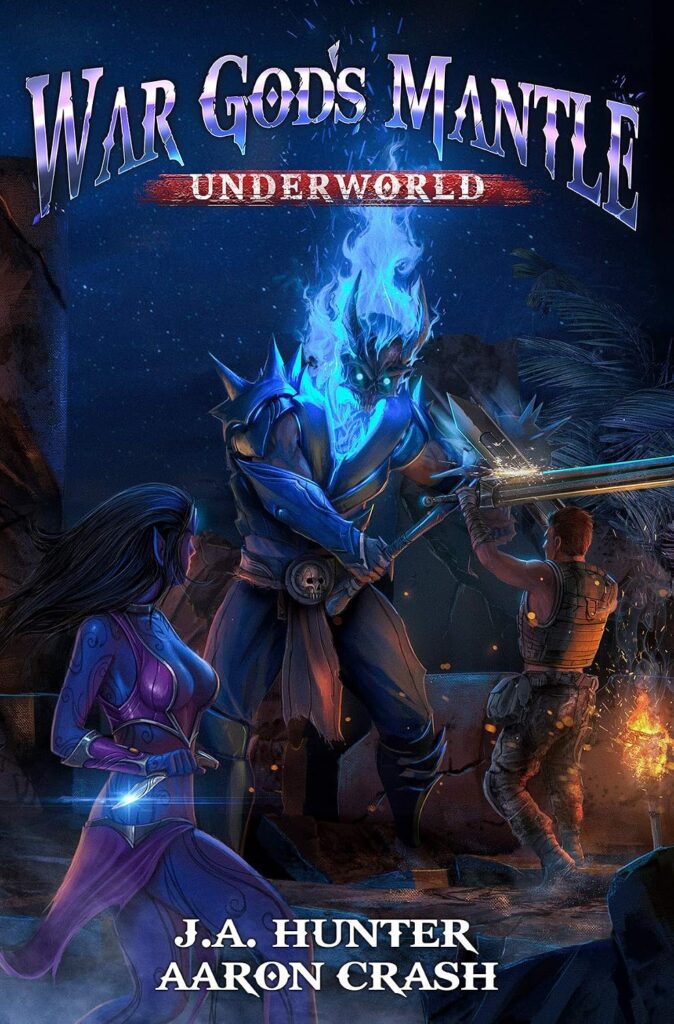
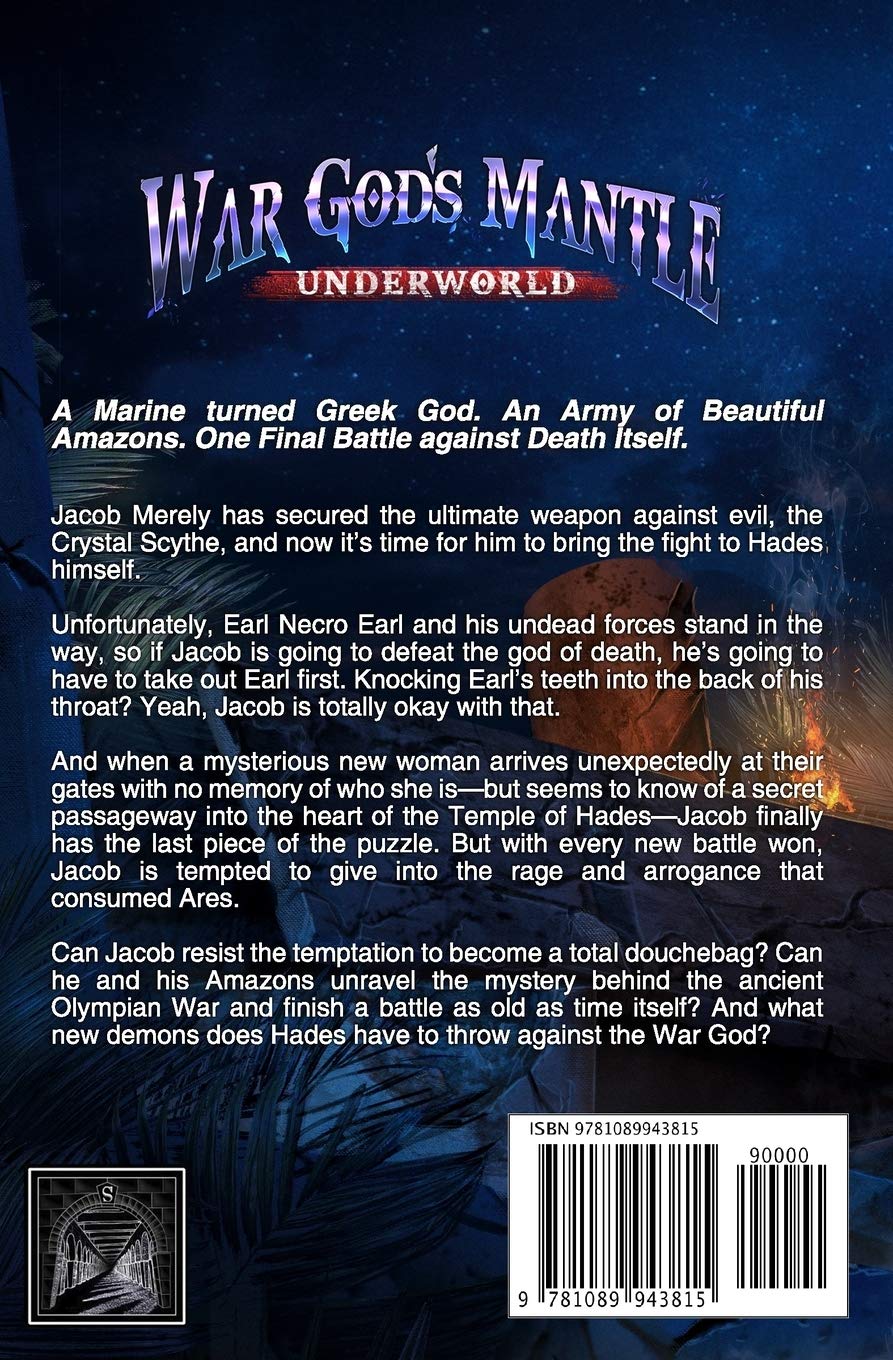
War God's Mantle: Underworld by James A. Hunter and Aaron Crash drops the protagonist Jacob Merely directly into the final leg of a high-stakes divine conflict. Having secured the powerful Crystal Scythe, Jacob shifts his focus from regional…
Quick Verdict
War God's Mantle: Underworld successfully delivers the high-stakes finale its audience has been waiting for, balancing RTS-inspired strategy with uninhibited action and character growth. It avoids the trap of endless narrative stalling, opting instead to resolve long-standing conflicts while leaving just enough room for future universe expansion. Flawed by occasionally broad humor but elevated by genuine enthusiasm for its genre mashup, it stands as a fitting, full-throttle conclusion for readers committed to the journey.
Disclosure: As an Amazon Associate, LiaGuide earns from qualifying purchases. Affiliate relationships do not determine our editorial conclusions.
Premise and Setup
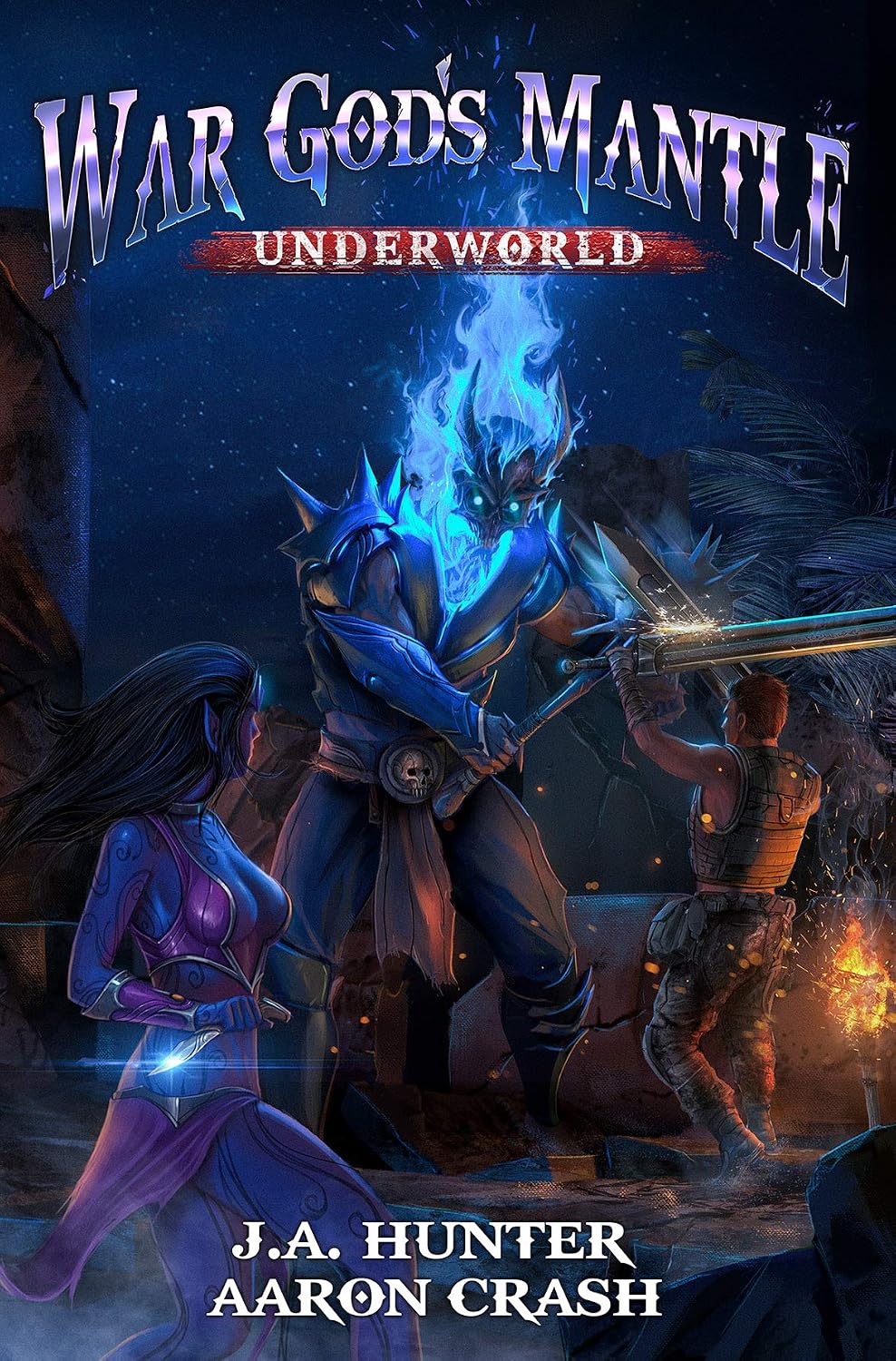
Standing immediately in his path is Earl Necro Earl and a relentless legion of undead forces that must be shattered before Jacob can confront the god of death.
The narrative layers on additional momentum with the sudden appearance of an amnesiac woman at their gates. She conveniently holds knowledge of a secret passageway leading straight into the heart of the Temple of Hades, serving as the final piece of the tactical puzzle. Alongside an army of devoted Amazons, Jacob presses forward while fighting a secondary internal war against the very arrogance and rage that doomed Ares before him.
Reading Experience and Mechanics
Readers stepping into this volume will encounter a blend of fast-paced action and game-lit progression that distinguishes itself from standard dungeon core tropes. Supplied reader feedback highlights a distinct RTS-centric influence on the setting, which shapes how large-scale encounters and tactical positioning are presented on the page. Rather than getting bogged down in endless stat sheets, the story integrates statistics and mechanical pacing to keep the momentum moving swiftly toward its climax.
At the same time, the tone maintains a distinctly irreverent and brash attitude. The dialogue leans heavily into bold insults and casual bravado, a stylistic choice that successfully aligns with the protagonist's established character voice even if some readers may find certain punchlines lean or juvenile.
James A. Hunter and Aaron Crash wrap up their trilogy by leaning heavily into the RTS-inspired framing that shaped earlier entries. Readers who enjoyed watching stats, upgrades, and military positioning drive the narrative will find familiar mechanics at play here. Rather than getting bogged down in endless stat sheets, the text treats game systems as structural tools to push the military campaign forward.
Pacing strikes a brisk rhythm as the protagonist, Jacob Merely, pivots from acquiring the Crystal Scythe to direct confrontation with the underworld. Feedback from readers indicates that loose threads tie up cleanly by the final chapter, rewarding long-time followers of the series who waited for this installment. At the same time, the narrative leaves just enough room for potential future expansions in this universe without feeling artificially dragged out.
- Utilizes RTS-centric strategy themes to shape battles and territory control
- Balances mechanical progression with rapid conflict escalation
- Resolves long-standing plot arcs while keeping expansion doors open
Reader Fit and Series Placement
This third installment functions as a definitive resolution vehicle, successfully tying up loose plot threads left dangling across a notoriously spaced-out release schedule while leaving the door cracked open for future expansions in the universe. It is built explicitly for established fans of the series who want closure on the overarching war against Hades and a satisfying payoff to Jacob's transformation.
Anyone looking for a standalone entry point should start earlier in the sequence rather than diving directly here. Readers who prefer deeply serious, high-fantasy solemnity without modern quips or gamified progression systems will also want to skip this title in favor of traditional mythic fiction.
This concluding volume is tailored explicitly for established followers of the War God Saga who want closure on Jacob Merely's campaign, the fate of his Amazon army, and the broader Olympian conflict. Readers who enjoyed the previous installments for their blend of contemporary attitude, mythological remixing, and LitRPG mechanics will find the pacing satisfying and the resolution rewarding. It also functions well for enthusiasts of game-lit hybrid fiction who appreciate an authorial team willing to experiment with strategic mechanics in an open battlefield setting rather than a confined dungeon.
Conversely, newcomers should bypass this volume entirely until they have experienced the earlier books, as jumping straight into the underworld climax will leave key character motivations and world-building context entirely opaque. Additionally, readers who prefer grimdark fantasy, poe-faced mythological retellings, or strictly traditional military science fiction will likely find the comedic brashness and swaggering protagonist grating. Those seeking grounded tactical war fiction without fantasy tropes should explore dedicated historical military fiction or standard epic fantasy alternatives instead.
A fascinating divergence in reader reception appears around how the book handles its narrative closure and specific character arcs, most notably concerning Antiope. One detailed review argues that the narrative treatment of Antiope feels wildly inconsistent with how other Amazonian allies are managed, noting that despite being mentally compromised, she is treated as an inevitable casualty rather than someone to be saved. This stands out as a rare point of contention among an otherwise unified fan base.
Despite minor character grievances and debates over whether the story should conclude here or continue indefinitely, the readership is remarkably united in wanting more. Fans frequently express a strong desire for a fourth installment or a dedicated spin-off exploring other mythological systems. Whether viewed as a definitive series finale or a launching pad for future epics, the overwhelming consensus is that the journey delivers substantial entertainment value for committed fans of the genre.
- Reader disagreement noted regarding the narrative resolution and handling of Antiope
- Audience split between viewing the ending as a satisfying conclusion versus a stepping stone for future books
- Overwhelming demand from the community for a sequel or a new mythological spin-off series
Tone, Humor, and Character Dynamics
The story maintains an unapologetically brash, high-energy tone anchored by Jacob's transformation from a modern Marine into a Greek-style war deity. Dialogue and internal monologues lean heavily into swagger, wisecracks, and aggressive bravado. While this irreverent voice creates a distinct personality for the series, reader consensus notes that the humor can occasionally lean juvenile, particularly during confrontations with traditional mythological figures like Hades.
Alongside the main character's swagger, the narrative introduces an amnesiac newcomer who brings crucial tactical knowledge to the siege of the Temple of Hades. This dynamic works alongside the army of loyal Amazons to keep squad-level interactions lively. If you prefer grim, ultra-serious epic fantasy, the constant influx of modern attitude and casual banter might test your patience. However, if you enjoyed the previous books' comedic bravado, this volume delivers more of the same calibration.
A recurring point of praise across multiple reviews centers on the handling of the central cast and the romance elements. Readers observe that the harem aspects are managed with a light, entertaining touch, remaining sexy and fun without threatening to overwhelm the primary plot or stall the forward momentum of the story. Rather than bogging down the pacing, these relationship dynamics add a layer of emotional grounding amidst the divine chaos.
Furthermore, readers frequently contrast the series favorably against genre peers regarding its treatment of female characters. Several reviewers highlight that the women in the cast possess genuine agency, distinct personalities, and real depth, steering clear of the overt sexism or flat archetypes that sometimes plague adjacent genres. This deliberate effort to give the supporting cast actual drive and presence earns considerable respect from long-time genre readers.
- Blends modern wisecracks with traditional mythological world-building
- Features squad dynamics driven by an Amazonian army and new mysterious allies
- Explores the protagonist's internal struggle against arrogance and rage
- Harem elements integrated smoothly without overshadowing the core action plot
- Female characters praised for possessing real agency, personality, and depth
- Avoids common genre pitfalls regarding one-dimensional or poorly treated supporting casts
Navigating the Trade-Offs and Series Payoffs
James A. Hunter and Aaron Crash bring their collaborative universe to a head in War God's Mantle: Underworld, presenting a specific set of creative compromises that will charm existing fans while potentially alienating casual listeners of modern progression fantasy. Readers who have followed protagonist Jacob Merely through his transformation from Marine to Greek deity will find closure here, as the narrative actively works to tie off sprawling loose ends and deliver a decisive confrontation with Hades. At the same time, the tone remains resolutely rowdy, leaning heavily into brash humor and classic power-fantasy tropes that favor over-the-top momentum over quiet character introspection.
A notable point of discussion among enthusiasts concerns the humor and dialogue style, particularly the pointed barbs directed at antagonists like Earl Necro Earl and Hades. While some readers embrace this irreverent banter as core to the series' distinct voice, others note that the insults can occasionally read as juvenile. This stylistic choice underscores a broader structural trade-off: the authors prioritize fast-paced, high-octane action sequences and RTS-inspired tactical deployments over intricate political maneuvering or solemn mythological gravity.
For those invested in the structural mechanics, the integration of game statistics and system rules offers a refreshing diversion from standard dungeon-core formulas. Rather than treating stats as background decoration, the narrative weaves RTS-centric themes directly into the logistics of divine warfare. However, readers seeking deep mechanical crunch or hyper-realistic military strategy will discover that these elements serve primarily to fuel the spectacle of scale rather than drive meticulous tactical puzzles.
Pacing, Momentum, and the High-Octane Finish
Readers repeatedly point to the blistering velocity of the final installment, describing the narrative trajectory using terms like jet fuel, a helter-skelter ride, and a marathon sprint across mythical terrain. Several supplied reviews emphasize that while earlier volumes established the groundwork, this book dials the acceleration up significantly, ensuring that momentum rarely dips from the first chapter to the final pages. The sense of constant escalation is a dominant theme in reader feedback, with enthusiasts noting that the pacing mirrors an intense strategic siege where every movement counts.
At the same time, this breakneck acceleration leads to distinct points of friction among some readers. A recurring observation involves the fate of major antagonists; a segment of the audience feels that certain villains built up across earlier volumes were dispatched too quickly or resolved before their narrative potential was fully wrung dry. Yet, despite these abrupt conclusions to specific conflicts, the prevailing sentiment remains overwhelmingly positive regarding how the book manages its overarching resolution, tying together sprawling multi-front wars without losing its frantic energy.
- Described by fans as an unrelenting, high-adrenaline narrative arc from start to finish
- Pacing successfully balances large-scale tactical sieges with rapid character progression
- Some readers note that specific antagonist showdowns felt rushed compared to their buildup
Mythology, Worldbuilding, and Creative Setting Design
The blending of ancient Greek mythology with contemporary concepts draws widespread acclaim from the readership base. Reviewers frequently highlight the authors' thorough research into classical deities and pantheons, noting that the incorporation of mythological weight feels authentic while still retaining a modern, high-energy edge. The setting expands into bizarre and imaginative territory—including hellish modern landscapes like a monstrous Rockford, Illinois—which keeps the exploration fresh and unpredictable.
In addition to classical myths, readers point out the clever integration of RTS-centric themes and statistical mechanics. Rather than feeling like a generic clone of standard dungeon-core formulas, the book utilizes game systems and strategic infrastructure to augment the setting organically. This fusion of tactical base-building, grotesque creature design, and divine warfare creates a vibrant sandbox that keeps fans eagerly speculating about future expansions into other global pantheons.
- Deep research into Greek mythology blended seamlessly with modern-day grit
- Creative use of RTS-inspired mechanics and unique regional settings like a demonic Rockford, Illinois
- Rich worldbuilding leaves ample room for potential spin-offs into other mythological pantheons
Humor, Dialogue Quirks, and Narrative Trade-Offs
While the overall tone is celebrated as a fun, action-packed thrill ride, readers do not hesitate to highlight minor stylistic friction points. A noted critique involves the protagonist's penchant for slipping into frequent dialogue taunts and dramatic speeches, particularly during critical moments when enemies are already cornered. One reviewer specifically pointed out the irony of a character declaring they would avoid monologuing, only to fall back into the exact same habit moments later.
Similarly, some readers find the specific insults hurled at divine adversaries to be a bit juvenile or overly simplistic. However, even those who point out these minor gripes generally concede that the snark and swagger remain relatively true to the protagonist's background as a modern marine thrust into godhood. It represents a stylistic trade-off: the breezy, wise-cracking humor keeps the mood light, even if it occasionally undercuts the gravity of high-stakes confrontations.
- Occasional annoyance expressed over repeated villain-taunting and battle monologues
- Humor leans into modern snark and juvenile insults directed at classical deities
- Tone successfully balances comedic relief with moments of genuine pathos and tragedy
Pros and Cons
✓ Pros
- Blistering pacing that maintains high-octane momentum from opening to closing chapters
- Refreshing integration of RTS-style tactical mechanics and inventive modern-myth settings
- Female characters are written with genuine agency, depth, and freedom from flat genre tropes
- Successfully balances large-scale divine warfare with humorous character interactions and emotional pathos
✕ Cons
- Certain antagonist buildups resolve much faster than expected, leaving some readers wanting more prolonged conflict
- Protagonist habits of monologuing during critical showdowns can occasionally strain credulity
- Specific character treatments, particularly regarding Antiope, draw criticism for perceived inconsistency
Final Verdict
War God's Mantle: Underworld has a clear case for readers whose tastes line up with its strongest supported qualities. Two strengths stand out. One strength is its blistering pacing that maintains high-octane momentum from opening to closing chapters. Another strength is its refreshing integration of RTS-style tactical mechanics and inventive modern-myth settings. The main drawback is that certain antagonist buildups resolve much faster than expected, leaving some readers wanting more prolonged conflict. If that trade-off conflicts with your reading preferences, this is an easy title to skip; otherwise, the review evidence supports keeping it on your reading list.
See current book details
Check the current formats and listing details for War God's Mantle: Underworld on Amazon.
View on AmazonAffiliate link. Product details may change.