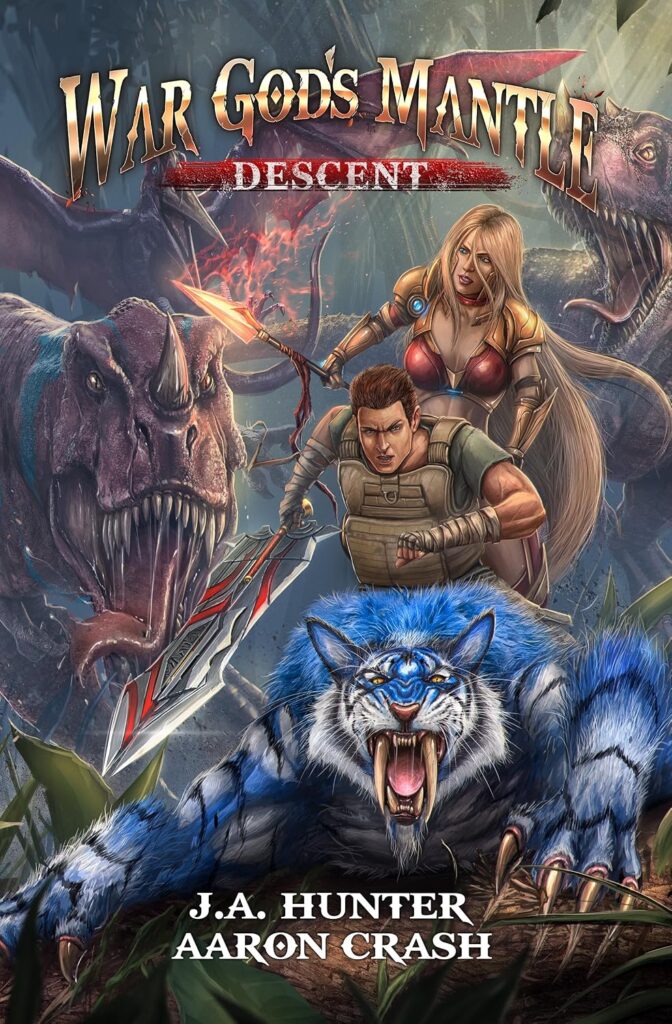
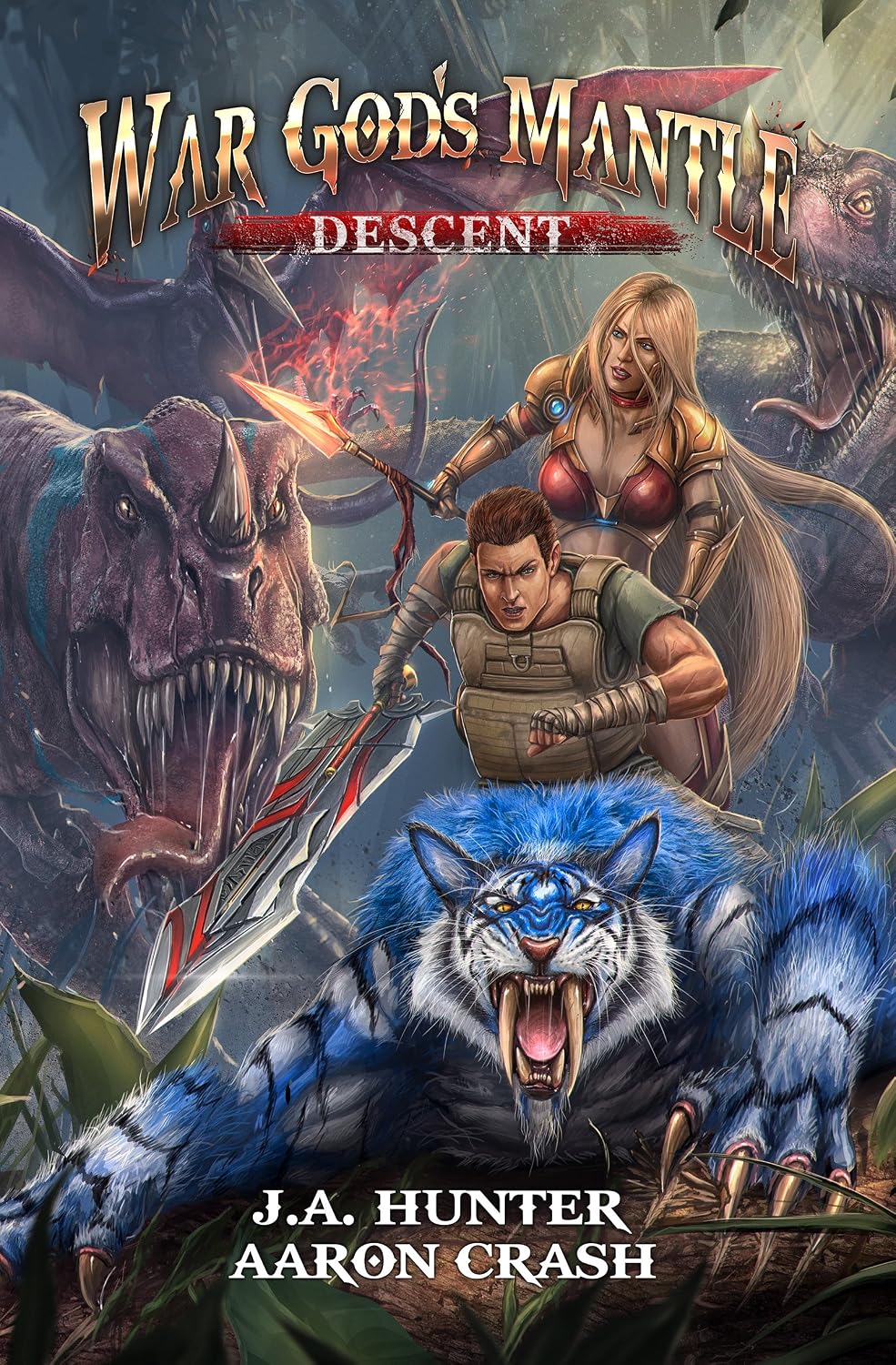
War God's Mantle: Descent continues the LitRPG adventure series published under. Picking up three weeks after the protagonist crash-landed on the mythical island of Lycastia, the story follows Jacob Merely as he settles into his role…
Quick Verdict
War God's Mantle: Descent successfully maintains the momentum established early in the series by expanding its scope, intensifying rivalries, and leaning further into high-stakes adventure. It provides a satisfying continuation for anyone invested in Jacob Merely's journey from a modern Marine to a commanding mythological figure. Recommended for fans of fast-moving LitRPG adventures who enjoy mythological world-building, base development arcs, and prominent action set pieces. Readers who demand exhaustive stat sheets or slower, more methodical political intrigue may want to weigh those preferences before diving in.
Disclosure: As an Amazon Associate, LiaGuide earns from qualifying purchases. Affiliate relationships do not determine our editorial conclusions.
Premise and Setup
Having established a fledgling city and earned the loyalty of the island's hard-charging Amazon inhabitants, Jacob faces a compounding external crisis rather than internal unrest.
The narrative stakes escalate as the mystical sigil holding Hades at bay begins to fail. Daily enemy onslaughts slowly grind down defensive forces, forcing the protagonist to look beyond immediate perimeter defense. According to publisher and reader details, the plot shifts toward a high-stakes expedition into a prehistoric world deep within the island to locate a legendary, god-slaying weapon guarded by primordial entities and an exiled Titan.
Reading Experience and Mechanics
Readers evaluating this installment can expect a noticeable escalation in pacing, combat density, and character agency compared to the series opening. Reader feedback highlights a faster narrative tempo driven by relentless action sequences and mounting tactical friction. The protagonist's progression takes a central stage as he more fully embraces his divine abilities, accompanied by sharper interpersonal conflict—particularly in the evolving dynamic between Jacob and Echo Earle.
On the structural side, the book maintains the hybrid identity of the genre without leaning into overwhelming complexity. Available observations suggest it avoids becoming overly crunchy with statistical readouts, choosing instead to integrate game mechanics smoothly into the narrative flow so that system elements remain functional without bogging down the adventure beats or slowing the momentum of the plot.
Readers opening this installment find a noticeable acceleration in momentum compared to the introductory volume. The narrative wastes little time on foundational world-building, instead thrusting the protagonist into daily defensive struggles that grind against his established forces. This constant pressure creates a relentless page-turning rhythm that hooks adventure-focused fans right from the opening chapters.
While the progression mechanics remain light on exhausting numerical tables, the stat elements still influence the plot in meaningful ways. Rather than burying the audience under spreadsheet-heavy calculations, the author weaves progression directly into the protagonist's growing command over his divine mantle and territorial defenses.
Readers considering War God's Mantle: Descent will find a narrative that leans heavily into fast-paced progression, military buildup, and heightened personal conflicts rather than granular mathematical tracking. Reader feedback highlights an increased focus on large-scale combat sequences, city development, and character growth for protagonist Jacob Merely as he settles further into his divine role.
That narrative prioritization means stat enthusiasts looking for deeply analytical mechanics or spreadsheet-heavy progression may find the system lighter than expected. While system elements remain present and drive the GameLit experience forward, they function more as a backdrop for mythologically inspired action, escalating conflicts with adversaries like Hades, and tactical maneuvers involving the Amazon forces.
Choosing this installment requires accepting a lighter statistical footprint in exchange for quicker narrative momentum. Those who prefer complex arithmetic and exhaustive inventory management might want to look toward heavily mechanical progression fantasies, whereas readers seeking high-energy escapism centered around Greek mythology will find the balance fits a brisk weekend reading session.
Regarding LitRPG mechanics, readers generally characterize the system as moderately crunchy rather than overwhelmingly complex. Gamified elements—such as leveling up, spending stat points, and acquiring new abilities—play a functional and entertaining role without bogging down the prose in endless spreadsheets. Fans of tabletop-style campaigns note that watching the protagonist refine his build gives the adventure an enjoyable, campaign-like feel.
At the same time, readers identify a notable structural blind spot regarding the antagonist's strategy. Because the story is framed around real-time strategy (RTS) style warfare, several reviews express frustration at the lack of transparency surrounding the villain's upgrade trees and tech generation. Readers note that enemy forces and maneuvers can feel a bit arbitrary or hand-wavy due to this one-sided mechanical visibility, dampening the strategic depth of the conflict.
- Mechanics offer a satisfying, accessible level of crunch without overwhelming readers.
- The RTS framework suffers from a one-sided perspective, hiding the primary antagonist's upgrade trees.
- Tabletop and gamer readers appreciate the clear progression build and stat allocation elements.
Reader Fit and Decision Signals
This novel suits fans of progression fantasy and mythological world-building who appreciate fast-moving conflicts, strategic base-building elements, and high-energy showdowns. Those who enjoyed the initial volume's blend of Greek mythology and GameLit mechanics will find the continuation leans further into its established strengths, offering more pronounced twists and larger-scale encounters.
Conversely, readers looking for granular, spreadsheet-heavy statistical optimization or slow-burn political intrigue may find the action-forward focus less aligned with their preferences. If you prefer low-action urban fantasy or hard Sci-Fi without mythological tropes, you might want to explore standard epic fantasy alternatives instead.
Character Dynamics and Mythological Conflict
Character growth stands out as a primary driver for reader engagement in this sequel. The protagonist transitions from a bewildered survivor into a confident divine ruler who fully embraces his capabilities. Alongside him, the Amazon forces receive sharper characterization, displaying increased tactical competence and surprising narrative turns that keep the interpersonal dynamics unpredictable.
Conflict expands beyond mere territorial defense through escalating tensions between key figures. The rivalry with established antagonists deepens the emotional stakes, anchoring the wild mythological elements in a personal struggle that resonates with fans of fast-paced progression fantasy.
Character interactions and relationships generate mixed reactions, particularly concerning the integration of romantic subplots and interpersonal drama. On one hand, readers warmly receive the developing dynamics between the protagonist and the formidable, highly capable Amazon forces, noting that the female characters are portrayed with striking competence and loyalty. The evolving friction and chemistry with key figures—including tech-oriented allies and old military nemeses—add welcomed fuel to the overarching narrative.
Conversely, some readers find certain relationship arcs out of character. Specifically, aspects of the harem dynamics receive mild pushback from readers who felt those elements clashed with the established tone of the story. Additionally, the dialogue style draws varied responses; while some appreciate the throwback, tough-guy quips reminiscent of classic video game protagonists, others describe the tone as leaning toward cheesy or over-the-top.
- Amazon characters are widely praised as badass, attractive, and loyal additions to the core cast.
- Some readers feel romantic or harem elements sit awkwardly within the established protagonist persona.
- Dialogue blends high-stakes mythology with retro action-hero banter, dividing preference between fun and campy.
Amplified Action Density and Pacing Shifts
Readers repeatedly point out that this sequel significantly accelerates the action and overall adventure pacing compared to its predecessor. Several supplied reviews describe a narrative engine running almost entirely on continuous combat, leveling upgrades, and escalating threats. For a large segment of the audience, this relentless momentum translates into a page-turning experience; readers mention being unable to put the book down once started, praising the sheer volume of fights and large-scale set pieces.
However, this heavy reliance on uninterrupted combat polarizes the readership. While action enthusiasts celebrate the unending string of battles against new monsters and horde defenses, dissenting readers argue that the loop feels too simplistic. One detailed review argues that the narrative structure collapses into a repetitive cycle of fighting, leveling, and brief reprieves, lacking organic flow. This friction creates a distinct divide between readers who want non-stop adrenaline and those who miss the breathing room and balanced pacing of earlier installments.
- Action enthusiasts praise the high-octane battle frequency and non-stop momentum.
- Some readers criticize the simplistic cycle of constant fights with minimal narrative downtime.
- Pacing shifts from mixed foundational elements in book one to an action-heavy sprint in this sequel.
Tactical Realism Versus Plot-Driven Combat
A recurring criticism within the reader community centers on tactical consistency during major conflicts. While the worldbuilding establishes military backgrounds and strategic stakes, a prominent critique notes that tactical awareness frequently takes a backseat to script convenience. Readers observing this flaw point out that characters will occasionally acknowledge a tactical hazard only to ignore it entirely, letting predictable plot beats override logical battlefield decisions.
This mechanical disconnect can disrupt immersion for more analytical readers. When combat choices appear engineered solely to force specific outcomes rather than reflecting smart tactical adaptations, it alienates fans who expect military-minded protagonists to behave with consistent strategic rigor. This issue ultimately drove some frustrated readers to drop the series despite otherwise enjoying the world and premise.
- Analytical readers frequently highlight lapses in tactical logic during key battles.
- Characters occasionally acknowledge tactical realities but ignore them for plot convenience.
- Strategic inconsistencies serve as a primary catalyst for negative rating drops among military-focused readers.
Pros and Cons
✓ Pros
- High-frequency combat and relentless action momentum for thrill-seeking readers.
- Accessible LitRPG leveling systems that appeal directly to tabletop and RPG fans.
- Engaging blend of Greek mythology with modern military and Sci-Fi twists.
✕ Cons
- Simplistic tactical choices during major battles can break immersion for strategic readers.
- One-sided RTS perspective leaves the primary villain's mechanics feeling opaque and hand-wavy.
- Pacing lacks organic breathing room due to the heavy concentration of back-to-back fights.
Frequently Asked Questions
Is this book heavy on complex math and stat sheets?
Readers report that the system is moderately crunchy rather than overwhelming. Stat points and leveling matter to the progression, but they do not bog down the narrative pace.
How prominent is the base-building and crafting compared to the first book?
Reviewers note that town-building and crafting take a backseat in this sequel, serving mostly as minor foundational elements while action and combat take center stage.
Final Verdict
War God's Mantle: Descent has a clear case for readers whose tastes line up with its strongest supported qualities. Two strengths stand out. One strength is its high-frequency combat and relentless action momentum for thrill-seeking readers. Another strength is its accessible LitRPG leveling systems that appeal directly to tabletop and RPG fans. The main drawback is that simplistic tactical choices during major battles can break immersion for strategic readers. If that trade-off conflicts with your reading preferences, this is an easy title to skip; otherwise, the review evidence supports keeping it on your reading list.
See current book details
Check the current formats and listing details for War God's Mantle: Descent: A LitRPG Adventure on Amazon.
View on AmazonAffiliate link. Product details may change.