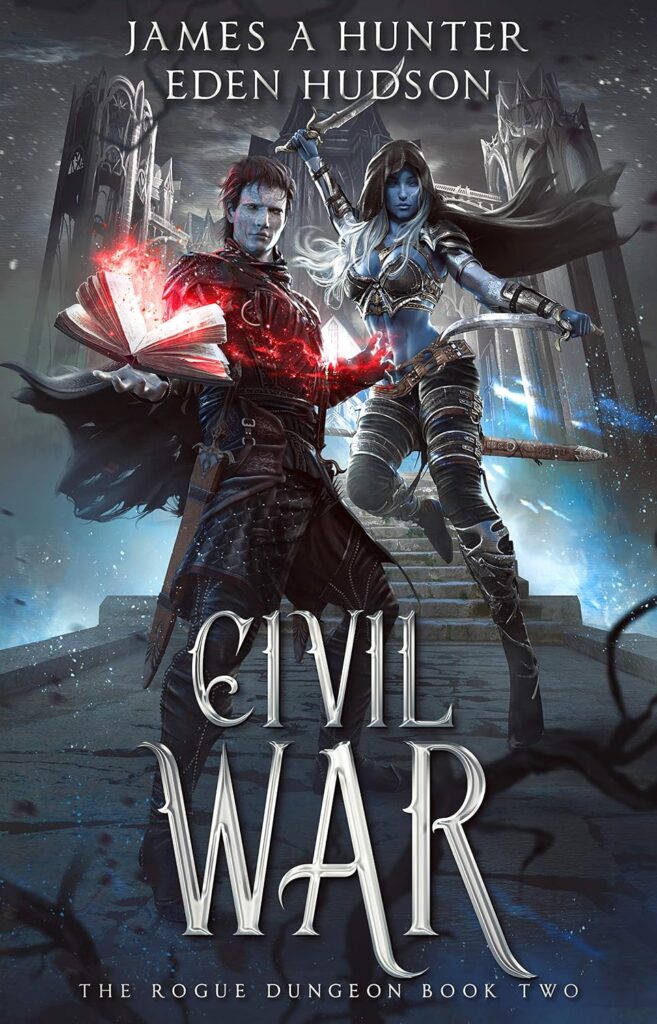
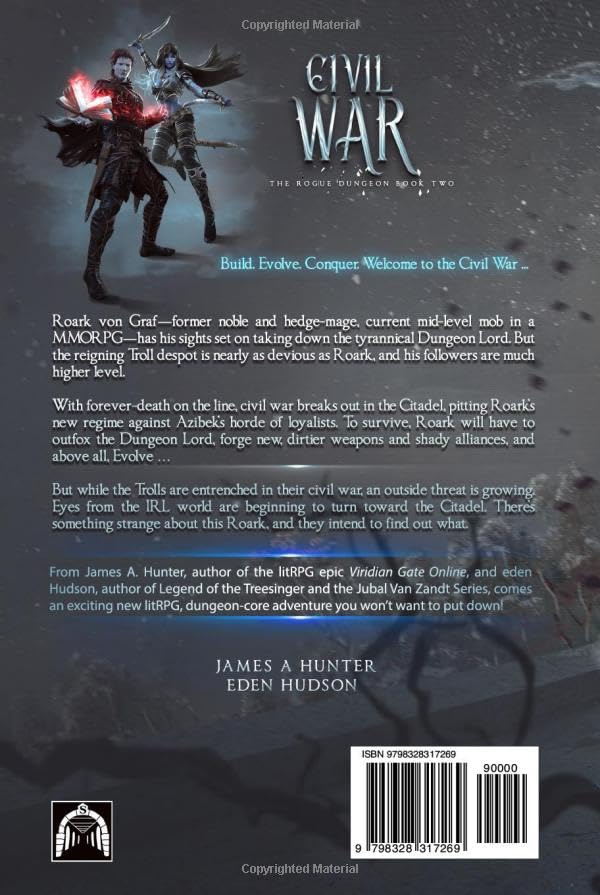
Civil War: A LitRPG Adventure (The Rogue Dungeon) shifts the focus from external dungeon survival to internal insurrection. Written by James A. Hunter and eden Hudson, the narrative centers on Roark von Graf, a former noble and hedge-mage…
Quick Verdict
Civil War delivers a high-stakes, twist-filled continuation for followers of James A. Hunter and eden Hudson's collaborative litRPG universe. Supported by steady character growth, loyal companion dynamics, and engaging tactical pacing, it avoids the middle-book slump common in long-running dungeon-core series. For anyone already invested in Roark von Graf's descent and survival inside the MMORPG machine, this installment offers a compelling blend of humor, grit, and unexpected narrative left turns.
Disclosure: As an Amazon Associate, LiaGuide earns from qualifying purchases. Affiliate relationships do not determine our editorial conclusions.
Premise and Internal Conflict
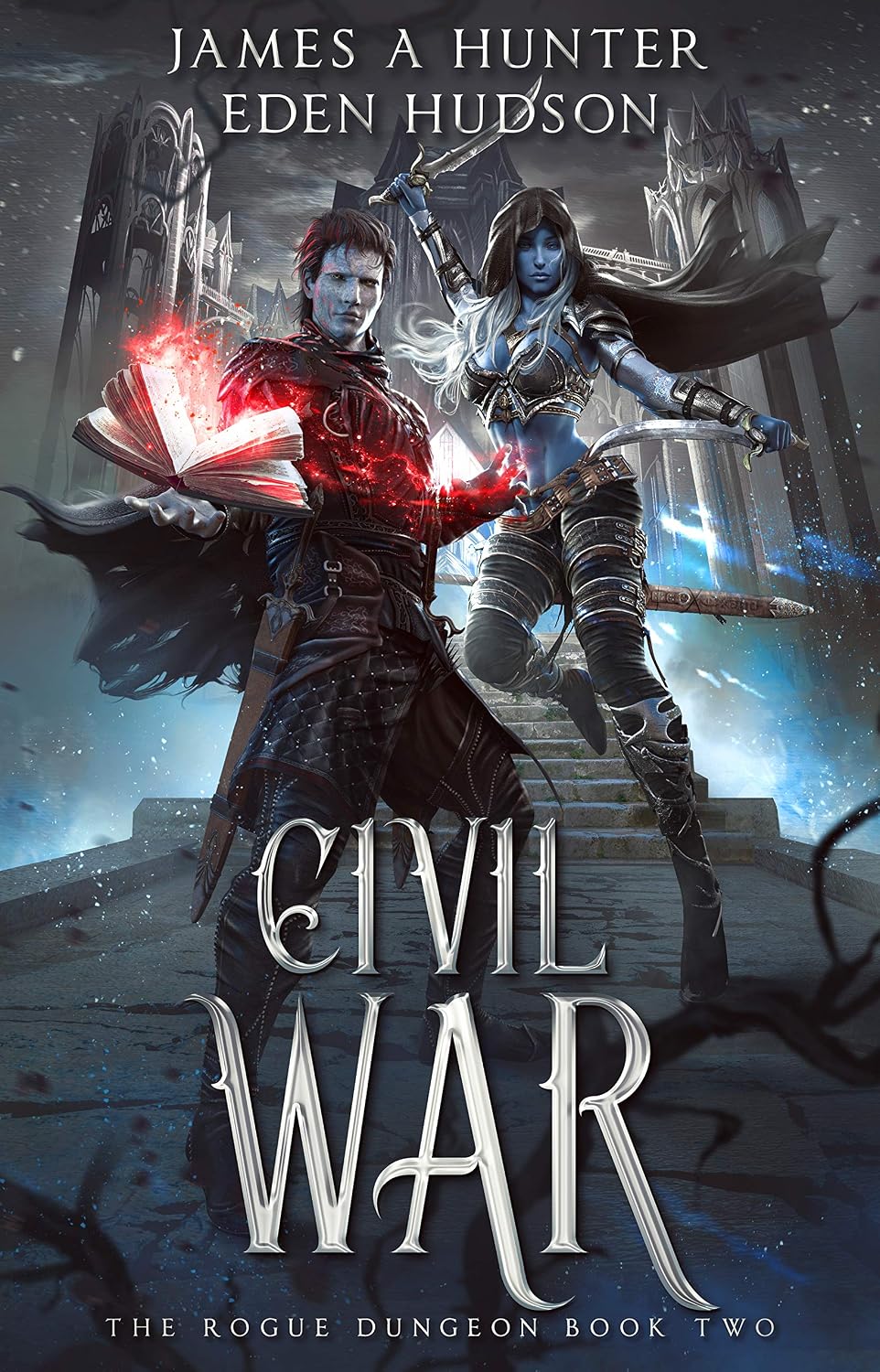
Civil War: A LitRPG Adventure (The Rogue Dungeon) shifts the focus from external dungeon survival to internal insurrection. Written by James A. Hunter and eden Hudson, the narrative centers on Roark von Graf, a former noble and hedge-mage operating as a mid-level mob inside a massively multiplayer online role-playing game. Roark targets the tyrannical Dungeon Lord, Azibek, sparking a high-stakes power struggle within the Citadel.
With permanent death hanging over the characters, the power balance splits the fortress between Roark's newly formed regime and Azibek's loyalist horde of high-level Trolls. Surviving this fracture requires more than raw stats. Roark must engineer unorthodox weaponry, forge risky alliances, and continuously evolve his capabilities while the Citadel tears itself apart from the inside.
Beneath the immediate factional violence, the plot introduces a secondary external pressure. Observers from the real world begin turning their gaze toward the Citadel, noticing anomalous behavior in Roark that demands investigation. This layer introduces a subtle narrative boundary between the in-game rebellion and outside oversight.
Reading Experience and Pacing
Reader feedback highlights a steady rhythm that balances tactical preparation with explosive bursts of action. Rather than bogging down in repetitive stat blocks or static world-building, the pacing maintains momentum even during lulls between major skirmishes. This structure supports an engaging, continuous reading flow rather than a fragmented episodic progression.
Character progression avoids the common pitfall of sidelining supporting figures. Feedback emphasizes that companions like Kaz and Zyra maintain active developmental momentum alongside the protagonist. Their growing loyalty anchors the emotional stakes of the narrative, ensuring the internal faction war feels personal rather than purely mechanical.
Reader Fit and Decision Signals
This installment suits readers who enjoy systemic progression fantasies featuring underdog protagonists, tactical manipulation of game rules, and escalating political friction within a confined setting. Those who appreciate steady character growth paired with unexpected narrative twists will find plenty of engagement here.
Readers should skip this book if they prefer standalone adventures disconnected from an ongoing series arc, or if they dislike MMORPG mechanics interwoven with traditional fantasy tropes. Because the plot relies heavily on established faction dynamics and prior character relationships within the Citadel, newcomers unfamiliar with the series setup may want to start with earlier volumes.
Progression Dynamics and Character Evolution
The narrative architecture hinges on the unique premise of a former noble turned mid-level mob working his way up against a tyrannical Dungeon Lord. Rather than relying on static power jumps, the progression model weaves strategic maneuvering, weapon crafting, and shifting faction alliances directly into Roark von Graf's upward trajectory. Reader feedback highlights how this internal power struggle avoids feeling stagnant, maintaining a steady and rewarding sense of momentum as the protagonist adapts to mounting threats.
Character depth receives considerable heavy lifting from supporting figures like Kaz and Zyra, whose loyalty anchors the protagonist amidst escalating chaos. This interpersonal dynamic prevents the litRPG mechanics from swallowing the human elements of the story, ensuring that tactical choices carry emotional weight. For readers who enjoy watching an underdog systematically outsmart higher-level adversaries through ingenuity rather than sheer brute force, this volume delivers a satisfying escalation in scale.
Pacing and Twist Integration
Maintaining engagement during transitional chapters is a notorious hurdle for serialized progression fantasy, yet this installment avoids mid-book slumps by tightly interweaving quiet tactical planning with explosive bursts of conflict. The narrative structure keeps the stakes high with the looming threat of forever-death, forcing every internal faction dispute to matter. Review patterns consistently emphasize an inability to put the book down, pointing to well-paced sequencing that prevents lulls between major set-pieces.
Compounding this momentum are narrative curveballs that arrive without heavy-handed foreshadowing. These unexpected plot shifts manage to alter the strategic landscape of the Citadel without feeling unearned or chaotic. Readers who prefer predictable linear trajectories might find themselves jolted by these left-field developments, but those who relish being routinely outguessed by the authors will find plenty to parse and enjoy.
Reading Trade-offs and Pacing Realities
Readers diving into Civil War: A litRPG Adventure (The Rogue Dungeon) should anticipate a narrative heavily anchored in mechanical progression and faction strategy. Because the core premise traps a former noble inside a mid-level MMORPG mob structure, much of the runtime is devoted to tactical upgrades, crafting dirty weapons, and managing internal Citadel politics. If you prefer sweeping fantasy sagas driven entirely by high-concept emotional drama rather than system alerts, stat growth, and localized skirmishes, certain pacing stretches centered on rebellion logistics might feel granular.
Conversely, reader feedback highlights that the pacing successfully balances these system-heavy strategy intervals with sudden bursts of action and unexpected plot shifts. The narrative keeps momentum high by intertwining the internal rebellion against the Troll despot with looming external threats from the real world. Readers who enjoy watching a clever underdog outmaneuver statistically superior foes will find the tactical payoff rewarding, provided they appreciate spreadsheets and leveling logic woven directly into the narrative fabric.
- Best suited for fans of progression fantasy who enjoy faction wars, base-building elements, and detailed stat-driven survival mechanics.
- Readers seeking purely character-driven literary fiction without game mechanics or leveling loops may want to explore traditional epic fantasy instead.
Final Verdict
Civil War has a clear case for readers whose tastes line up with its strongest supported qualities.
See current book details
Check the current formats and listing details for Civil War: A litRPG Adventure on Amazon.
View on AmazonAffiliate link. Product details may change.