In James A. Hunter and eden Hudson's cooperative litRPG novel Rogue Dungeon, the political struggles of a dying magical rebellion collide head-on with digital game mechanics. Roark von Graf is a hedge mage and one of the last…
Quick Verdict
Co-authored by James A. Hunter and eden Hudson, Rogue Dungeon successfully bridges fast-paced rebellion tropes with lighthearted gaming tropes. Dakota Krout praises the book as an excellent start to a series packed with action, intrigue, and evolution, aligning closely with reader observations about its brisk pacing and engaging protagonist. It avoids getting bogged down in overly dense setup, launching the main character straight into an unexpected digital predicament without sacrificing narrative urgency. For readers weighing whether to add this to their digital shelf, the decision comes down to your appetite for game-lit conventions. If you appreciate witty world-building, clever system manipulation, and a protagonist who treats monster classification as a temporary inconvenience, this adventure earns a solid recommendation for your reading rotation.
Disclosure: As an Amazon Associate, LiaGuide earns from qualifying purchases. Affiliate relationships do not determine our editorial conclusions.
Opening and Premise
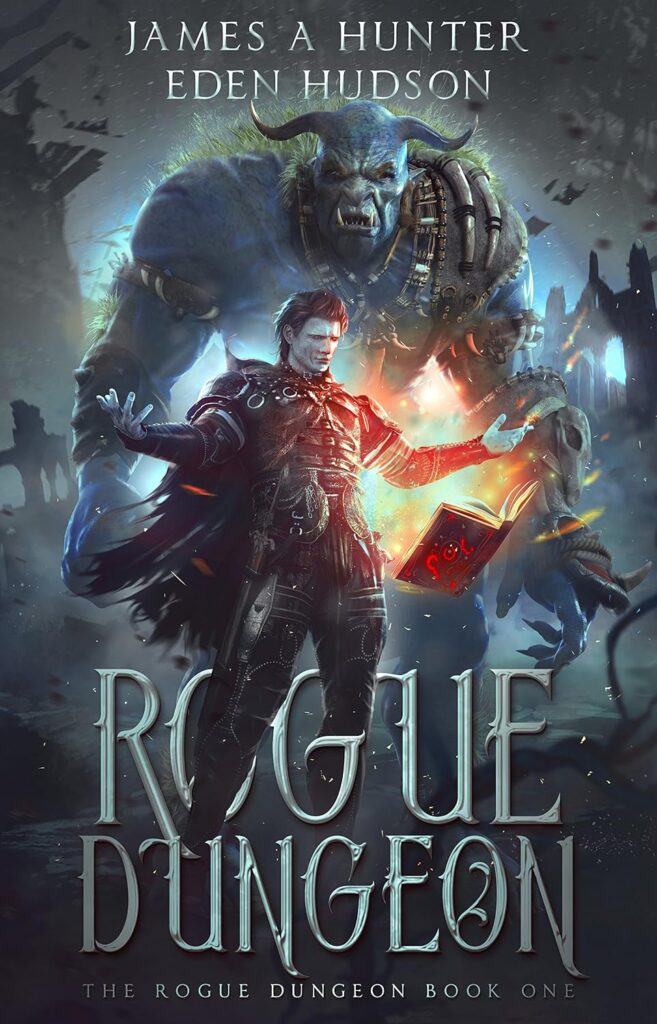
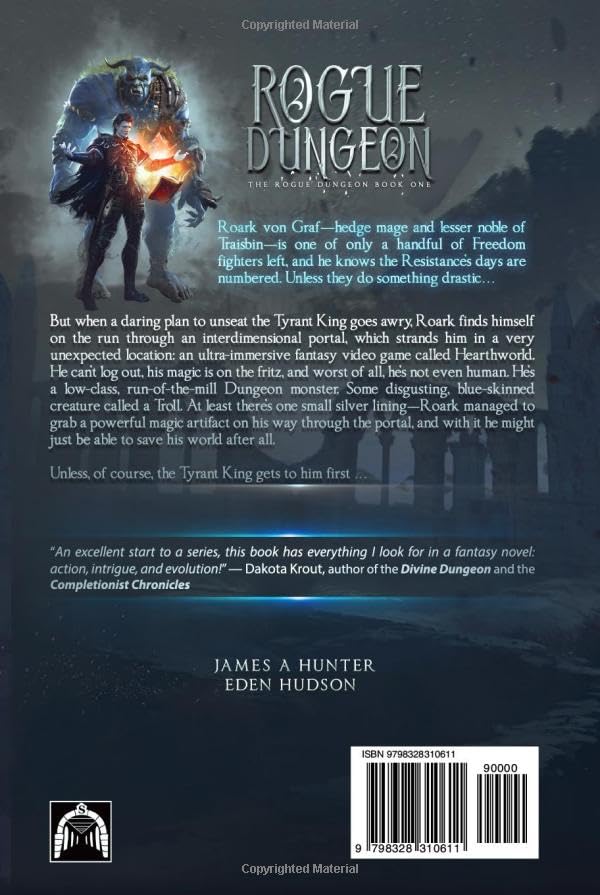
In James A. Hunter and eden Hudson's cooperative litRPG novel Rogue Dungeon, the political struggles of a dying magical rebellion collide head-on with digital game mechanics. Roark von Graf is a hedge mage and one of the last remaining freedom fighters in the land of Traisbin. Knowing that the oppressive Tyrant King is slowly crushing the Resistance, Roark and his allies execute a high-stakes, desperate plot to unseat him.
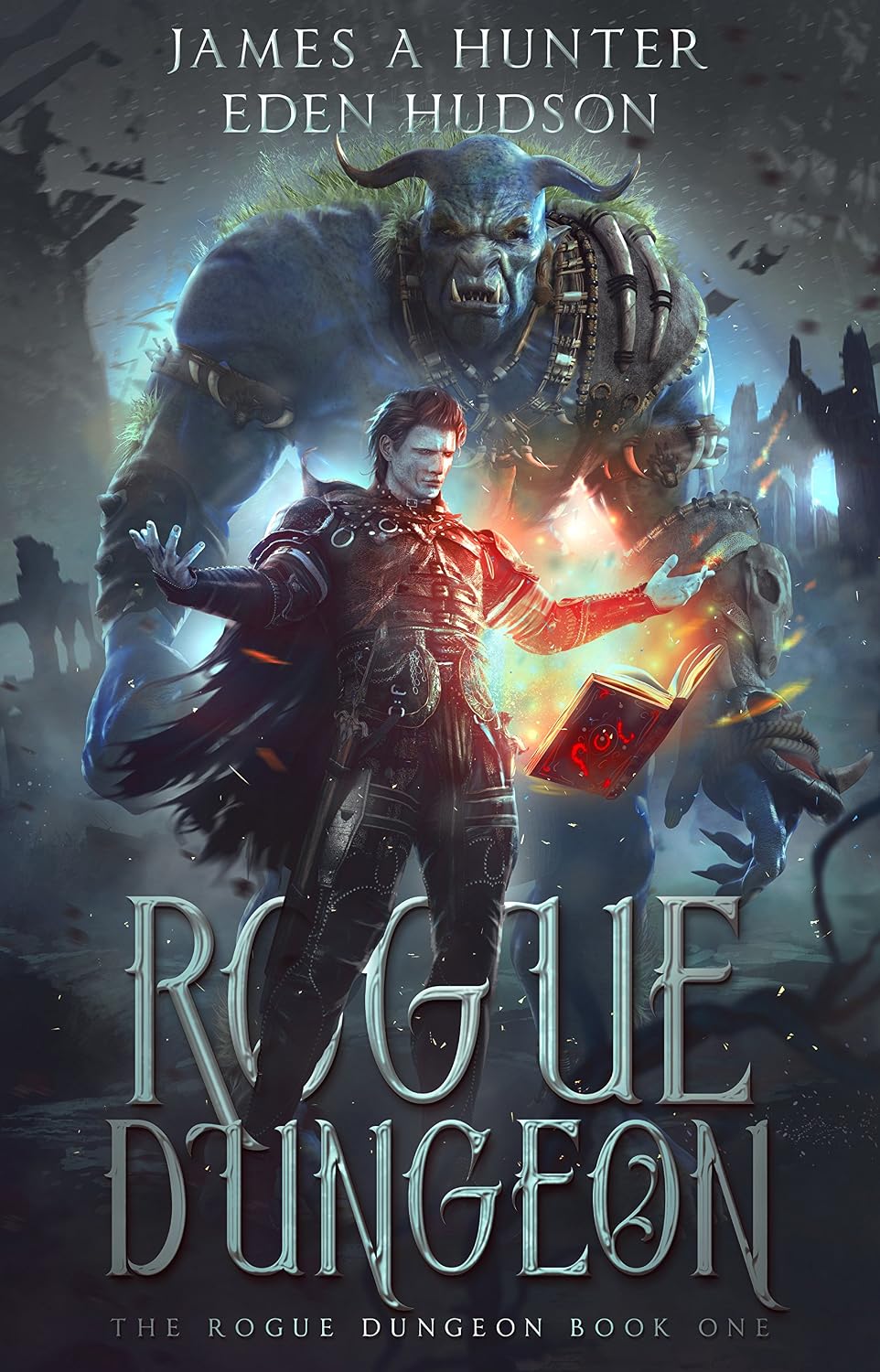
That plan violently unravels, hurling Roark through an interdimensional portal and stranding him inside an ultra-immersive fantasy simulation known as Hearthworld. He can neither log out nor rely on his familiar magic, which malfunctions in the new environment. Matters worsen when he realizes he is no longer human; he has been thrust into the body of a low-level, blue-skinned dungeon troll. Armed only with a world-breaking artifact he managed to smuggle through the portal, Roark must navigate the brutal ecosystem of an MMORPG from the perspective of an NPC with player-like capabilities.
Reading Experience and Narrative Style
Co-authors James A. Hunter—widely known for Viridian Gate Online—and eden Hudson craft a fast-moving narrative built around classic game-world progression, tactical problem-solving, and sudden bursts of action. Reader feedback indicates that the story leans heavily into the fish-out-of-water trope, contrasting Roark's serious, rebellion-forged mindset with the arbitrary, rule-bound systems of a literal video game.
Rather than bogging down the opening chapters with endless exposition, the book quickly establishes the stakes of Roark's predicament before leaning into rapid character evolution and mechanical discovery. As noted by fellow litRPG author Dakota Krout, the novel delivers a blend of action, political intrigue, and steady progression that drives the pacing forward without sacrificing world-building.
- High-velocity progression emphasizing quick level gains and tactical combat advantages.
- A clever inversion of standard tropes by placing a high-fantasy rebel into a low-level monster role.
- Balanced integration of game statistics and traditional fantasy narrative stakes.
Early Reader-Fit Signals
This adventure is well-suited for fans of game-lit, dungeon-core setups, and progression fantasy who enjoy watching a protagonist exploit system mechanics to punch well above their weight class. If you appreciate stories where characters acquire game-breaking artifacts early on and have to figure out how to survive the resulting chaos, the opening chapters establish an engaging rhythm right away.
However, readers who prefer traditional high-fantasy storytelling unburdened by stat sheets, inventory management, or explicit RPG rules will want to look toward conventional epic fantasy alternatives. Similarly, those who dislike anti-heroes thrust into non-human avatars may find the initial monster-survival phase less appealing.
Mechanics, Progression, and the Troll Experience
Readers diving into Rogue Dungeon encounter a distinct flavor of progression fantasy where traditional high-stakes resistance plotting collides head-on with game-world mechanics. The narrative pivots on a hedge mage who abruptly transitions from fighting an oppressive regime in a magic-bound reality to being trapped inside an ultra-immersive MMORPG environment. Instead of retaining standard human privileges, the protagonist finds himself re-embodied as a low-level, blue-skinned troll NPC wielding player-like capabilities.
This premise sets up an entertaining friction between familiar tabletop-style rule sets and the protagonist's desperate survival instincts. Review feedback highlights how the story handles this transition: rather than flattening the world into pure stat sheets, the authors balance system notifications, skill upgrades, and dungeon crawling with active character motivation. Gamers and litRPG veterans will recognize the rhythm of leveling up, managing loot, and exploiting game loops, while fantasy readers get the added tension of a displaced rebel trying to reverse-engineer a digital reality using an overpowered artifact he smuggled across the portal threshold.
- Blends high-stakes rebellion plotting with traditional MMORPG leveling mechanics.
- Features an unconventional protagonist trapped in the body of a low-class troll monster.
- Maintains a brisk progression curve driven by an unusually powerful smuggled artifact.
Pacing, Tone, and Collaborative Style
Co-authored by James A. Hunter and eden Hudson, the novel moves at a rapid clip designed to keep pages turning without bogging down in exhaustive lore dumps. The tone leans heavily into adventurous escapism, combining dark fantasy underpinnings with wry humor over the protagonist's sudden demotion to monster status. It avoids taking itself too grimly, giving the narrative an energetic bounce that appeals to fans of fast-paced progression loops.
At the same time, readers should note that this opening volume focuses primarily on establishing the world, foundational rules, and the initial stages of the protagonist's monstrous evolution. While praised as an excellent starting point that delivers plenty of action and intrigue, those who prefer deeply completed story arcs within a single standalone book will want to keep in mind that this is very much the launching pad for a broader series.
- Co-authored narrative style that prioritizes momentum and lighthearted survival friction.
- Serves as an introductory volume laying groundwork for a larger multi-book series.
- Well-suited for readers who enjoy fast-moving setup, dungeon mechanics, and monster evolution.
Reading Trade-offs and Genre Fit
Readers diving into Rogue Dungeon should expect a specific blend of portal fantasy and system-driven progression mechanics. The narrative pivots heavily on a high-stakes escape that abruptly strands a seasoned rebel inside a rigid gaming environment. For fans of game-lit fiction who enjoy watching protagonists decode rules, min-max abilities, and exploit system loopholes, this setup delivers immediate traction. At the same time, traditional fantasy purists who prefer organic magic systems without status windows or numerical leveling metrics may find the constant mechanical framing disruptive to the narrative flow.
A central tension in the storytelling stems from the protagonist's dual identity: a refugee carrying world-breaking magic forced to operate within the constraints of a low-class dungeon monster body. This creates an entertaining friction between high-level tactical competence and low-level starting stats. Reviewers note that watching Roark navigate MMORPG mechanics as an NPC with player capabilities offers a fresh angle on standard progression tropes. However, readers wanting a slow, gritty survival crawl might find the protagonist's early acquisition of a powerful artifact speeds past some of the traditional danger associated with starting at the bottom.
- Best suited for fans of litRPG, dungeon-core adventures, and strategic system exploitation.
- Skip if you dislike numerical stats, status screens, or video-game logic superimposed onto fantasy worlds.
- Look toward traditional portal fantasy or epic sword-and-sorcery novels if you prefer zero game mechanics.
Inversion and the Monster Perspective
Several supplied reviews describe how the novel breaks away from conventional portal-fantasy formulas by avoiding the standard trope of a human player or hero getting sucked into a digital world. Instead, the protagonist—a hedge mage and freedom fighter named Roark—is unceremoniously hurled through an interdimensional portal into an ultra-immersive MMORPG called Hearthworld, where he awakens not as an elite half-elf assassin or warrior, but as a low-level, blue-skinned dungeon monster.
This role reversal is repeatedly praised as a refreshing change of pace. Readers note that because Roark comes from a traditional fantasy background with its own magical rules, he doesn't perceive his new environment as a literal video game. To him, Hearthworld is simply an absurdly strange alternate dimension governed by rigid, incomprehensible laws. He has to puzzle out his interface, stats, and objectives with zero meta-gaming awareness, treating incoming player-characters not as gamers having fun, but as murderous invaders threatening his survival.
Beyond the protagonist himself, readers point out that the narrative deliberately flips the script on dungeon ecology. Rather than functioning as mindless cannon fodder meant to die endlessly for player progression, the low-level monsters—including changelings and salamanders—possess their own culture, daily routines, and a desperate desire to survive. Roark's campaign involves organizing these marginalized creatures into a functioning community, creating an engaging shift from the traditional hero's journey to a collective defense of the underdog.
- Features a protagonist transformed into a low-level dungeon mob rather than an overpowered human hero.
- Characters interpret game rules as natural laws of a bizarre new reality rather than computer software.
- Focuses on mob culture and collective survival against invading player characters.
Character Dynamics and Misfit Allies
The supporting cast receives considerable attention from readers who appreciate how a band of quirky secondary characters anchors the narrative's lighter moments. Reviewers frequently highlight Kaz, a fellow changeling who acts as Roark’s guide and primary mentor in navigating Hearthworld’s strange ecosystem. Their dynamic provides both necessary exposition and sharp banter as they figure out how to survive the relentless cycle of player raids.
Another standout favorite among readers is Macaroni, a stone salamander companion who functions more like an exotic pet than a strategic combatant, yet garners immense affection for adding charm to the monster enclave. These relationships inject warmth into what could otherwise be a purely mechanical grind-and-level routine, giving the protagonist tangible reasons to care about his surroundings beyond his ultimate goal of returning to depose his home world's tyrant.
At the same time, character writing draws a specific line of critique from a minority of readers. A recurring observation points out that the protagonist embodies a very familiar archetype: the snarky, arrogant smart-ass who is morally flexible yet somehow driven by a core desire to protect his followers. While many find this bravado thoroughly entertaining, a dissenting reviewer argues that this personality type feels overly derivative, expressing frustration that the main character's familiar swagger can occasionally wear thin.
- Kaz the changeling serves as a vital guide and witty foil for the protagonist.
- Macaroni the salamander emerges as a fan-favorite creature companion.
- Some readers critique the protagonist's snarky, arrogant archetype as a repetitive genre trope.
Mechanics, Crunch, and Genre Accessibility
When it comes to LitRPG mechanics, multiple reviewers highlight the story's careful balancing act between crunch and readability. The novel incorporates a classic MMO stat, leveling, and evolution system reminiscent of monster-progression stories, but manages the data presentation so that it enhances the narrative rather than bogging it down. Stat charts and level transitions are clearly demarcated—often using italics—to mark when characters acquire new skills or cross evolutionary thresholds.
A particularly noteworthy aspect emphasized in several reviews is the book's accessibility to absolute beginners. Readers who had never encountered the LitRPG genre before, or whose video game experience extended no further than casual mobile games, report that the story's intuitive onboarding allowed them to catch on quickly. Because Roark himself is learning the system from scratch, the reader learns alongside him without feeling overwhelmed by dense mathematical formulas or heavy jargon.
At the same time, readers observe that traditional dungeon-master and base-building mechanics are introduced relatively late in the narrative and occupy a smaller fraction of the overall plot than anticipated. Those looking for an in-depth management simulation find that the story leans much more heavily into fast-paced tactical skirmishes and slice-of-life monster interactions rather than intricate architectural design.
- Stats and level-ups are clearly formatted using italics and concise charts to avoid clutter.
- Highly accessible to readers unfamiliar with traditional LitRPG conventions.
- Base-building and dungeon-master elements appear late and play a relatively minor role.
Pacing, Structure, and Reader Disagreements
Reader experiences diverge notably when discussing the narrative's pacing and structural progression. A segment of the audience notes that the opening chapters require a brief adjustment period, feeling slightly slow before the protagonist crosses the portal into Hearthworld around the eleven percent mark. Once the transition occurs, however, the story shifts into a fast-paced rhythm characterized by escalating skirmishes against raiding adventurers, local exploration, and episodic slice-of-life adventures.
A distinct point of debate arises around the book's overarching plotting and ending momentum. While many praise the narrative for maintaining high energy and delivering a satisfying stopping point that avoids a frustrating cliffhanger, a detailed critique focuses on the introduction of threats from the protagonist's original homeworld. One reviewer argues that bringing elements of the primary antagonist's faction back into play too early creates a narrative tension problem, forcing either an abrupt power-scaling montage or artificial stalling to keep the overpowered villain from overwhelming the developing hero prematurely.
Additionally, format-specific feedback highlights the audio adaptation as a major enhancement. Listeners point out that professional narration significantly elevates the comedic timing and distinct personalities of the monster ensemble, making the listening experience particularly recommended for those exploring the hybrid subgenres of portal fantasy and monster evolution.
- Pacing starts deliberately before accelerating once the protagonist enters the game world.
- Readers debate the narrative wisdom of introducing primary homeworld villains too early in the series arc.
- Audiobook narration receives praise for strengthening character voices and comedic delivery.
Pros and Cons
✓ Pros
- Inverts standard portal tropes by casting the protagonist as a low-level dungeon monster rather than an elite human hero.
- Remarkably accessible to readers with no prior exposure to LitRPG or MMORPG mechanics.
- Engaging supporting cast of monster allies, including fan-favorite creatures like Macaroni the salamander.
✕ Cons
- Some readers feel the protagonist relies on a tired, snarky smart-ass archetype.
- Dungeon management and base-building elements are introduced late and remain relatively minimal.
- Early homeworld antagonist integration threatens to force rushed power-scaling in future installments.
Frequently Asked Questions
Do I need to understand video game mechanics or MMORPGs to enjoy this book?
Multiple reviewers emphasize that no prior gaming background is required. Because the protagonist enters the digital world with zero gaming knowledge and learns the rules organically, readers unfamiliar with the genre can easily follow along.
Is this a pure dungeon-building story or does it focus on other elements?
Readers note that traditional dungeon-master mechanics appear late in the story and occupy a relatively small percentage of the plot. The narrative focuses much more heavily on portal-fantasy survival, monster evolution, and episodic skirmishes against invading players.
Final Verdict
Rogue Dungeon has a clear case for readers whose tastes line up with its strongest supported qualities. Its clearest strengths are inverts standard portal tropes by casting the protagonist as a low-level dungeon monster rather than an elite human hero. and Remarkably accessible to readers with no prior exposure to LitRPG or MMORPG mechanics. The main reason to hesitate is some readers feel the protagonist relies on a tired, snarky smart-ass archetype. If that trade-off conflicts with your reading preferences, this is an easy title to skip; otherwise, the review evidence supports keeping it on your reading list.
See current book details
Check the current formats and listing details for Rogue Dungeon: A litRPG Adventure on Amazon.
View on AmazonAffiliate link. Product details may change.