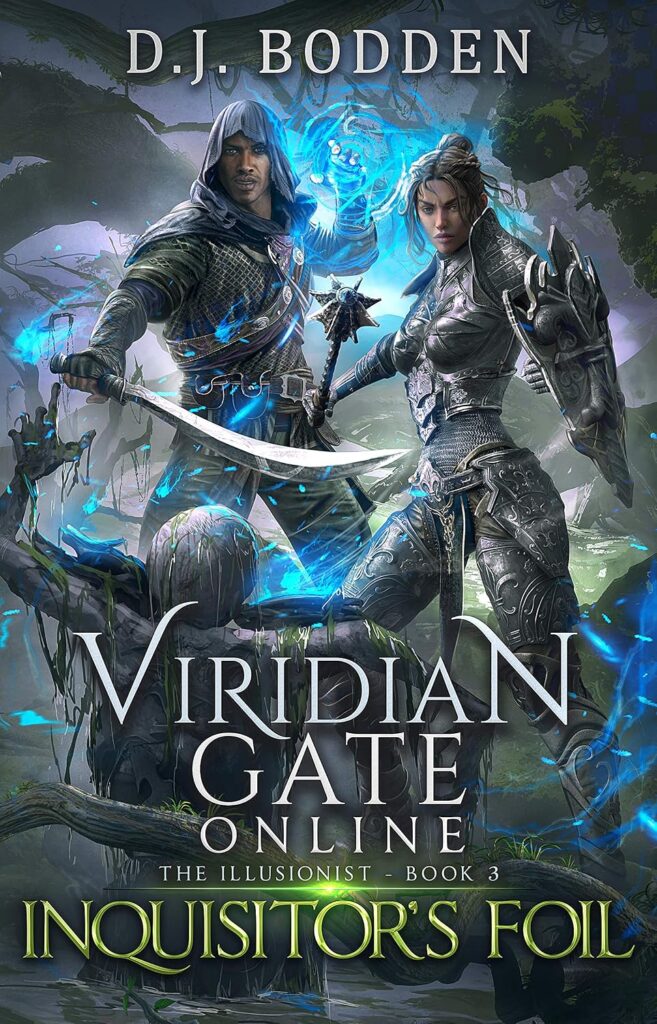
Inquisitor's Foil steps back into the expansive, high-stakes virtual reality of the Viridian Gate Online universe, co-authored by James A. Hunter and D.J. Bodden. As the third installment in the Illusionist series, the narrative follows Alan Campbell—part-time Imperial…
Quick Verdict
Inquisitor's Foil successfully delivers a high-stakes chapter for followers of the Illusionist series, blending brazen thievery, dark fantasy elements, and real-world corporate drama. It acts as a rewarding continuation for invested readers, even if its sprawling ensemble cast and dual-world focus demand a bit more patience from casual fans of the broader universe.Disclosure: As an Amazon Associate, LiaGuide earns from qualifying purchases. Affiliate relationships do not determine our editorial conclusions.
Premise and Setup
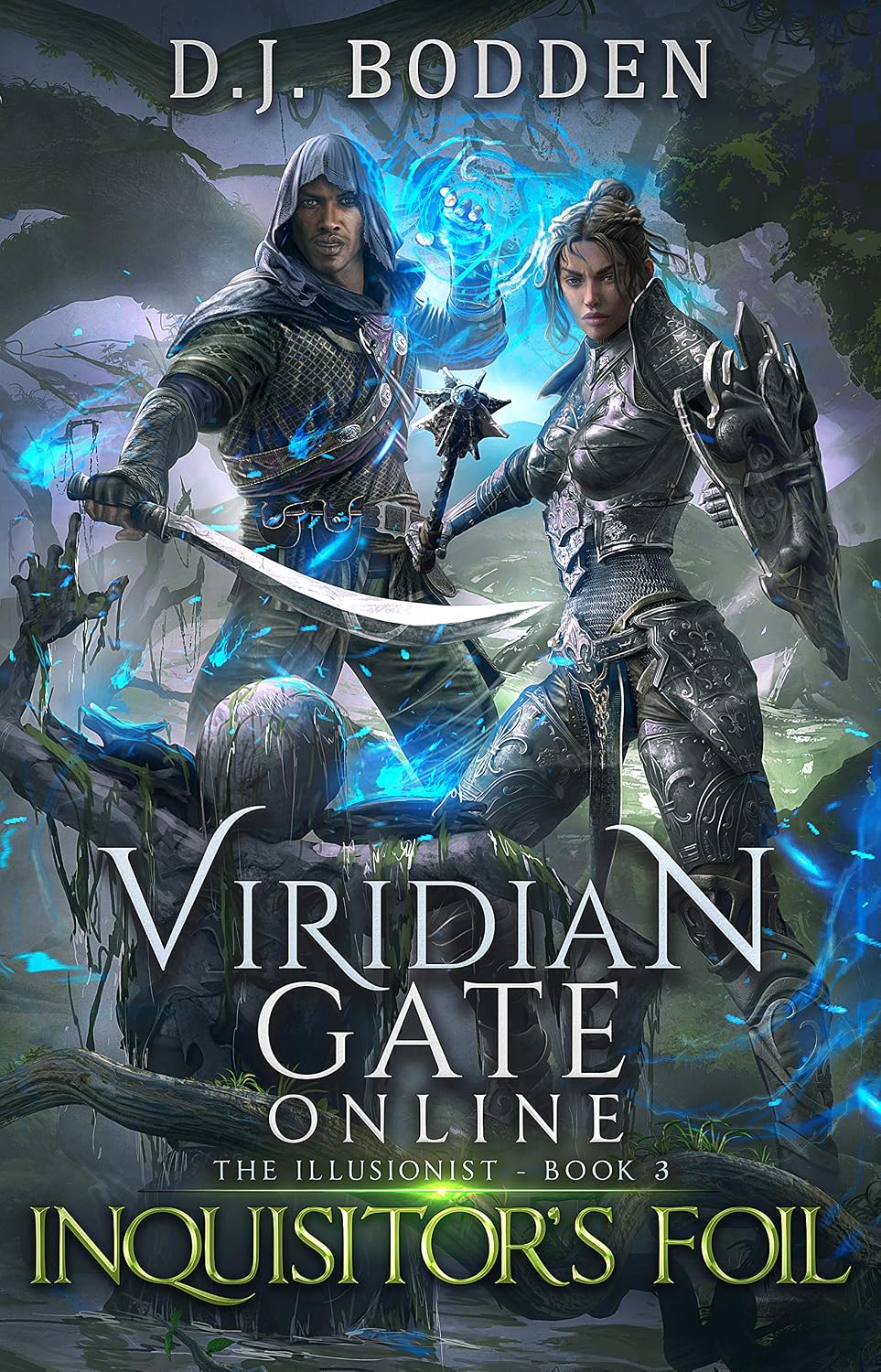 Fresh off parting ways from a previous relationship, Alan finds his path colliding with Lady Camilla Favonius of the Imperial Inquisition, a formidable figure clad in field-ready plate armor.
Beyond local romance and undercover espionage in the city of Harrowick, the scope widens toward the dangerous expanse of the Grass Sea. Alan must tangle with a corrupt syndicate, secure a footing in the Thieves' Union, and contend with monsters and the risen dead. Meanwhile, back in the real world, Robert Osmark faces critical business pressures that threaten his livelihood, while secondary characters Sandra and Jeff are forced to take sides as impending conflicts draw near.
Fresh off parting ways from a previous relationship, Alan finds his path colliding with Lady Camilla Favonius of the Imperial Inquisition, a formidable figure clad in field-ready plate armor.
Beyond local romance and undercover espionage in the city of Harrowick, the scope widens toward the dangerous expanse of the Grass Sea. Alan must tangle with a corrupt syndicate, secure a footing in the Thieves' Union, and contend with monsters and the risen dead. Meanwhile, back in the real world, Robert Osmark faces critical business pressures that threaten his livelihood, while secondary characters Sandra and Jeff are forced to take sides as impending conflicts draw near.
Reading Experience and Tone
Readers jumping into this volume will encounter a blend of fast-paced LitRPG progression, street-level thievery, and high-fantasy tension. The writing leans heavily into its dual-layered setup, balancing the immediate virtual survival mechanics and faction politics of Alan's adventures with the pressing real-world stakes impacting Robert Osmark's company. Evidence from early series engagement highlights a strong appreciation for established character dynamics—particularly the inclusion of companions like Jeff—and the pacing of Alan's chaotic trajectory. Rather than slowing down for deep exposition, the narrative relies on momentum, moving swiftly from underworld heists to expansive regional threats. James A. Hunter and D.J. Bodden maintain a brisk momentum as Alan Campbell transitions from the urban confines of Harrowick into the perilous expanses of the Grass Sea. Rather than lingering on drawn-out exposition, the narrative splits its attention cleanly between fast-moving LitRPG mechanics and high-stakes social navigation. Readers looking for steady leveling milestones will find that the authors keep the character progression tied tightly to immediate survival challenges, corrupt syndicates, and rising undead threats rather than slow grinding sequences. The pacing also balances the dual-world friction effectively. Intermittent shifts back to the real-world stakes surrounding Robert Osmark and company provide necessary dramatic breathing room without derailing the momentum of Alan's virtual escapades. While fast-paced progression appeals directly to fans of adventure-heavy progression fantasy, those who prefer deep, meticulous exploration of secondary factions might find that the plot moves a bit too swiftly through major geographic transitions. A recurring friction point among readers involves the pacing distribution across the narrative. One detailed review argues that the book takes a considerable amount of time to truly gain momentum, noting that the opening portions can feel somewhat slow or less engaging for portions of the audience. However, these same readers frequently emphasize that the narrative payoff more than compensates for the initial buildup, pointing out that the final third accelerates dramatically into a true page-turner. This structural choice alters the reading rhythm compared to preceding books. Several audience members observe that this installment trades away a portion of constant, relentless action in favor of broader character perspectives and intricate world-development threads. While franchise loyalists generally appreciate the expanded look at how different factions and overminds operate, readers looking for non-stop pacing may need to exercise patience during the middle stretches before reaching the explosive concluding momentum.- Opening and middle chapters prioritize setup, leading to a notably slower initial rhythm.
- The final third of the book delivers a sharp acceleration in pacing and engagement.
- Reduced immediate action allows for a greater emphasis on multi-thread perspectives.
Reader-Fit Signals
This book is a strong match for dedicated followers of the Viridian Gate Online expanded universe who appreciate character-driven LitRPG adventures featuring rogue archetypes, clever schemes, and shifting political alliances. If you enjoyed the first two volumes of the Illusionist series, this continuation delivers a direct extension of those plot threads and character arcs. On the other hand, readers seeking a standalone entry point or those who prefer strictly grounded, non-gaming fantasy worlds should skip this specific volume in favor of an independent epic fantasy series. Newcomers to the setting will want to start with earlier books in the overarching franchise to fully appreciate the overlapping real-world and virtual stakes. Jumping into Inquisitor's Foil requires an appetite for expanding world-building alongside fast-moving serial fiction. Readers who enjoy tracking dual stakes—balancing Alan Campbell's in-game exploits against Robert Osmark's real-world corporate pressures—will find plenty of narrative traction here. However, those looking for a standalone adventure or a streamlined, single-focus plot may find the shifting perspectives between virtual dangers and physical reality introduces a fragmented reading rhythm. The story broadens its scope significantly by moving from the city of Harrowick out to the Grass Sea, introducing new factions like the Thieves' Union and the Imperial Inquisition. While this scale expansion satisfies fans of expansive LitRPG universes, it also means the narrative spends less time on deep-dive mechanical progression and more on political maneuvering, romance subplots, and faction conflict. This installment is an easy recommendation for established fans of James A. Hunter and D.J. Bodden's collaborative expansion within the Viridian Gate Online universe. Readers who specifically followed Alan and Jeff through the previous Illusionist entries will appreciate the character continuity and the payoff of ongoing relationships, particularly the dynamic involving Lady Camilla Favonius. Conversely, if you prefer standalone science fiction or fantasy tales that resolve entirely within a single volume without requiring familiarity with prior series events, this book is a safe skip. Readers searching for hard-crunch stats and heavy optimization loops rather than narrative-driven progression may also want to look toward alternative LitRPG subgenres.Character Dynamics and Relationship Progression
A major focal point of this third installment is the evolving dynamic between Alan and Lady Camilla Favonius of the Imperial Inquisition. Moving away from standard romantic tropes, their interaction blends political tension with reluctant camaraderie, supported by the ongoing banter with Alan's partner-in-crime, Jeff. Reader response highlights this character interplay as a central anchor, giving the story an emotional core that complements the high-fantasy combat and thievery. For readers invested in the broader series continuity, the character writing offers satisfying growth for returning faces while keeping newcomers oriented through grounded personal conflicts. If you enjoy character-driven progression fantasy where interpersonal relationships directly influence quest outcomes, this installment delivers a rewarding dynamic. Conversely, readers seeking grim, solitary protagonists who avoid romantic subplots entirely may find the partnership focus a departure from traditional dungeon-crawler formulas.Character Evolution and Personal Stakes
Readers repeatedly point to the internal growth of the protagonist, Alan Campbell, as a standout highlight of this third installment. Several supplied reviews describe how Alan truly comes into his own during this narrative stretch, transitioning convincingly from a reactive player into a more grounded figure within the thieves' underground. Rather than portraying an overpowered, infallible hero, the writing keeps him fundamentally human—someone who makes genuine mistakes and has to grapple with the messy consequences of his choices. This vulnerability resonates strongly with audiences who prefer protagonists who earn their victories through struggle rather than sheer brute force. Alongside the main character, companion dynamics receive considerable praise. Reviewers frequently highlight the expanded role and personal journey of Jeff, whose path toward self-discovery yields unexpected revelations and deepens the overall camaraderie. Furthermore, readers observe that secondary and supporting figures across the board show unexpected layers of depth, moving past initial archetypes to become far more engaging participants in the ongoing drama. This concerted focus on emotional maturation helps anchor the high-concept digital setting in relatable human stakes.- Internal development makes the protagonist feel human and fallible rather than overly powerful.
- Companion arcs, particularly Jeff's ongoing journey, provide substantial emotional weight.
- Supporting figures exhibit unexpected depth compared to earlier series entries.
Tone, Wit, and Dialogue Dynamics
The comedic and atmospheric tone remains a firm favorite among dedicated followers of the series. Readers frequently characterize the writing as funny, snarky, and briskly paced, maintaining a lighthearted adventurous spirit even when the stakes grow grim. This signature blend of humor and tension helps prevent the intricate political machinations and digital survival elements from becoming overly heavy or dreary. At the same time, minor execution critiques occasionally surface regarding the dialogue. A recurring observation from readers notes that keeping track of character conversations during certain multi-person exchanges can occasionally prove slightly challenging. Despite this minor technical hurdle, the overall voice, comedic timing, and witty banter consistently earn high marks for keeping the atmosphere entertaining and immersive.- Humor and snarky banter keep the high-stakes narrative light and entertaining.
- Fast-paced dialogue maintains engagement despite occasional tracking confusions.
- Atmospheric consistency matches the established tone of earlier installments.
Worldbuilding Expansion and Viridian Gate Integration
Readers heavily invested in the broader expanded universe express deep satisfaction with how this installment weaves its narrative into the established lore of the setting. Several supplied reviews describe the world as a vibrant tapestry of color, drama, and depth that successfully complements the core series without feeling derivative. The integration of complex, rule-bound imperial factions draws favorable comparisons to classic epic fantasy structures, adding layers of political intrigue and institutional weight. Beyond the fantasy landscape, the dual-layer reality involving real-world corporate struggles, government pressures, and AI overminds continues to captivate followers. Reviewers note that exploring the early years of the Viridian project and witnessing how AI controllers interact with uploaded human consciousness adds vital context. This seamless blending of virtual game mechanics, corporate espionage, and ancient fantasy secrets makes the setting feel vast, interconnected, and ripe for future exploration.- Imperial factions and political structures evoke complex, rule-bound epic fantasy elements.
- Real-world corporate drama and AI overmind threads deepen the expanded universe lore.
- Exploration of the Viridian project's history enriches the core Sci-Fi premise.
Pros and Cons
✓ Pros
- Compelling humanized protagonist who relies on wits and learns from mistakes rather than overpowering foes.
- Rich expansion of the Viridian Gate Online universe, incorporating complex factions and real-world corporate stakes.
- Strong emotional development and expanded screen time for beloved companion characters like Jeff.
✕ Cons
- Slower initial pacing requires patience before the narrative accelerates into its high-engagement final third.
- Occasional difficulty in tracking dialogue and distinguishing speaker voices during crowded conversations.
Frequently Asked Questions
Do I need to read the previous books in the series before starting this one?
Yes, readers strongly recommend experiencing the earlier books first, as this installment builds heavily upon established character arcs, ongoing digital universe mechanics, and multi-thread plotlines.Final Verdict
Viridian Gate Online: Inquisitor's Foil has a clear case for readers whose tastes line up with its strongest supported qualities. Two strengths stand out. One strength is its compelling humanized protagonist who relies on wits and learns from mistakes rather than overpowering foes. Another strength is its rich expansion of the Viridian Gate Online universe, incorporating complex factions and real-world corporate stakes. The main drawback is that slower initial pacing requires patience before the narrative accelerates into its high-engagement final third. If that trade-off conflicts with your reading preferences, this is an easy title to skip; otherwise, the review evidence supports keeping it on your reading list.See current book details
Check the current formats and listing details for Viridian Gate Online: Inquisitor's Foil on Amazon.
View on AmazonAffiliate link. Product details may change.