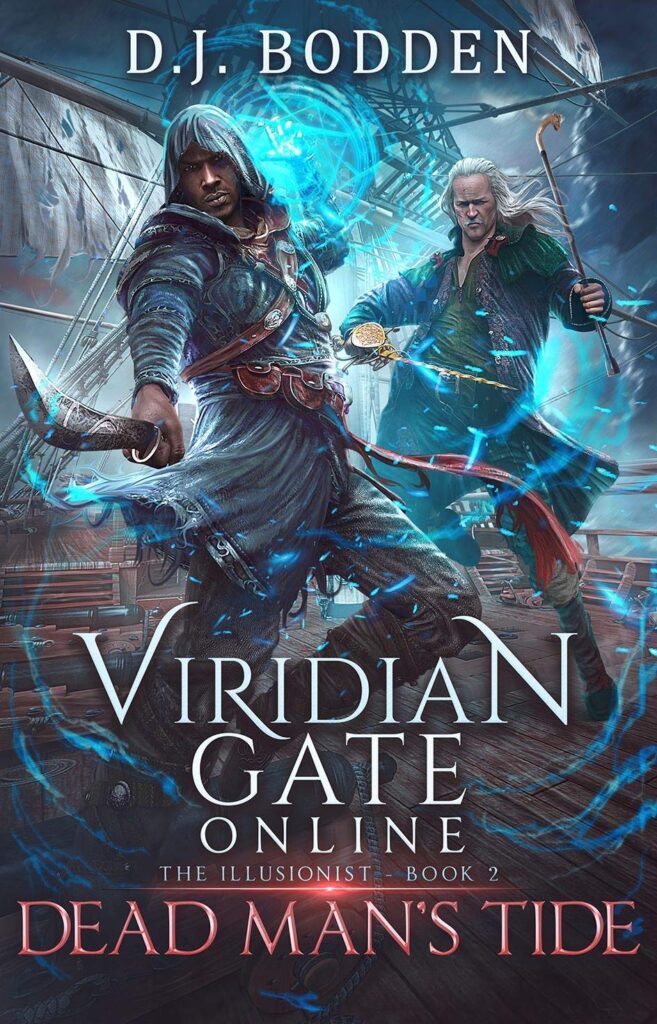
In Viridian Gate Online: Dead Man's Tide, co-authors James A. Hunter and D.J. Bodden continue the expansive LitRPG journey of Alan Campbell. Following the events of the first Illusionist installment, Alan finds himself newly deceased in real life,…
Quick Verdict
Dead Man's Tide successfully deepens the personal stakes for its protagonist while widening the scope of the virtual reality landscape in ways that reward returning series fans. It balances high-energy escapades with meaningful internal development, making it a compelling continuation for anyone already tracking the adventures within the Viridian Gate Online expanded universe.Disclosure: As an Amazon Associate, LiaGuide earns from qualifying purchases. Affiliate relationships do not determine our editorial conclusions.
Premise and Setup
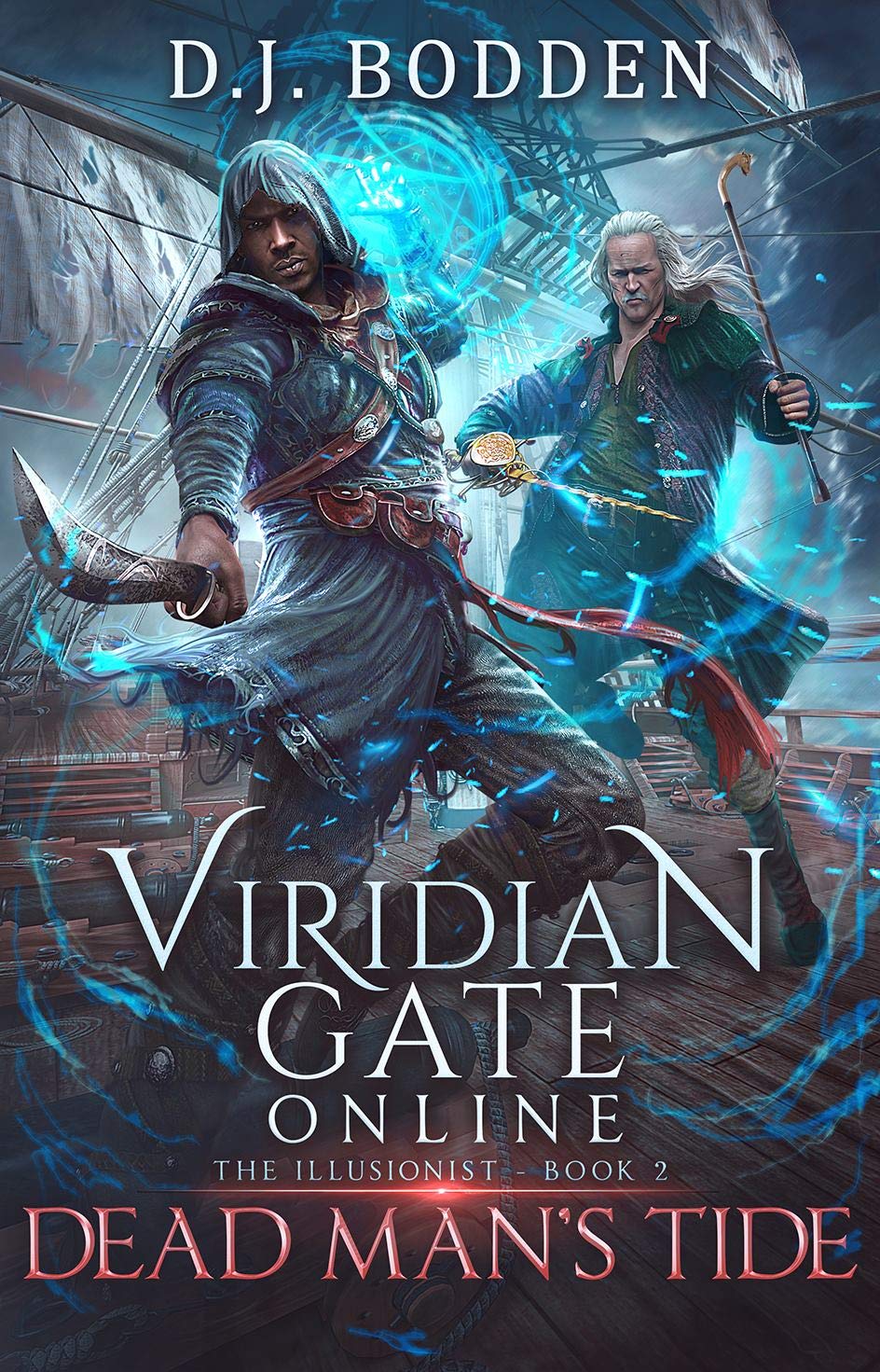
The setup forces a fragile transition as Alan attempts to cope with his profound offline losses while evading high-stakes threats in-game, most notably his treacherous ex, Thalia Daceran. The narrative shifts gears as Alan's survival strategy expands beyond solitary evasion. On his route toward safety and retribution, he forms uneasy alliances with an Imperial spymaster named Titus and a motley crew of pirates, commandos, and even a blood-seeking shapeshifting Mimic. This unlikely entourage eventually converges on Wyrdtide, a shadowy, gaslit city shrouded in mists and ruled by dark demigods. Beyond Alan's immediate survival concerns, the broader universe marches forward with sweeping political and metaphysical consequences. Supplied publisher notes highlight looming questions regarding government seizures of Viridian Gate Online, the ambiguous fate of Horace the blind beggar, and the mysterious whereabouts of Jeff. These threads weave together an active plot where personal vendettas intersect with divine machinations.Reading Experience and World-Building
Readers exploring this expanded universe entry can expect a briskly paced, action-heavy adventure that blends classic game-lit progression mechanics with gaslamp fantasy aesthetics. The introduction of Wyrdtide provides a distinct atmospheric backdrop, moving away from standard open-field fantasy tropes into a claustrophobic, mist-laden urban environment governed by unpredictable entities. Reader feedback highlights significant growth in character craftsmanship compared to standard genre entries. Evaluative feedback specifically points out that Alan's internal arc balances a growing sense of self-reliance with a necessary willingness to trust companions. Furthermore, ancillary figures receive dedicated attention rather than serving as flat backdrop filler, making the surrounding crew feel genuinely invested in the narrative stakes. The pacing prioritizes immediate tactical momentum over slow-burn exposition, pulling the audience directly into chaotic skirmishes and political maneuvering. While action drives the narrative spine, the evident care in crafting the supporting cast ensures that quieter moments of interpersonal friction and world-building register with emotional weight. The narrative maintains a brisk, action-forward tempo while carving out space for wider universe lore. Co-authors James A. Hunter and D.J. Bodden utilize the expanded Viridian Gate Online framework to push overarching plotlines forward, addressing lingering mysteries regarding game-world governance, background characters, and high-level divine machinations. For readers who appreciate dense LitRPG environments that balance mechanical progression with atmospheric world-building, this installment delivers a dense, highly immersive landscape. Those seeking a slow-burn, purely introspective character study may find the constant external momentum leaves little room for quiet reflection, but fans of high-stakes, fast-moving adventure will feel right at home navigating the perils of the dead man's tide. Reader responses diverge noticeably when discussing overall pacing and accessibility for newcomers. Several reviews describe the narrative as an exhilarating road of fun twists and turns that keeps the audience hooked from start to finish. For these readers, the action strikes an ideal balance, arriving frequently enough to satisfy without overwhelming the plot. Conversely, a contrasting viewpoint exists among a small subset of readers who found the progression somewhat sluggish. One distinct critique labels the pacing as slow going, noting that it may require a patient investment compared to faster-paced companion arcs within the broader universe. Newcomers to the specific sub-series also note an initial period of confusion due to the complex web of prior lore, though many ultimately find the journey worthwhile.- Pacing splits opinion between fast, exhilarating twists and slower narrative progression.
- Newcomers may experience a brief adjustment period due to complex pre-existing lore.
- Action frequency satisfies most genre fans while occasional readers seek tighter momentum.
Reader Fit and Series Continuity
This novel is a natural fit for established fans of the Viridian Gate Online expanded universe, particularly those who enjoyed the tone and mechanics established in the first Illusionist book. Readers who appreciate crunchy LitRPG progression systems combined with fast-moving, high-stakes ensemble survival plots will find plenty to latch onto here. However, newcomers should note that stepping directly into Dead Man's Tide without experiencing the foundational setup of the broader VGO universe or the opening Illusionist volume will likely leave narrative gaps. Because the plot relies heavily on established character friction, corporate-state tensions in the real world, and ongoing political fallout, it operates firmly as a continuation rather than a standalone entry. Readers who prefer solitary protagonist power fantasies where a single character dominates every scene may find the ensemble-heavy crew dynamics and shifting alliances require an adjustment. For those invested in cooperative party mechanics, rogue-adjacent problem solving, and dark urban fantasy settings, this sequel delivers an engaging continuation of Alan Campbell's digital struggle. This novel suits enthusiasts of LitRPG and GameLit who appreciate heavily detailed virtual worlds, clever class progression like Alan's illusionist abilities, and a diverse crew of quirky companions including a blood-hungry shapeshifting Mimic. It works especially well for readers already invested in the expanded universe who enjoy tracking overarching political intrigue alongside personal character growth. Conversely, skip this title if you prefer standalone stories with completely self-contained arcs or standalone fantasy devoid of game-mechanic statistics and persistent MMORPG framing. Readers who haven't experienced the first Illusionist book may also want to start there rather than jumping mid-sequence into Alan's ongoing troubles.Character Progression and Ensemble Dynamics
Readers following Alan Campbell's journey will find a distinct shift in how the protagonist handles both his internal doubts and external pressures. Rather than isolating himself after the high-stakes friction of the previous installment, Alan leans into collaborative survival. Review feedback highlights a noticeable maturation in his self-reliance coupled with a newfound willingness to trust teammates. That expansion extends well beyond the lead. The supporting cast—ranging from an imperial spymaster to a blood-thirsty shapeshifting Mimic and a ragtag crew of pirates and commandos—receives substantial page time. This ensemble-heavy approach transforms what could have been a solitary progression grind into a vibrant, faction-driven adventure inside the gaslit, mist-shrouded streets of Wyrdtide.Navigating the Trade-Offs
Readers diving into Dead Man's Tide encounter a narrative that prioritizes fast-paced action and expansive world-building over isolated character studies. Co-authored by James A. Hunter and D.J. Bodden, this installment pushes Alan Campbell into a gaslit, mist-shrouded city while juggling multiple plot threads outside his immediate perspective. For fans of the wider Viridian Gate Online universe, this expansive scope offers rich lore and high-stakes momentum. However, that same breadth introduces a distinct structural compromise. Because the narrative splits attention between Alan's desperate flight from his ex-partner, political maneuvers by imperial spymasters, and broader governmental shifts within V.G.O., readers looking for a tightly focused, single-perspective dungeon crawl may find the pacing occasionally diffused by secondary perspectives.Character Evolution and Relatable Antagonism
Readers repeatedly point out that the heart of this installment lies in Alan Campbell’s ongoing transformation. Several supplied reviews describe how the protagonist shifts from feeling vulnerable and reactive to discovering genuine self-belief, all while learning the critical value of relying on trusted companions. This internal growth runs parallel to high-stakes external pressure, keeping the protagonist in a constant state of flux where survival demands both tactical adaptation and emotional maturity. An equally prominent point of praise among readers is the surprising depth given to the antagonists. Rather than operating as flat obstacles, conflicting figures—most notably the protagonist's complex relationship with his former ally turned adversary—evoke genuine emotional resonance. Several reviewers note that while you root for the main character to succeed, you simultaneously wish for the primary villain to find peace and real understanding, elevating the conflict above standard good-versus-evil tropes.- Protaganist growth balances personal resilience with healthy team reliance.
- Antagonists feature unexpected emotional humanity and relatable motivations.
- Ancillary cast members receive expanded depth that anchors the narrative.
Tone Shifts and Darker Atmosphere
A recurring observation in reader feedback highlights a distinct tonal pivot toward a much darker narrative landscape compared to earlier entry points. Several reviewers emphasize that this grittier atmosphere works absolute wonders for the setting, injecting genuine tension, mystery, and consequential stakes into the virtual reality space. The heavier mood successfully grounds the story, making the victories feel hard-earned and the threats uncomfortably real. Despite the overarching gloom and dangerous environment, readers note that the narrative retains a sharp pulse of wit. Quick dialogue, high-energy set pieces, and moments of genuine humor balance the darkness so that the reading experience remains consistently engaging rather than oppressively bleak.- Noticeably darker atmosphere that enhances overall narrative tension.
- Dialogue pulses with clever wit to temper the heavier thematic elements.
- Maintains a high-flying, fun adventure rhythm despite the grim setting.
Class Mechanics and the LitRPG Trade-Off
The unique nature of the Illusionist class serves as a major draw for fans of the genre. Reviewers frequently praise the inventive ways the protagonist leverages his custom-tailored abilities to survive deadly encounters, noting that the class dynamics stand out even when compared to other popular entries in the expanded universe. Furthermore, the framing device of exploring the game’s early timeline—where the protagonist remains the sole active Traveler—adds a distinct layer of narrative tension. However, a notable reader disagreement arises regarding the density of the game mechanics. While many enthusiasts celebrate the creative skill applications, a minority critique suggests the authors went slightly light on the crunch. One detailed review explicitly notes a hunger for more explicit level-up sequences and in-depth class skill descriptions, creating a minor divide between readers who prefer fast narrative momentum and those who seek heavier RPG statistics.- Illusionist class abilities offer inventive and dangerous combat applications.
- Early-timeline premise restricts active Travelers, raising individual stakes.
- Minor reader friction regarding whether the story includes enough statistical crunch.
World-Building Breadth and AI Dynamics
Readers repeatedly highlight the expansive world-building, noting the obvious time, care, and craft invested in shaping the environment. From mist-shrouded gaslit cities to the intricate mechanics governing the virtual realm, the setting feels alive and fully realized. The inclusion of returning fan-favorite figures helps bridge different corners of the universe seamlessly. Additionally, multiple reviews express enthusiasm for how the artificial intelligence overminds are handled. By showcasing greater autonomy and more active involvement during this early pre-launch era, the narrative adds a rich layer of lore and intrigue that satisfies long-term followers of the overarching franchise.- Vivid environmental design and memorable new location entries.
- Expanded focus on autonomous AI overminds enriches series lore.
- Seamless integration of returning ancillary characters.
Pros and Cons
✓ Pros
- Compelling humanization of the antagonist that elevates emotional stakes.
- Inventive utilization of the Illusionist class mechanics in early-game scenarios.
- Strong IRL perspective segments that add meaningful consequences to the overarching plot.
✕ Cons
- Some LitRPG purists may find the mechanical stat tracking and skill breakdowns too light.
- Pacing can occasionally feel slow going for readers unfamiliar with the broader expanded universe lore.
Final Verdict
Viridian Gate Online: Dead Man's Tide has a clear case for readers whose tastes line up with its strongest supported qualities. Two strengths stand out. One strength is its compelling humanization of the antagonist that elevates emotional stakes. Another strength is its inventive utilization of the Illusionist class mechanics in early-game scenarios. The main drawback is that some LitRPG purists may find the mechanical stat tracking and skill breakdowns too light. If that trade-off conflicts with your reading preferences, this is an easy title to skip; otherwise, the review evidence supports keeping it on your reading list.See current book details
Check the current formats and listing details for Viridian Gate Online: Dead Man's Tide on Amazon.
View on AmazonAffiliate link. Product details may change.