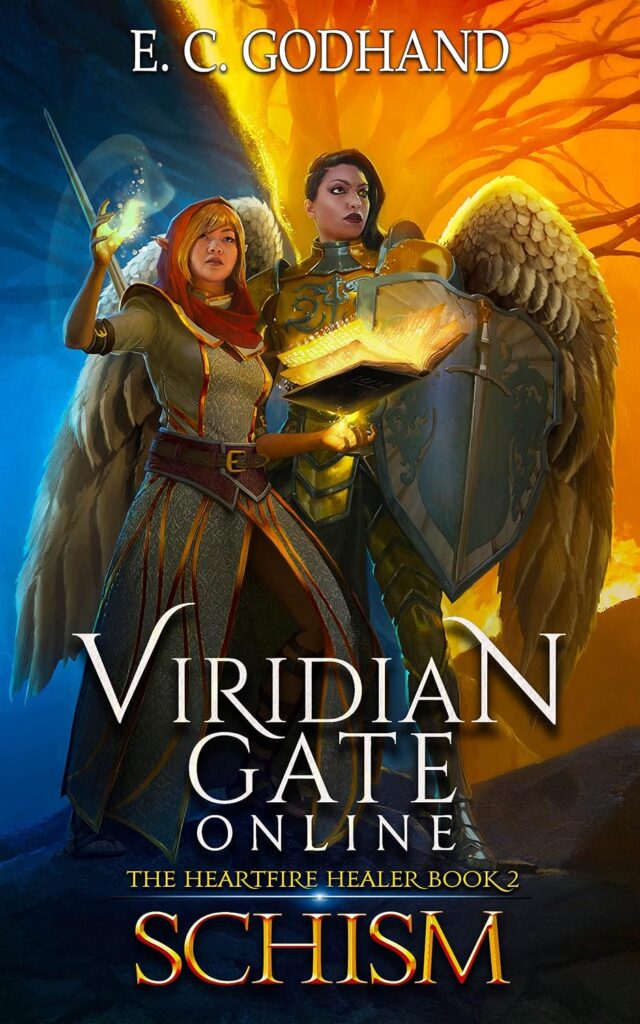
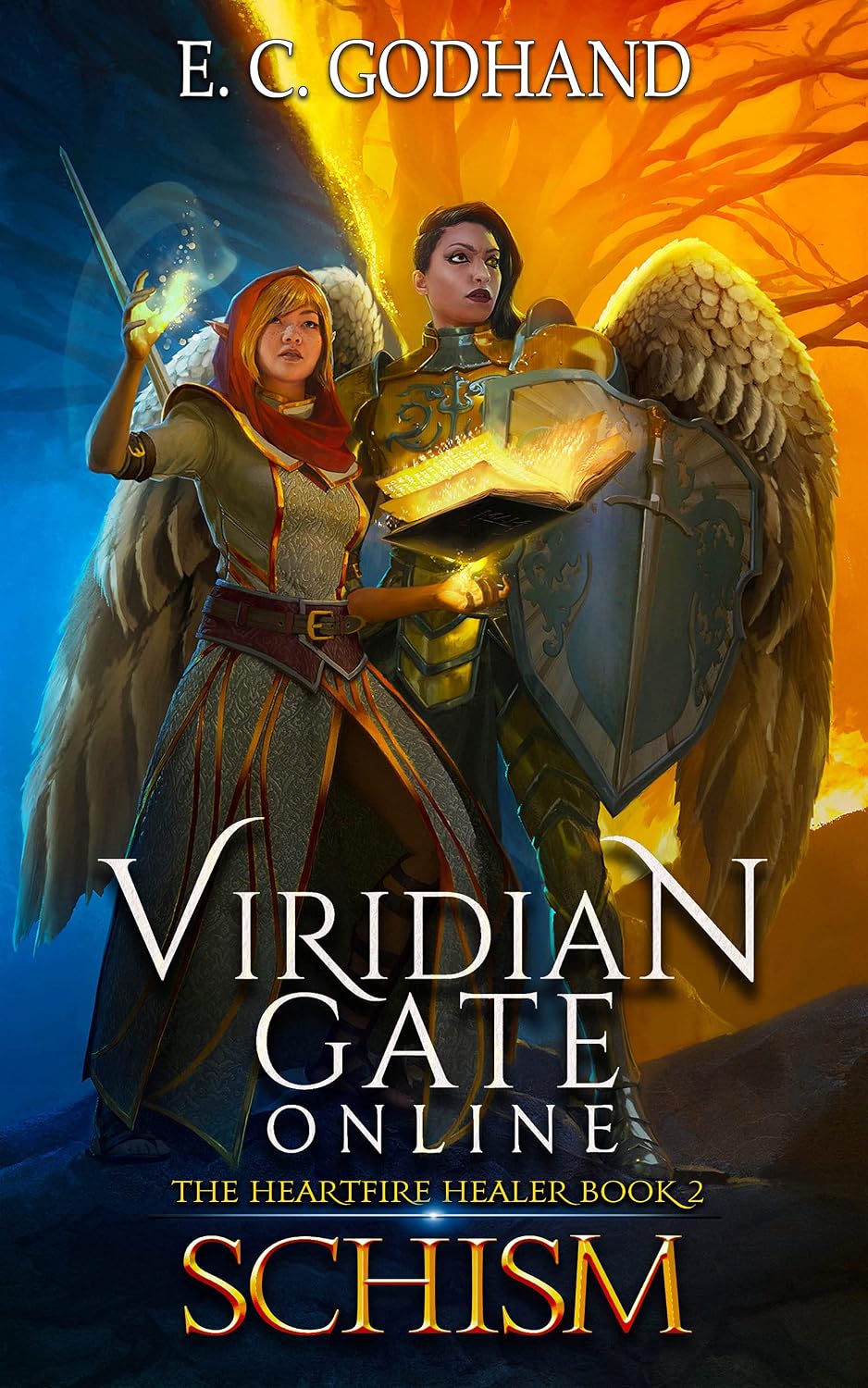
In Viridian Gate Online: Schism, the established rules of faith and healing inside the virtual world face a severe fracture. Protagonist Liset the Blessed finds herself trapped between conflicting demands from the Temple of Areste after recovering a…
Quick Verdict
Schism successfully challenges the established conventions of its shared universe by placing a flawed, medically minded professional at the center of an institutional and regional crisis. It trades some fast-paced tactical grind for a sharper focus on character friction and moral dilemmas. For followers invested in the ongoing expansion of Rowanheath and the intricate politics of virtual faith, this entry delivers high-impact storytelling that changes the stakes for the entire series.
Disclosure: As an Amazon Associate, LiaGuide earns from qualifying purchases. Affiliate relationships do not determine our editorial conclusions.
Premise and Setup
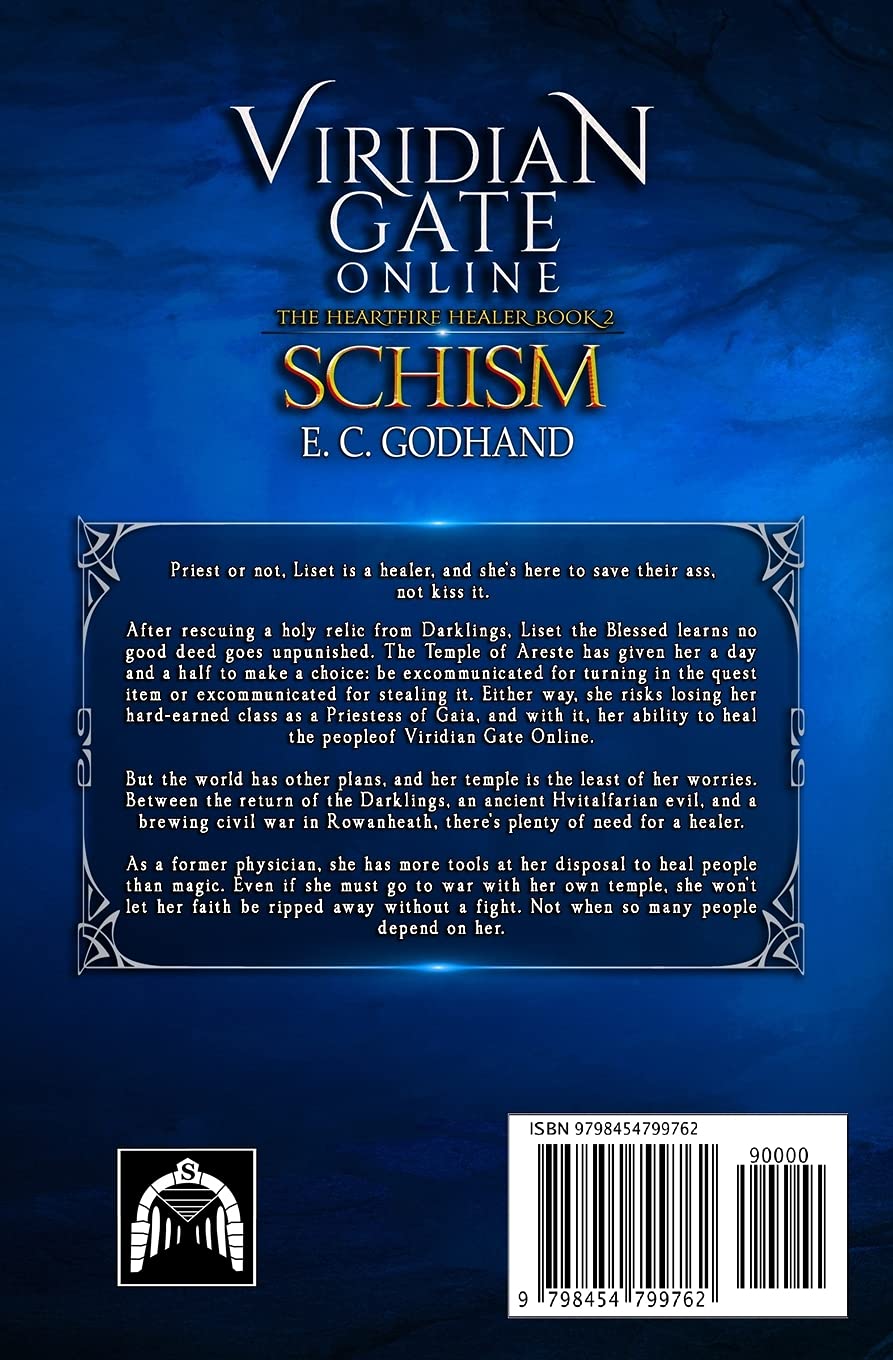
Threatened with excommunication regardless of her next move—whether for handing over the quest item or for allegedly stealing it—she risks losing her hard-earned Priestess of Gaia class and her primary means of keeping others alive.
Beyond institutional politics, the broader digital landscape deteriorates rapidly. The narrative pulls readers into multiple simultaneous crises, including a resurgence of Darklings, ancient Hvitalfarian threats, and a brewing civil war across Rowanheath. Rather than relying solely on standard fantasy spellcasting, Liset brings the background of a former real-world physician to her virtual profession, utilizing medical knowledge alongside game mechanics to manage injuries and support her allies.
Reading Experience and Structural Shifts
Readers familiar with the broader Viridian Gate Online universe will find that this installment disrupts standard narrative patterns for the imprint. Reader feedback highlights this entry as a pivotal pivot point for the series, shaking up expected faction dynamics and character trajectories. The focus shifts toward institutional friction and the friction of a non-gamer professional trying to navigate rigid MMO constraints.
While the coreLitRPG progression and high-stakes conflicts receive praise for maintaining engagement, some stylistic elements warrant a careful look depending on personal taste. Review observations note that secondary relationship threads and interpersonal subplots occasionally draw focus away from purely statistical progression and dungeon mechanics, creating a distinct narrative texture compared to standard action-heavy entries.
Readers diving into this installment will encounter a distinct shift in narrative focus compared to standard dungeon-crawling entries. While the core setting remains deeply rooted in the mechanics of a virtual MMO world, the plot dedicates meaningful page time to interpersonal dynamics, institutional conflict with the Temple of Areste, and the personal backgrounds of non-gamer characters attempting to function under high-stress survival pressures.
This structural choice introduces a notable trade-off for fans of the genre. Those who prefer rapid-fire stat progression, combat optimization loops, and non-stop dungeon raids may find that character-driven subplots and implied relationship arcs consume pacing bandwidth that could otherwise serve pure LitRPG elements.
As a pivotal second book in a large shared universe, this installment evokes sharply divided reactions regarding its narrative construction and pacing. Enthusiasts argue that the story manages the notoriously difficult sophomore slump by escalating stakes effectively, warping expectations, and driving toward a breathless, edge-of-your-seat climax. For these readers, the narrative breaks open the established conventions of the overarching setting in exhilarating ways, offering unexpected structural turns that keep the audience guessing.
Conversely, a notable minority of readers express frustration with the plot's complexity, describing certain stretches as convoluted and overstuffed. A recurring criticism from this camp is that characters are subjected to repetitive hardships—such as endless, escalating arrests and bureaucratic charges—that can feel tedious or manufactured rather than organic. While some find the pacing to be a welcome improvement with well-woven intersecting paths, others argue the middle segments suffer from balance issues and structural drag.
- Successfully raises stakes and delivers a high-adrenaline climax for many fans
- Some readers find the plot overly convoluted with repetitive bureaucratic hurdles
- Connects deeply to the wider universe lore while charting its own course
Reader Fit and Audience Signals
This novel fits dedicated fans of the Viridian Gate Online universe who appreciate world-building that challenges established factions and tests the protagonist's foundational beliefs. It particularly suits readers who enjoy grit, flawed characters, and protagonists who rely on professional expertise rather than pure power scaling to solve crises.
Readers who prefer uninterrupted tactical combat, traditional dungeon crawling, or minimal side subplots may find the interpersonal focus and institutional drama occasionally stretches pacing. Those looking for a straightforward stats-and-loot grind should weigh whether character-driven political friction aligns with their preferred reading pace.
This novel fits dedicated followers of the broader Viridian Gate Online universe particularly well, especially readers who appreciate unconventional protagonists. Liset breaks away from typical heroic molds by combining her real-world medical expertise with caustic, defensive personality traits, creating a compelling dynamic for anyone tired of standard cookie-cutter avatars.
Conversely, readers seeking a purely mechanical progression fantasy devoid of systemic institutional politics or interpersonal drama might want to skip this particular side-series. If your reading list requires constant combat encounters and strict adherence to traditional fantasy tropes without social subplots, traditional dungeon-core or heavier action-focused LitRPG alternatives will serve you better.
One of the most prominent points of debate among readers involves the protagonist's shifting moral boundaries and the book's engagement with institutional corruption. Reviewers highlight how Liset is caught between conflicting fires: she must choose between compliance with a corrupt temple that threatens her calling and outright excommunication for protecting a relic. This dilemma forces her to cut unpleasant deals and navigate the messy reality of being a civilian caught in the crossfire of larger factional conflicts, providing a fresh perspective compared to the main series' heroics.
However, this evolution triggers sharp friction for some readers. A specific point of contention arises around moral consistency: while the first book established the protagonist as fiercely opposed to charging for healing, this installment shows her beginning to do just that out of necessity. One detailed review argues this change, alongside the labyrinthine political entanglements, marks a disappointing departure from earlier standards, leaving readers split on whether her compromises reflect realistic character survival or a jarring loss of core principles.
- Explores the grim realities of civilians caught in imperial rebel conflicts
- Sparks debate over character consistency, particularly regarding paid healing
- Presents high-stakes institutional corruption without easy resolutions
Character Dynamics and the Reality of a Non-Gamer Healer
Readers diving into this installment encounter a protagonist who upends standard fantasy tropes. Liset approaches her role as a healer not merely through the lens of game mechanics, but with the pragmatic background of a former physician. This professional foundation gives her approach to virtual medicine a distinct grit and resourcefulness that separates her from typical MMO adventurers.
That professional edge combines with a caustic, flawed personality that resonates strongly with readers looking for genuine character friction. Rather than a standard heroic archetype, she is described as hurting, real, and remarkably stubborn when her faith and livelihood are threatened by temple politics.
Pacing, Mechanics, and Story Priorities
The narrative structure deliberately shakes up the broader universe's established formulas, a shift that readers note alters the balance of traditional LitRPG elements. While the core conflict involving dark forces and regional civil war keeps the stakes elevated, structural choices mean that character relationships and personal stakes occasionally share space with the underlying progression systems.
Feedback highlights a deliberate focus on interpersonal dynamics and institutional conflicts over relentless number-crunching. For readers who prioritize fast progression mechanics above all else, this character-driven detour requires a slight shift in expectations, whereas fans of the broader shared universe find it to be a crucial turning point for the setting.
Character Complexity, Psychological Realism, and the Indomitable Healer
Readers repeatedly point to the protagonist, Liset, as the anchor that sets this installment apart from traditional LitRPG entries. Several supplied reviews describe her not merely as an avatar or a stat-building adventurer, but as a former physician who approaches her cleric role from a deeply clinical, grounded perspective. Rather than gliding through the virtual world with effortless perfection, she is characterized as caustic, flawed, hurting, and intensely human. Her psychological makeup receives high praise for incorporating realistic elements of trauma and PTSD, which color her perceptions and reactions in ways that few books in the genre dare to explore.
This refusal to shrink from psychological friction makes her journey compelling for character-driven fantasy enthusiasts. Observers note that she is not traditionally unstoppable through sheer overpowered mechanics, but rather indomitable—she will never quit doing what she believes is right, even when the institutional and moral landscape offers no clean choices. Her signature back-talking banter, combined with authentic compassion and a growing list of grievances against corrupt authorities, gives her a distinct voice that resonates strongly with readers who value emotional depth over cardboard heroics.
- Grounded in real medical background rather than standard fantasy tropes
- Depicts PTSD and psychological friction rarely seen in the genre
- Balances sharp, defensive banter with profound underlying empathy
Subgenre Expectations versus Narrative Focus: The Reader Schism
A fascinating ideological divide emerges in the reader reception regarding how the book balances traditional fantasy storytelling with its identity as part of an established MMO-inspired game lit series. Several reviews praise the narrative for injecting humanity, deep worldbuilding, and engaging interpersonal relationships into a structured digital framework, treating the setting as a living world inhabited by people who act with genuine psychological depth.
On the other end of the spectrum, format-specific friction arises from readers who arrived expecting conventional mechanical crunch and action-oriented progression. A minority of critical feedback—touching upon subplots, interpersonal dynamics, and social elements—argues that narrative time is occasionally diverted away from core roleplaying game mechanics and traditional fantasy tropes. This divergence means that readers seeking pure stat-progression or strict adherence to genre formulas may find themselves out of step with the book's character-first priorities.
- Diverges from traditional mechanical focus in favor of character drama
- Attracts both praise for its human depth and criticism for straying from genre norms
- Fosters intense discussion over what belongs in an established shared universe
Humor, Tone, and Familiar Universe Expansions
Beyond the institutional pressure and trauma recovery, the book receives consistent praise for its comedic timing and lighthearted balance. Readers observe that amidst the dark moments, bureaucratic harassment, and impending civil wars, the author sprinkles plenty of humor and fun to keep the atmosphere buoyant. The inclusion of beloved secondary figures—such as the return of familiar entities like Corvus—delights long-time followers of the broader world lore.
This tonal dexterity allows the story to oscillate smoothly between high-stakes dramatic tension and snappy interpersonal dynamics. Fans of the wider setting note that this entry enriches the established lore rather than merely coasting on past achievements, making it feel like a substantial, vital piece of the overarching mythos.
- Maintains a clever balance between dark institutional conflict and witty banter
- Reintroduces fan-favorite secondary characters to the delight of series veterans
- Expands the lore of the shared universe in meaningful, unexpected ways
Pros and Cons
✓ Pros
- A remarkably raw, trauma-informed protagonist who relies on clinical realism rather than standard magic tropes
- Delivers a high-adrenaline, expertly paced climax that rewards the escalation of stakes
- Enriches the broader shared-universe lore with fresh perspectives from civilians caught in factional wars
- Seamlessly blends sharp, back-talking humor with genuinely high-stakes dramatic tension
✕ Cons
- Plot progression can feel bogged down by repetitive bureaucratic arrests and convoluted conflicts
- Shifts in the protagonist's moral stance regarding paid services alienate some continuity-focused readers
- Readers looking strictly for traditional LitRPG stat-crunch may find the heavy focus on social drama distracting
Frequently Asked Questions
Can I enjoy this book if I prefer character-driven drama over heavy game mechanics?
Yes. Multiple readers emphasize that this series prioritizes psychological realism, emotional trauma, and interpersonal relationships far above standard stat-building, making it a strong fit for character-driven fantasy fans.
Does the story require strict familiarity with every prior book in the overarching universe?
While it expands on shared-universe lore and reintroduces familiar elements like Corvus, readers note that it functions as a strong, self-contained continuation of the protagonist's specific arc established in the first healer-focused volume.
Final Verdict
Viridian Gate Online: Schism has a clear case for readers whose tastes line up with its strongest supported qualities. Two strengths stand out. One strength is its a remarkably raw, trauma-informed protagonist who relies on clinical realism rather than standard magic tropes. Another strength is that it delivers a high-adrenaline, expertly paced climax that rewards the escalation of stakes. The main drawback is that plot progression can feel bogged down by repetitive bureaucratic arrests and convoluted conflicts. If that trade-off conflicts with your reading preferences, this is an easy title to skip; otherwise, the review evidence supports keeping it on your reading list.
See current book details
Check the current formats and listing details for Viridian Gate Online: Schism: A LitRPG Adventure on Amazon.
View on AmazonAffiliate link. Product details may change.