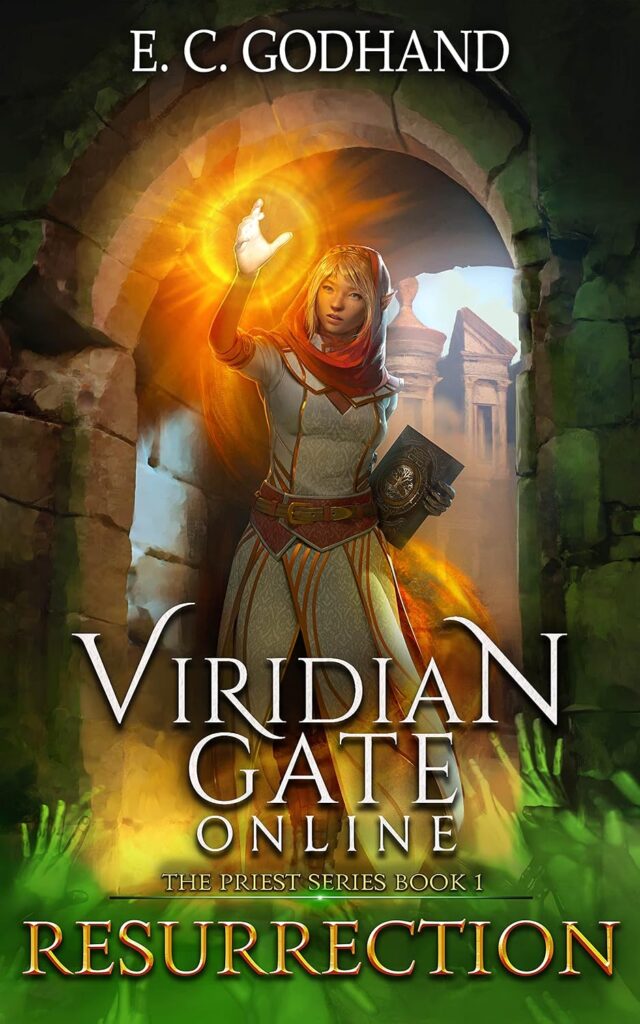
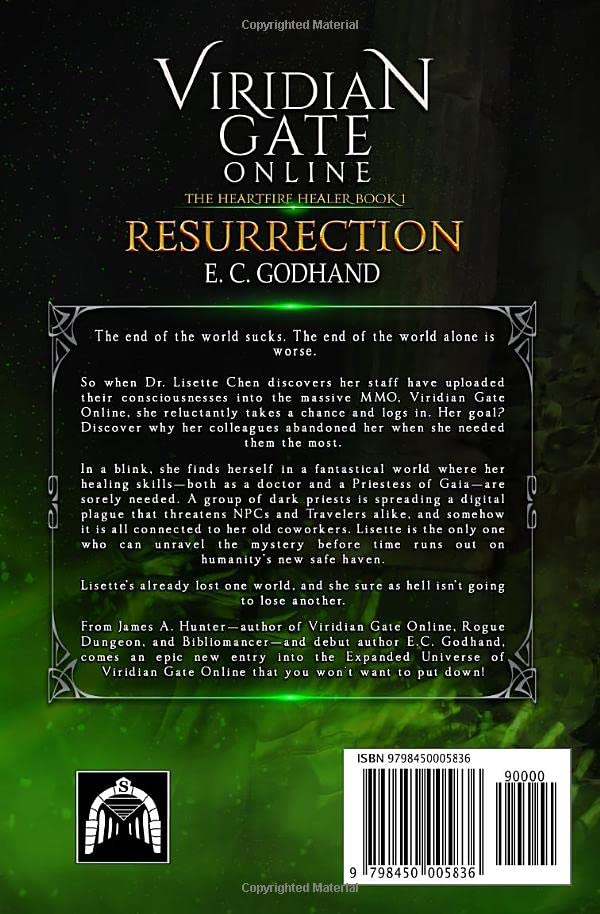
The world outside is ending, and Dr. Lisette Chen finds herself facing the ultimate isolation. When she discovers that her staff have vanished into Viridian Gate Online—a massive virtual reality MMO—she logs in to track down her colleagues…
Quick Verdict
Resurrection successfully expands the boundaries of the Viridian Gate Online universe by grounding its digital survival stakes in a compassionate, medically trained protagonist. By pairing high-stakes virtual reality threats with thoughtful character development and nuanced antagonists, the authors deliver an entry that resonates well beyond standard genre tropes. Recommended for dedicated fans of the expanded universe, readers who appreciate healer-centric protagonists, and anyone looking for a LitRPG adventure that balances dark thematic elements with humor and heart. Skip this volume if you strictly require breakneck combat pacing or prefer standalone stories entirely detached from shared-universe continuity.
Disclosure: As an Amazon Associate, LiaGuide earns from qualifying purchases. Affiliate relationships do not determine our editorial conclusions.
Premise and Setup
But entering the game means stepping into an expansive digital realm teetering on its own edge of collapse, where her real-world medical expertise translates directly into the role of a Priestess of Gaia.
Authored by James A. Hunter and debut writer E.C. Godhand, this entry into the expanded Viridian Gate universe shifts the narrative focus toward healing and systemic corruption. A faction of dark priests is spreading a digital plague that ravages both non-player characters and human travelers alike, and all signs point back to Lisette's former coworkers. Armed with healing magic and driven by a need for accountability, she has to untangle a web of virtual sabotage before humanity's last sanctuary falls apart entirely.
Reading Experience and Tone
Reader feedback highlights a narrative balancing act that separates this installment from typical game-lit adventures. Rather than leaning entirely into mechanical stat-tracking or black-and-white villainy, the story pairs high-stakes despair with genuine humor and warmth. According to early audience response, the antagonists possess grounded motivations rather than acting as simple cartoonish obstacles, giving the conflict genuine emotional weight.
The pacing supports an immersive experience without leaning on heavy-handed moralizing. Readers note that the book avoids cramming perspectives down the audience's throat, choosing instead to let the emotional highs and lows of the virtual environment unfold naturally through character action and world-building.
Balancing an impending apocalypse with moments of levity is no small feat for collaborative writing teams, yet the text maintains a steady rhythm that keeps pages turning. The pacing deliberately alternates between high-stakes encounters against dark priests spreading code-based afflictions and quieter moments where Lisette processes the loss of her former reality.
Audience response points to a distinct emotional resonance that elevates the book above standard genre fare. Review patterns suggest the humor and joy woven into the adventure soften the heavier existential themes without undercutting the danger. Readers seeking an epic entry that expands the shared world lore without rushing its character beats will find this installment hits a satisfying stride.
Reader Fit and Expectations
This novel speaks directly to fans of the broader Viridian Gate universe, particularly those who appreciate entries that carry significant weight for the overarching lore. It suits readers who prefer character-driven plots where professional expertise—in this case, medicine—shapes how a protagonist solves problems within a fantasy framework.
Readers who prefer fast-paced action sequences devoid of downtime or those looking for standalone stories completely detached from an expanded universe continuity may want to look elsewhere. For followers of immersive LitRPG who enjoy exploring the psychological toll of digital survival alongside traditional dungeon mechanics, Resurrection fits neatly into the rotation.
Fans already invested in the broader Viridian Gate Online expanded universe will recognize Resurrection as a pivotal entry that deepens the overarching lore. The introduction of the Heartfire Healer series perspective shifts the standard combat dynamics toward support and medical classes, offering a refreshing structural variation for veterans of the franchise. At the same time, newcomers can pick up the volume without getting lost, as the setup clearly explains the premise of a doomed earth and the mass virtual migration into an MMO safe haven.
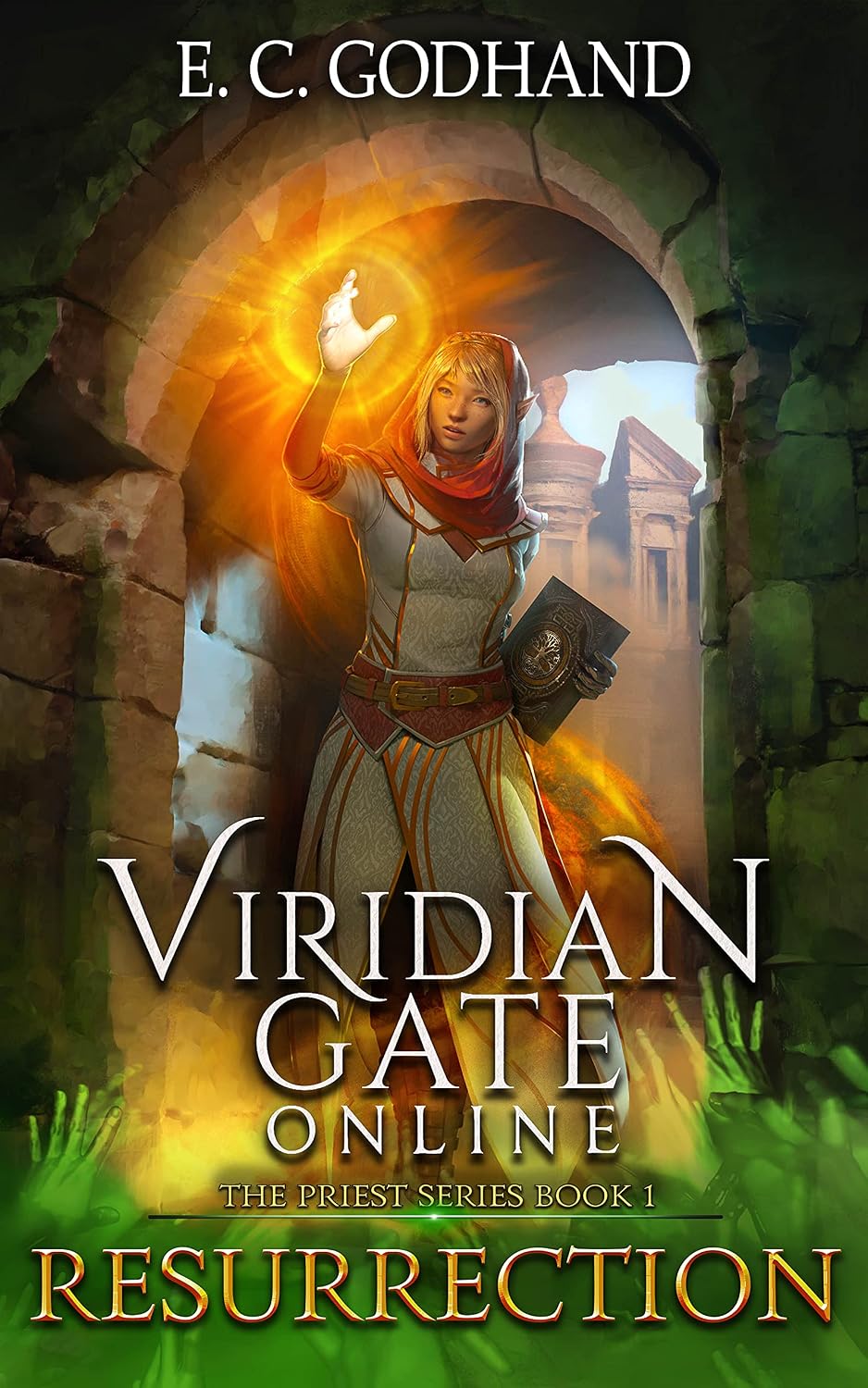
Managing expectations regarding the protagonist's skill set helps prevent misaligned reading goals. Lisette operates primarily through healing arts and her background as both a medical doctor and a Priestess of Gaia, making her problem-solving approach analytical and community-focused rather than weapon-centric. Readers who appreciate intelligent protagonists who leverage professional expertise within virtual environments will discover a well-executed angle on the genre.
Those deciding whether to add this title to their digital library should weigh their appetite for shared-universe expansions. If you enjoy collaborative world-building where multiple character threads cross paths across different sub-series, this installment delivers essential pieces of the larger puzzle. Conversely, readers seeking a standalone, self-contained narrative arc that requires zero outside franchise knowledge might prefer exploring a completely independent book type rather than an expanded-universe tie-in.
Narrative Mechanics and Character Dynamics
Stepping into the expansive universe crafted by James A. Hunter and debut author E.C. Godhand, Resurrection shifts the franchise's focal lens through Dr. Lisette Chen. Rather than leaning exclusively on traditional power-fantasy tropes, the narrative anchors itself in a professional background that informs every tactical decision Lisette makes inside the MMO. Her transition from medical doctor to a Priestess of Gaia blends hard-science pragmatism with digital fantasy systems, giving the progression mechanics a distinct flavor.
Reader feedback highlights a welcome departure from flat, cartoonish antagonism. The central conflict involves tracking down colleagues who abandoned her before a digital plague overwhelms both NPCs and human Travelers. Reviewers note that the character motivations avoid heavy-handed moralizing, opting instead for a nuanced exploration of despair, collaboration, and survival within a collapsing virtual sanctuary.
While the worldbuilding and character work earn high marks, the mechanical implementation of the game system invites a notable division among the audience. Several supplied reviews describe a heavy focus on stat reads, inventory lists, and frequent pauses in the narrative to review skill upgrades and numerical progression. For readers deeply invested in the crunch of character building, these elements provide satisfying depth and authenticity to the virtual setting.
Conversely, this exact mechanical density represents a stumbling block for other participants. Reviewers who lean primarily toward traditional fiction note that constant reminders of literal game rules can interrupt the flow of the story and weigh down the pacing. A minority of readers even expressed frustration that the text leaned a bit too literally into acknowledging its own artificial nature, creating a friction point between immersive storytelling and system mechanics.
- Stat blocks, level-ups, and skill checks provide authentic crunch for genre fans.
- Frequent mechanical pauses can disrupt narrative momentum for readers preferring pure prose.
- Literal references to game rules occasionally challenge traditional immersion.
Navigating the Trade-Offs
Readers diving into Resurrection encounter a distinct stylistic balance between sweeping cosmic stakes and meticulous game-system mechanics. Co-authored by James A. Hunter and E.C. Godhand, the narrative anchors its high-concept digital apocalypse in the professional background of its protagonist, Dr. Lisette Chen. Rather than focusing solely on power-fantasy leveling, the text spends meaningful page-time exploring medical ethics, psychological survival, and the heavy emotional toll of losing a previous world.
This emphasis on emotional depth and character-driven conflict creates an engaging experience, though it introduces a pacing trade-off for fans seeking nonstop tactical combat. Opinion evidence highlights that the story balances dark themes of despair and digital plagues with genuine humor and joy, steering clear of heavy-handed preaching. However, those who prefer pure action-oriented LitRPG without heavy psychological exposition may find the reflective interludes slow down the momentum of the main quest.
Choosing this expansion means committing to a narrative where antagonist motivations carry more nuance than simple villainy. Review feedback points out that the villains avoid feeling like mere paper-thin pawns, adding moral complexity to Lisette's investigation. Readers who enjoy untangling intricate webs of collaboration and betrayal among former colleagues will find this approach rewarding, whereas readers looking for straightforward, unambiguous foes might desire a more traditional confrontation.
Character Dynamics and the Healer Archetype
Several supplied reviews describe the protagonist, Lisette, as a refreshing departure from standard fantasy and LitRPG leads due to her background as a medical doctor transitioning into a supernatural healing role. Readers repeatedly point out that anchoring the story around a healer brings a unique structural weight to the narrative, shifting the combat dynamic away from brute-force DPS toward the high-stakes management of survival, trauma, and magical restoration. This class fantasy allows the authors to explore the heavy emotional toll of trying to mend a broken world when physical remedies fall short.
The supporting cast receives considerable praise for injecting distinct personality and humor into the grim premise. Reviewers frequently highlight the dynamic between Lisette—characterized as a spirited, flawed individual with a fondness for drink—and her steadfast protector, a stoic winged-person knight who watches her back. Another standout addition mentioned across multiple accounts is Corvus, a character sporting a plague doctor mask who frequently steals scenes with effective deadpan humor. These relationships provide a warm relational core that balances out the underlying tension of the apocalyptic backdrop.
- Healer-centric perspective brings a rare tactical angle to combat and magic usage.
- Dynamic between the messy protagonist and her stoic knight protector grounds the emotional stakes.
- Supporting figures like Corvus add memorable comedic timing and visual flair.
Real-World Parallels and Ethical Conflict
A recurring observation among readers is how effectively the book uses its fantastical framework to examine tangible real-world dilemmas. Rather than presenting a purely escapist power fantasy, the narrative tackles the commodification of healthcare through the mechanics of a temple priesthood. Several supplied reviews describe how Lisette faces immediate ethical friction: she must navigate a religious system that demands payment for every act of healing in order to maintain her standing, drawing pointed parallels to modern medical and insurance bureaucracies from the lost Earth.
Beyond institutional critique, readers note that the story explores broader themes of identity, meaning, and despair without feeling excessively preachy. The existential threat hanging over humanity is mirrored in the internal struggles of characters trying to find purpose after losing their original planet. This integration of genuine moral weight elevates the material for readers who might otherwise bounce off standard genre tropes.
- Explores the ethical corruption of charging for essential healing services.
- Reflects real-world medical and socio-economic frustrations within a fantasy context.
- Examines identity and purpose against the backdrop of societal collapse.
Accessibility for Newcomers to the Expanded Universe
A common hesitation for prospective readers entering an established expanded universe is whether extensive prior reading is required to understand the plot. Fortunately, multiple reviewers emphasize that this book functions as an entirely self-contained entry point. Readers who are not fully caught up on—or have never touched—the wider catalog report having no trouble following the lore, character motivations, and immediate conflicts without feeling lost.
This accessibility extends to readers who normally avoid role-playing game fiction altogether. Several non-gamers and casual genre dabblers note that the narrative handles its setting with enough human interest and emotional grounding to draw in outsiders, proving that the core themes transcend the technical framing of the virtual world.
- Functions as a standalone story requiring no prior knowledge of the broader setting.
- Welcoming to readers outside the traditional gamer and LitRPG demographic.
- Avoids heavy-handed exposition dumps regarding previous universe events.
Polarizing Protagonist and Emotional Tone
Reader reception regarding the main character's personality reveals a distinct split in emotional resonance. On one hand, many fans find Lisette deeply human, praising her resilience, humor, and unwavering commitment to decency despite being dealt a difficult hand. They appreciate a protagonist who visibly struggles with self-confidence and tries to make peace with her shortcomings while navigating an overwhelming crisis.
On the other hand, a vocal minority of reviewers found the protagonist actively difficult to root for. A critical perspective argues that her insecurity and self-doubt manifested as unlikable whining, making her efforts to prove her worth tedious to sit through. This divergence in taste highlights how heavily the reading experience rests on whether one finds a messy, anxiety-ridden healer endearing or grating.
- Supporters praise the protagonist's relatable vulnerability and moral compass.
- Detractors find her self-doubt and defensive attitude wearying over the course of the book.
- Emotional tone successfully balances dark apocalyptic stakes with warmth and humor.
Pros and Cons
✓ Pros
- Delivers a unique healer-centric perspective that changes up standard combat dynamics.
- Tackles sophisticated real-world themes like healthcare commodification through a fantasy lens.
- Works remarkably well as a standalone entry point requiring zero prior universe knowledge.
✕ Cons
- Mechanical stat-tracking and system checks can disrupt the narrative pacing for non-gamers.
- The protagonist's intense self-doubt and insecurity alienate readers looking for a classically confident hero.
Frequently Asked Questions
Do I need to read the rest of the Viridian Gate Online books before starting this?
No. Multiple reviewers confirm that the story is entirely self-contained and requires no prior familiarity with the wider expanded universe.
Is this book suitable for readers who do not normally enjoy LitRPG or gaming stats?
With caveats. While several non-gamers enjoyed the strong story and characters, the book does feature frequent stat reads and level-up checks that may frustrate those who dislike crunchy game mechanics.
Final Verdict
Viridian Gate Online: Resurrection has a clear case for readers whose tastes line up with its strongest supported qualities. Two strengths stand out. One strength is that it delivers a unique healer-centric perspective that changes up standard combat dynamics. Another strength is its tackles sophisticated real-world themes like healthcare commodification through a fantasy lens. The main drawback is that mechanical stat-tracking and system checks can disrupt the narrative pacing for non-gamers. If that trade-off conflicts with your reading preferences, this is an easy title to skip; otherwise, the review evidence supports keeping it on your reading list.
See current book details
Check the current formats and listing details for Viridian Gate Online: Resurrection: A LitRPG Adventure on Amazon.
View on AmazonAffiliate link. Product details may change.