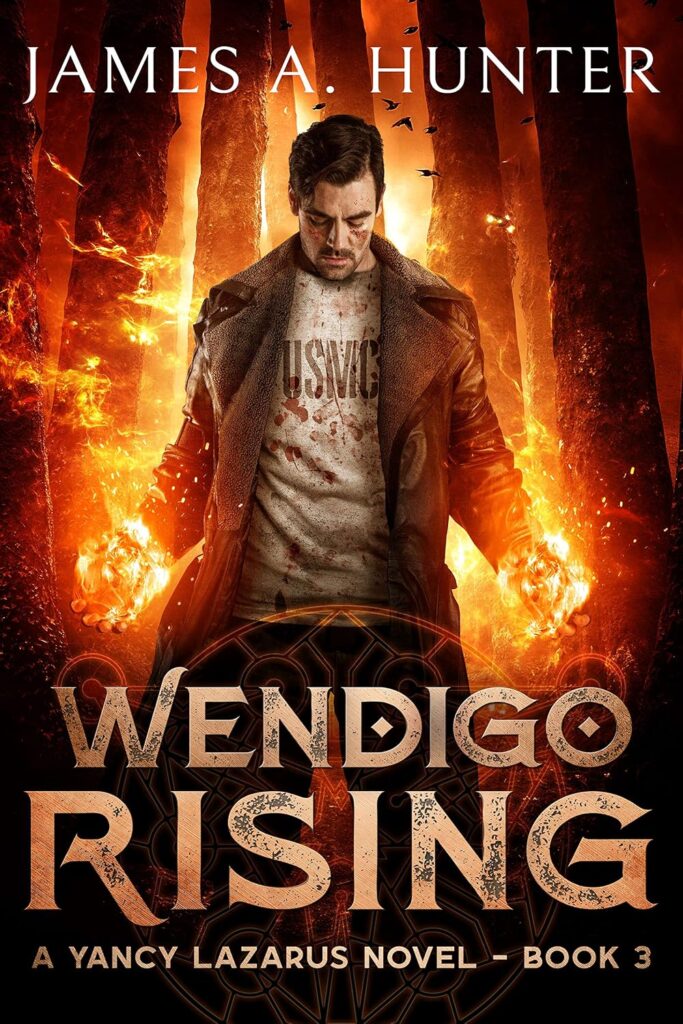
Urban fantasy often chains its protagonists to a single city, locking them into familiar headquarters and recurring precinct houses. James A. Hunter charts a different course in Wendigo Rising, leaning heavily into a transient setup where the main…
Quick Verdict
Wendigo Rising delivers an entertaining, high-velocity romp that leans into its own absurdities while grounding its monster threat in a mix of Native American folklore and modern imagination. It makes no apologies for its fast clip or its wandering protagonist, offering a lean supernatural ride that suits fans of action-heavy urban fantasy looking for a quick escape into the Montana backwoods.
Disclosure: As an Amazon Associate, LiaGuide earns from qualifying purchases. Affiliate relationships do not determine our editorial conclusions.
Road-Trip Supernaturalism and the Setup
This nomadic structure gives the narrative a rolling, episodic rhythm that trades neighborhood familiarity for constant changes of scenery.
The plot kicks into gear when Yancy Lazarus finds his path blocked in the forgotten backwoods of Montana by a nine-foot-tall cryptid flagging him down. Bigfoot, it turns out, has a severe crisis on his hands. A rogue member of his species has developed a taste for human and Sasquatch flesh alike, allowing a greater Wendigo to rise for the first time in millennia. If Yancy fails to intercept the beast, a rural Montana community faces a catastrophic slaughter.
Reading Experience and Tone
The resulting adventure blends folklore, modern cryptozoology, and fast-paced genre action into a high-octane package. Supplied reader feedback highlights a tone that swings fluidly between lighthearted absurdity and grim stakes, anchored by a protagonist who pairs heavy supernatural power with a sharp, sarcastic attitude and an appreciation for the blues.
Hunter leans on a creative mashup of Native American mythology and contemporary monster legends to build out the threat. For readers who enjoy fast, highly entertaining romps where a sarcastic wizard-type handles cosmic threats from the driver's seat of a classic car, this installment delivers a distinct change of pace from stationary urban investigations.
James A. Hunter keeps his supernatural fixer mobile, trading the static home base common to many urban fantasy series for the driver's seat of a battered El Camino. This nomadic setup changes the pacing of Wendigo Rising completely, turning the narrative into an episodic road trip through forgotten Montana backwoods rather than a localized turf war.
That movement prevents the storytelling from growing stagnant, though readers looking for deep institutional lore tied to a single city might miss the rich familiarity that stationary settings offer. Instead, the momentum relies heavily on a shifting backdrop of dive bars, small-town corruption, and rural isolation.
Tone-wise, the book balances snappy sarcasm with genuine supernatural peril. The protagonist brings a blues-loving attitude and a heavy dose of snark to high-stakes confrontations, ensuring that even when the plot dips into darker, more violent horror elements, the overall ride remains fast-paced and intensely entertaining.
Readers widely agree that the story operates at a breakneck speed, delivering a rapid-fire adventure that keeps pages turning late into the night. The narrative tone walks a fine line between serious supernatural stakes and absurd, high-octane spectacle.
While most readers embrace this roller-coaster pacing as a core strength, a few observe that the lightning-fast progression leaves little room to breathe or explore the deeper histories of passing secondary characters and unique creature societies.
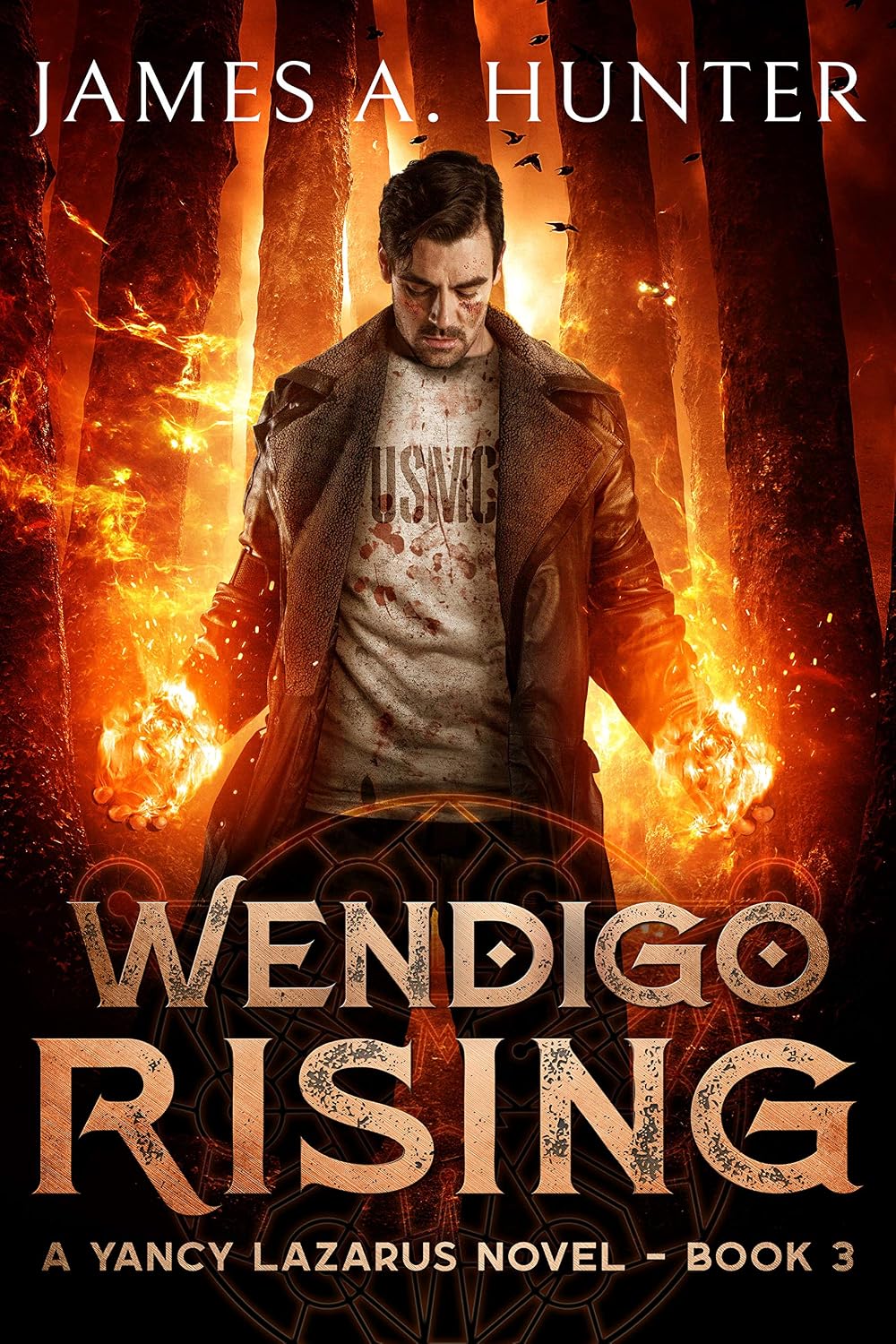
- Fast, page-turning progression with relentless action momentum
- Blends serious apocalyptic threats with lighthearted, snarky banter
- Pacing occasionally rushes past opportunities for deeper creature lore
Reader Fit and Decision Guide
This novel suits fans of fast-moving contemporary fantasy who prefer witty, road-weary protagonists over institutional investigators. It rewards readers looking for supernatural action grounded in atmospheric backwoods settings rather than corporate boardrooms or sprawling city precincts.
On the other hand, readers who demand deeply anchored home-base continuity or strictly procedural pacing may find the drifting, episodic nature of the El Camino-bound journey less immersive. Those seeking a traditional, stationary urban fantasy series should look toward standard localized detective setups instead.
This supernatural thriller fits readers looking for fast-paced, entertaining urban fantasy that blends modern monster lore with traditional myth, specifically readers who enjoy sarcastic protagonists, blues-infused atmospheres, and high-stakes monster hunting rooted in remote rural landscapes. Fans of Craig Schaefer’s Daniel Faust series will find a kindred spirit here.
Conversely, skip this title if you demand slow-burn political intrigue, cozy mystery vibes, or sprawling urban settings where characters spend multiple books investigating the same neighborhood. Readers who prefer deeply grounded, home-base-oriented series should explore traditional stationary urban fantasy alternatives rather than a mobile supernatural fixer narrative.
Mythology and Monster Mechanics
At the center of the conflict is a blend of traditional Native American folklore and modern cryptozoology, anchored by a nine-foot-tall Sasquatch that flags down the lead character in broad daylight. Rather than treating Bigfoot as a generic movie monster, the text weaves a complex social structure around the creature and its people.
The central threat emerges when one of those colossal figures goes rogue, giving rise to an ancient, cannibalistic Wendigo for the first time in millennia. Reader-feedback patterns highlight this creature design as a standout strength, successfully fusing monstrous horror with a rich, imaginative expansion of established myths.
If you prefer straightforward monster hunting where the antagonist is purely mindless evil, the internal politics and tribal complications woven into this plot might feel busier than expected. However, readers who enjoy creature features with layers of cultural lore and visceral tension will find the confrontation hard to put down.
Navigating the Trade-Offs of a Mobile Protagonist
James A. Hunter’s choice to keep Yancy Lazarus constantly on the move shapes the entire reading experience. Because the protagonist operates out of a beat-up El Camino and travels through forgotten backwoods rather than anchoring down in a single urban fixture, the narrative gains a restless, episodic energy. Yet that same transient structure means individual settings and supporting casts rotate out quickly, sacrificing the deep, long-term geographic familiarity found in traditional stationary urban fantasy series.
Readers who prefer deep lore tied to a single city block or permanent home base may find the road-trip pacing breathless or light on prolonged world-building. However, for those who value a fresh change of scenery with every installment, that structural limitation becomes its greatest asset, keeping the supernatural investigations feeling unpredictable and compact.
The Drifter Aesthetic and Mobile World-Building
Several supplied reviews describe how the series departs from traditional urban fantasy templates by refusing to anchor its protagonist in a single, familiar metropolitan hub. Instead of building deep attachment to one fixed precinct or city base, the narrative relies on a mobile, road-trip structure. Yancy's home is essentially his beat-up El Camino and whatever rustic dive bars or lonely backroads he happens to be traversing.
Readers repeatedly point out that while this choice sacrifices some of the localized world-building depth that comes with a permanent headquarters, it more than makes up for it by giving each installment a fresh change of pace. The Montana setting in this installment introduces rural backwoods corruption, isolated towns, and hidden wilderness threats that shift the atmospheric texture away from standard urban pavement-pounding.
- Replaces a fixed home base with a mobile El Camino setting
- Enables a constantly shifting geographic backdrop across remote regions
- Some readers express a desire for even more background lore on every roadside locale
Mythology, Folklore Mashups, and Lore Expansion
A recurring point of praise among readers is the inventive way the narrative blends disparate mythologies. The introduction of Bigfoot tribes, ancient Native American folklore, and a corrupted, pure-white eyeless Wendigo creates a distinctive monster mashup that stands apart from standard paranormal creatures.
Several reviews note that the world-building successfully builds upon foundations laid in earlier books, expanding a dense web of magical factions, divine entities, and historical echoes. One detailed review mentions how the author's execution is convincing enough to send readers searching online to see where actual folklore ends and creative world-building begins.
- Combines modern cryptid concepts with traditional indigenous folklore
- Expands ongoing series mythology regarding magical factions and ancient seals
- Spurs reader curiosity to research the boundaries of real-world myths versus fiction
The Protagonist Divide: Grumpy Veteran Versus Whiny Adolescent
Character reception is deeply polarized, particularly regarding the protagonist's voice and demeanor. On one side, favorable reviews enjoy Yancy as a sarcastic, blues-loving, world-weary wizard with a good heart beneath a tough, cynical exterior. Supporters find his wisecracking style and veteran baggage entirely entertaining.
Conversely, a notable minority of readers struggle significantly with Yancy's personality, describing him as simultaneously a crotchety old geezer and an immature manchild. One critical review notes that early chapters feature complaints and verbal sparring that borders on adolescent whining, which feels jarringly out of character for a seasoned operative with decades of supernatural experience.
- Polarizing protagonist voice balancing cynical charm and juvenile complaints
- Supporters praise the hard-boiled, music-loving wizard persona
- Critics find certain dialogue choices campy or counter to his veteran background
Comparing Reader Expectations: Urban Fantasy Tropes and Subgenres
Reviewers frequently compare the series to other prominent urban fantasy works, noting similar blends of wisecracking magic users, secret governmental oversight divisions, and hidden supernatural underworlds. For fans of hard-boiled magical investigators, the style feels immediately accessible and satisfying.
At the same time, readers who dislike zombie apocalypse tropes or cryptid-heavy plots may find themselves alienated. Additionally, one humorous observation highlights a distinct lack of explicit romance or conventional genre sex scenes, which some readers celebrate as a refreshing change of pace from overcrowded genre tropes.
- Frequently compared favorably to established urban fantasy detective series
- Stands out for focusing on supernatural cryptids rather than standard vampires and werewolves
- Lacks conventional romance tropes, much to the relief of certain readers
Pros and Cons
✓ Pros
- Inventive integration of Bigfoot mythology and Wendigo lore
- Relentless, fast-moving road-trip pacing
- Refreshing absence of forced romantic subplots
✕ Cons
- Protagonist's snarky dialogue can occasionally cross into grating immaturity
- Fast narrative speed leaves some secondary locales underexplored
Frequently Asked Questions
Do I need to read the previous books in the Yancy Lazarus series to understand Wendigo Rising?
Readers report that the book works well enough as a standalone adventure, though returning fans will better appreciate the broader series threads and long-term world-building foundations beginning to pay off.
What kind of creature focus does this installment feature?
The story centers heavily on Bigfoot tribes, a corrupted Wendigo, sirens, and various divine or mythological entities drawn from a mix of folklore and original series lore.
Final Verdict
Wendigo Rising has a clear case for readers whose tastes line up with its strongest supported qualities. Two strengths stand out. One strength is its inventive integration of Bigfoot mythology and Wendigo lore. Another strength is its relentless, fast-moving road-trip pacing. The main drawback is that protagonist's snarky dialogue can occasionally cross into grating immaturity. If that trade-off conflicts with your reading preferences, this is an easy title to skip; otherwise, the review evidence supports keeping it on your reading list.
See current book details
Check the current formats and listing details for Wendigo Rising on Amazon.
View on AmazonAffiliate link. Product details may change.