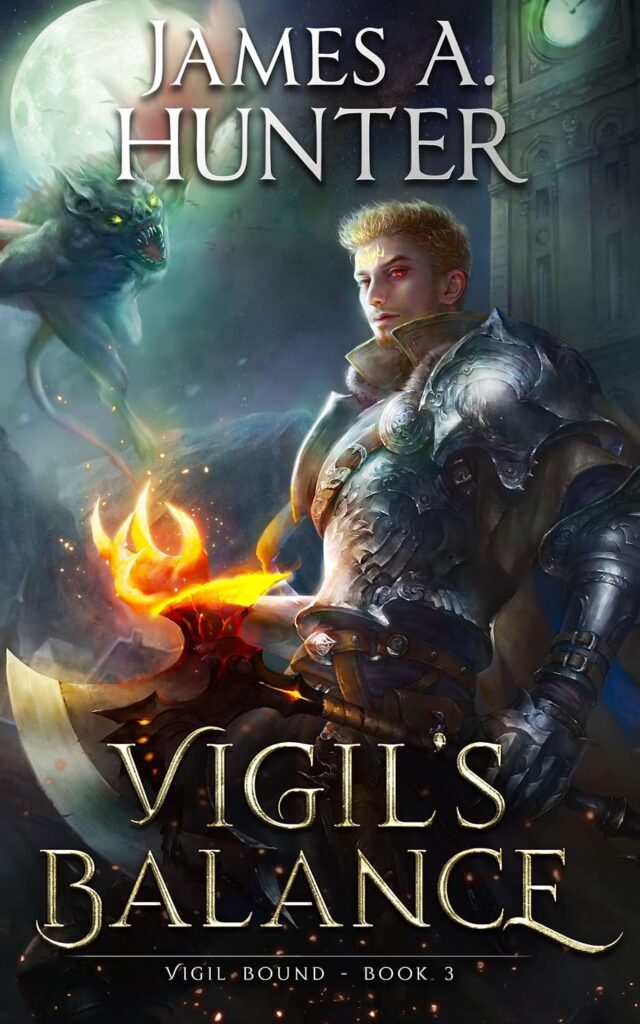
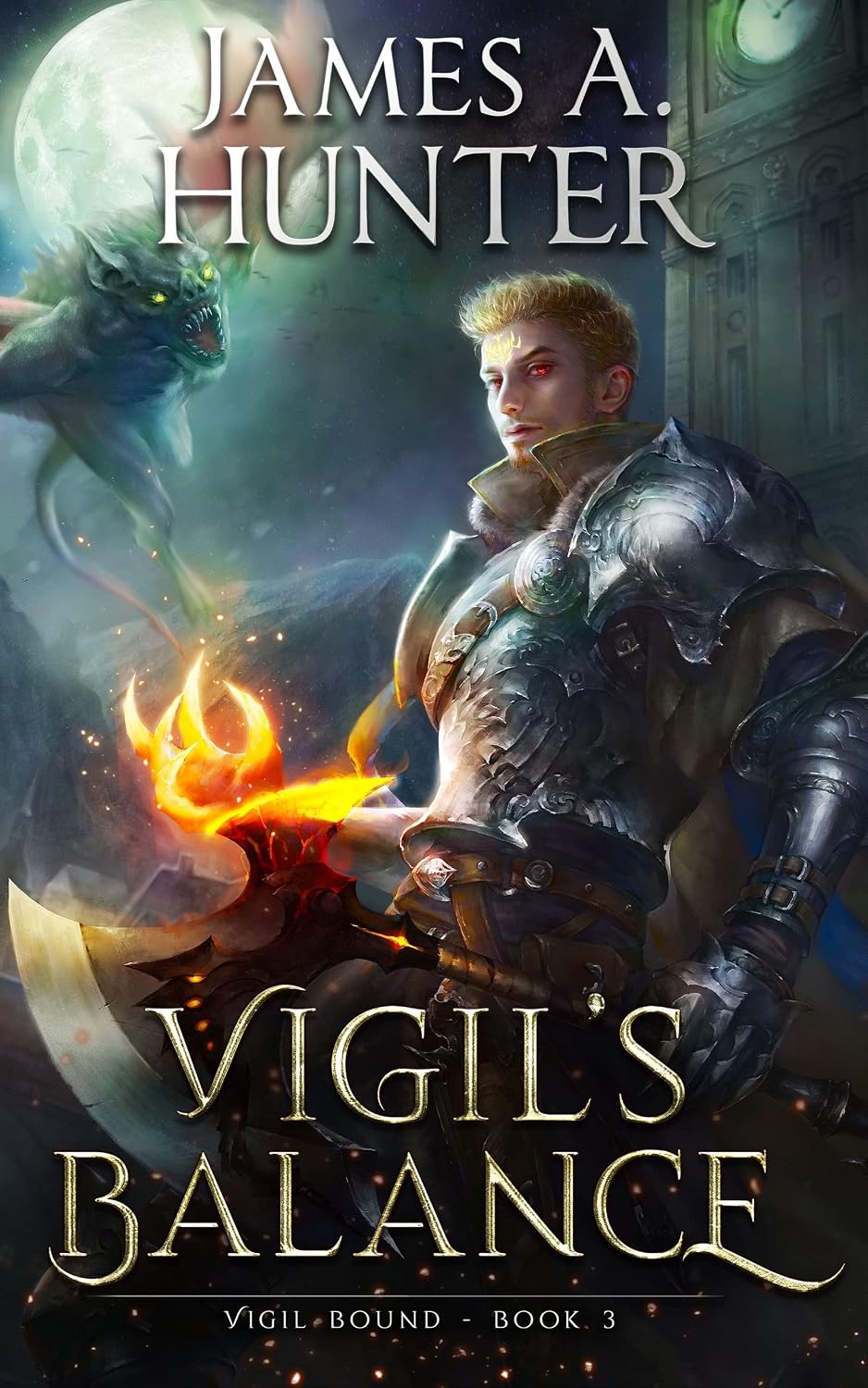
Stepping back into the chaotic intersection of modern firepower and mythic danger, Vigil's Balance continues the Vigil Bound series penned by bestselling author James A. Hunter. The narrative centers on Boyd Knight, a former Marine turned Vigil who…
Quick Verdict
Vigil's Balance successfully deepens its core cast and expands a creative tactical fantasy framework, even as its concentrated scope leaves some readers wanting more resolution. It is a rewarding continuation for those already committed to the series' unique blend of modern firepower and mythic court politics.
Disclosure: As an Amazon Associate, LiaGuide earns from qualifying purchases. Affiliate relationships do not determine our editorial conclusions.
Premise and Setup
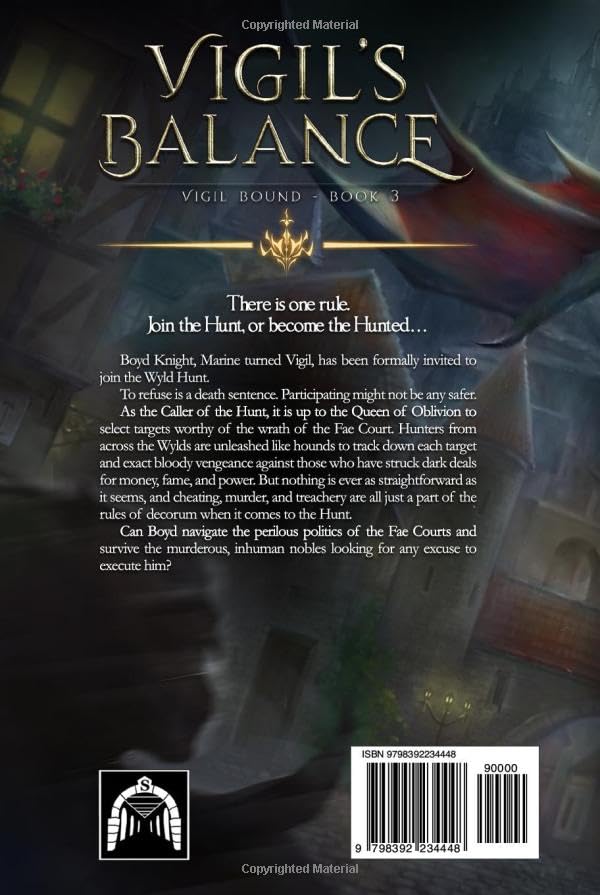
Hunter. Refusing the invitation means certain death, yet participating offers little guarantee of survival as inhuman nobles and deadly Fae courts watch every move.
As the Caller of the Hunt orchestrates bloody vengeance against targets wrapped in dark deals for power and fame, Boyd must navigate treacherous court decorum, brutal combat, and moral gray areas. Backed by the mechanics of a shoot-'em-up LitRPG world complete with spells, character progression, and firearm upgrades, the setup leans heavily into fast-paced tactical action entwined with lethal political pressure.
Early Reader-Fit Signals
This installment is a strong match for fans of progression fantasy who enjoy militaristic protagonists, tactical gunplay systems, and high-fatality political environments. If you prefer self-contained story arcs that fully resolve major campaign objectives within a single cover, the pacing structure here might require an adjustment in expectations.
Readers following the Vigil series will find familiar character evolution and continuity, making it a natural continuation for returning fans. Those seeking a standalone entry point might want to start earlier in the series to fully appreciate how Boyd and his companions arrived at their current standing.
Reflecting on the broader reading experience, established fans of the author's wider catalog find plenty to celebrate, pointing to imaginative storytelling, reliable execution, and clever narrative twists. The entry functions smoothly as a continuation for returning followers who appreciate the gritty, take-names-and-kick-butt attitude of the protagonist. Furthermore, adjustments in tone—such as a perceived toning down of vulgarity noted by long-term observers—contribute to a smoother read for certain segments of the audience.
Prospective readers can expect a tight, action-packed fantasy that prioritizes build experimentation, kinetic combat, and lethal political chess over slow-burn exposition. While those desiring a self-contained multi-stage hunt might experience slight frustration at the narrative's pacing boundaries, followers of progressive fantasy and LitRPG mechanics will find an inventive, high-energy addition that sets the stage for substantial future conflict.
- Delivers strong continuity and familiar stylistic strengths for returning series fans.
- Action-first approach prioritizes fast progression, combat, and build variety over slow exposition.
- Reader adjustments regarding tone and language enhance accessibility for ongoing followers.
Progression, Power Systems, and Combat Mechanics
Readers diving into Vigil's Balance will find a distinct blend of tactical gunplay and traditional fantasy progression mechanics. Authored by James A. Hunter, the narrative leans heavily into the shoot-em-up LitRPG subgenre, combining modern firearms, spells, and systematic upgrades into a fast-moving package. Feedback from the reading community indicates that the mechanics governing Boyd Knight's growth feel satisfyingly structured, offering a clear sense of momentum as the protagonist encounters new threats and accumulates power within the Wylds.
At the same time, this progression model introduces a notable structural compromise for serial fiction enthusiasts. Reader commentary points out that the narrative arc concludes relatively early, wrapping up after the initial mission of the Wyld Hunt rather than resolving the entire overarching event. For buyers who prefer self-contained story blocks where major conflicts reach a definitive climax within a single volume, this stopping point may feel abrupt. Conversely, serial fans tracking long-term character scaling will appreciate the deliberate pacing, which treats protagonist advancement as an ongoing evolution rather than a rushed sprint.
When evaluating the underpinning system design, readers note a distinct flavor of progression that leans heavily into video-game aesthetics rather than traditional tabletop mechanics. Several supplied reviews point to inventive soul-forge systems, leveling ideas, and the sheer over-the-top magnitude of the power scaling as key highlights. The ability to experiment with character builds, craft unique setups, and utilize mechanics like a respec option when a strategy falls short offers a satisfying layer for fans of crunch-heavy fantasy.
At the same time, this structural approach shapes how readers interact with the combat and power-ups. The integration of a Kentucky Marine’s tactical background reads true to many, grounding the otherwise wild magical upgrades and supernatural firepower. Readers invested in optimization find plenty of room for mayhem, noting that watching the protagonist grow stronger feels like only the beginning of a much larger architectural design for the series.
- Mechanics lean heavily into video-game style progression rather than traditional tabletop rules.
- Soul-forge crafting and respec options provide engaging build-crafting angles.
- Protagonist's military background grounds the high-octane magical upgrades.
Character Dynamics and Fae Court Politics
Beyond the numerical upgrades and tactical skirmishes, the story's emotional weight hinges on shifting identities and high-stakes political maneuvering. Observations from the readership highlight the steady development of Boyd and companion character Cal as they navigate the treacherous rules of decorum enforced by the Queen of Oblivion and her inhuman nobles. The friction between Boyd's former identity as a Marine and his current survival-driven role as a Vigil creates compelling internal pressure, raising steady questions about morality, compromise, and the gradual loss of humanity.
Returning fans will find familiar character dynamics anchored by established figures from earlier series entries, supplemented by fresh personalities introduced to complicate the political landscape. While the interpersonal friction and court intrigue succeed in keeping the pages turning, readers looking for sweeping moral resolutions should note that the journey is very much underway rather than nearing its destination. Those invested in psychological transformation alongside mechanical stat growth will discover plenty of thematic material to chew on, whereas readers seeking light, episodic adventuring may find the underlying existential questions pull the tone toward darker territory.
Navigating the Trade-Offs
Every installment in an ongoing progression fantasy series carries structural compromises, and this entry is no exception. While readers praise the ongoing development of the power system and the introduction of fresh character dynamics, structural feedback from the readership points to a distinct pacing compromise. Specifically, some followers note that the narrative halts its momentum abruptly, choosing to conclude after the initial mission rather than pushing through to the full completion of the overarching hunt.
This design choice expands the room given to political maneuvering and character evolution, yet it leaves certain plot arcs feeling prematurely clipped. For readers who prefer dense, self-contained multi-stage arcs per volume, that abrupt transition requires a shift in expectations. At the same time, the moral weight carried by Boyd and Cal as they adapt to their harsh new reality deepens the internal stakes, balancing out the leaner external scope.
Fit, Expectations, and Final Verdict
If you have followed Boyd Knight's journey through earlier volumes and enjoy high-concept mixes of tactical firearms, Fae politics, and crunch-heavy progression mechanics, this addition delivers the familiar voice and expanding universe you expect. It suits dedicated fans of James A. Hunter's broader catalog who appreciate character-driven progression over isolated monster-of-the-week loops.
Conversely, newcomers looking for a standalone starting point or readers who demand a fully wrapped narrative climax within a single book may find the stopping point frustrating. For those seeking an alternative type of experience within the genre, exploring completed standalone LitRPG trilogies can provide a more comprehensive multi-stage resolution per volume.
- Good fit for established fans invested in the long-term progression of Boyd and Cal.
- Skip if you prefer single-volume narrative arcs that resolve every major plot thread before the final page.
Character Evolution and the Cost of Survival
Readers frequently home in on the psychological transformation of the protagonist, Boyd, and his companion Cal as they navigate an unforgiving environment. Several supplied reviews point out that both figures are shifting significantly away from the people they were upon first entering this world, prompting ongoing discussions among readers regarding whether such a radical loss of prior identity is a positive trade-off. Observers note that this departure from their original mindset feels earned through relentless pressure, even if it leaves lasting questions about whether Boyd will ultimately surrender his core humanity on this path.
Beyond the main duo, the character ecosystem receives strong marks for depth and integration. Reviewers repeatedly highlight how the protagonist’s characteristic gruffness is effectively balanced against well-chosen character foils, keeping interpersonal dynamics engaging. While one detailed review suggests that a long-standing buddy relationship could benefit from a bit more page-time and fleshing out, the surrounding cast of new arrivals and eccentric teammates—described by some as a crew of maniacs—adds lively friction and prevents the narrative from becoming stagnant.
- Protagonist and companion undergo noticeable psychological shifts away from their past selves.
- Gruff lead personality is balanced successfully by contrasting character foils.
- Supporting cast introduces fresh dynamics, though select relationships leave room for deeper exploration.
Worldbuilding, Fae Court Politics, and Snakepit Intrigue
The atmospheric setting and sociopolitical landscape of the Fae Court receive consistent praise across international feedback. Several supplied reviews emphasize the strength of the worldbuilding, describing the courtly environment as a dangerous snakepit defined by backstabbing, political intrigue, and outright murder. Rather than playing it safe, the setting actively resists straightforward interpretation, creating an environment where decorum masks deadly rules.
The specific focal point of this entry—the Wyld Hunt—elicits mixed yet deeply engaged reactions. One detailed review notes that the Hunt itself felt surprisingly personal and less grandiose than initially anticipated, as reigning figures attempt to stack the deck against the protagonist. However, readers generally relish watching the lead character disrupt expected outcomes, subvert expectations, and turn political maneuverings back on those attempting to orchestrate his downfall.
- Fae Court portrayed as a treacherous snakepit of intrigue and lethal decorum.
- The Wyld Hunt offers a more personal, targeted conflict than expected.
- Worldbuilding matches the high quality of the series' action and character writing.
Humor, Dialogue, and Pacing Trade-Offs
On the stylistic front, readers frequently commend the snappy dialogue, fast pacing, and comedic timing embedded in the narrative. Multiple supplied reviews mention that certain sequences delivered genuine bursts of laughter, with one reader noting moments that caused outright guffaws. The storytelling style moves at a brisk clip, ensuring that moments of high tension are regularly punctuated by sharp wit and banter among the team.
However, this briskness intersects with a notable point of reader division regarding length and scope. A recurring criticism centers on the book feeling too short or concluding prematurely. While some audience members found the stopping point to be a logical and well-managed conclusion to the immediate narrative arc, others argued that halting the narrative right after the first mission left the overarching Hunt feeling incomplete and curtailed just as momentum was peaking.
- Fast-paced storytelling paired with sharp, genuinely funny dialogue.
- Book length divides opinion, with multiple readers feeling it ended too abruptly.
- Stopping after the first mission leaves some wanting a fully resolved hunt arc.
Pros and Cons
✓ Pros
- Inventive soul-forge and respec mechanics that satisfy fans of crunch-heavy progression.
- Sharp comedic dialogue and strong pacing that keep the action engaging from start to finish.
- Immersive, treacherous Fae Court worldbuilding filled with high-stakes political maneuvering.
✕ Cons
- Book length feels compressed to some readers, ending abruptly after only the first mission.
- Select long-standing relationships could benefit from more detailed exploration on the page.
Frequently Asked Questions
Is this book suitable for readers new to the series?
While new readers can enjoy the fast pacing and action, several reviews note that it functions best as a continuation, building directly on established character dynamics and power baselines from earlier entries.
Does the book complete the entire Wyld Hunt arc within its pages?
No. A recurring observation among readers is that the story concludes after the first mission, leaving the broader multi-hunt conflict open for future installments.
Final Verdict
Vigil's Balance has a clear case for readers whose tastes line up with its strongest supported qualities. Two strengths stand out. One strength is its inventive soul-forge and respec mechanics that satisfy fans of crunch-heavy progression. Another strength is its sharp comedic dialogue and strong pacing that keep the action engaging from start to finish. The main drawback is that book length feels compressed to some readers, ending abruptly after only the first mission. If that trade-off conflicts with your reading preferences, this is an easy title to skip; otherwise, the review evidence supports keeping it on your reading list.
See current book details
Check the current formats and listing details for Vigil's Balance: A LitRPG Adventure on Amazon.
View on AmazonAffiliate link. Product details may change.