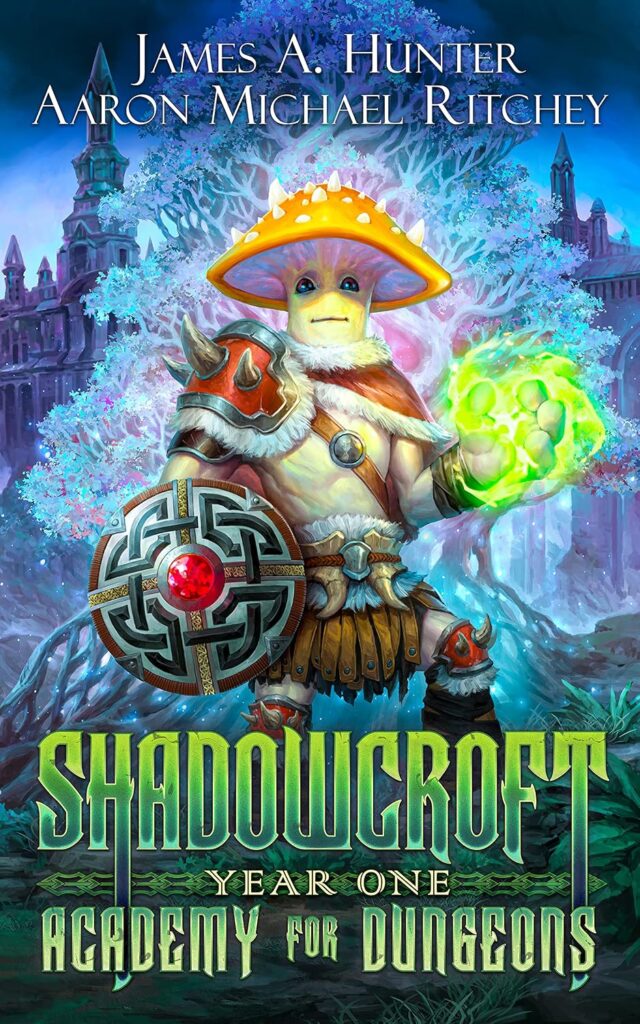
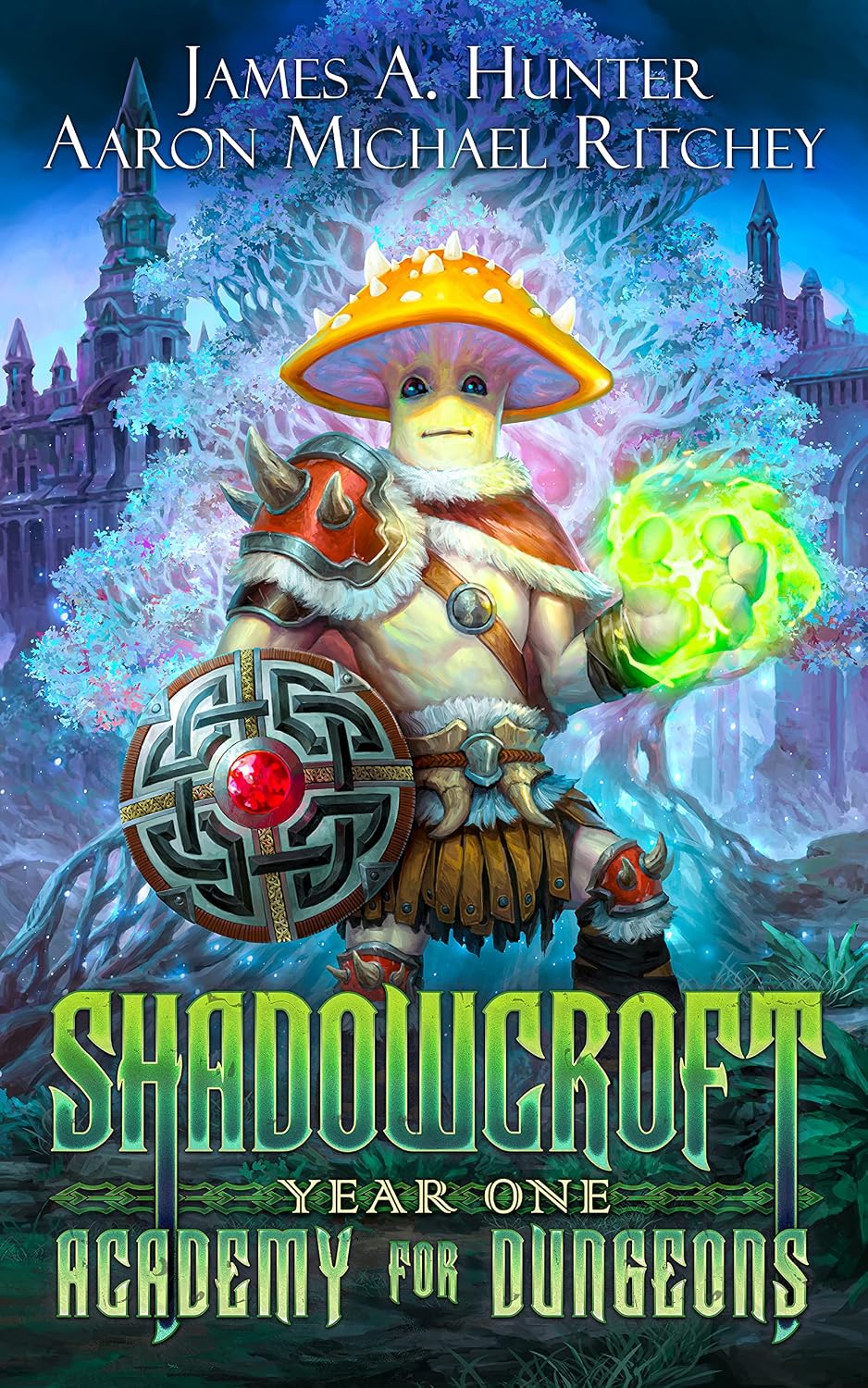
Shadowcroft Academy For Dungeons: Year One flips conventional fantasy mechanics on their head by casting the reader into a world where traditional heroes are the ultimate existential threat. Co-authored by James A. Hunter and Aaron Michael Ritchey, the…
Quick Verdict
Bailey Srimoungchanh, James A. Hunter, and Aaron Michael Ritchey deliver an inventive spin on the dungeon core subgenre by flipping the classic hero narrative on its head. While the bottom-tier fungaloid premise requires a taste for quirky monster evolution, the blend of academy challenges and system mechanics makes for an entertaining read. For readers craving a fun, game-lit adventure that refuses to take itself too seriously, this opening year at Shadowcroft Academy is well worth adding to the rotation.
Disclosure: As an Amazon Associate, LiaGuide earns from qualifying purchases. Affiliate relationships do not determine our editorial conclusions.
Premise and Academic Setup
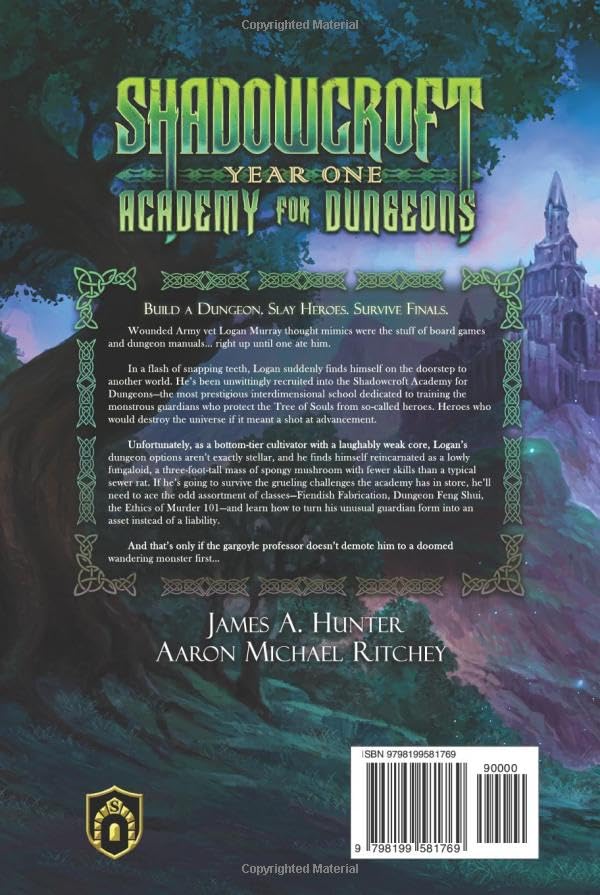
Instead of training to slay monsters, students at Shadowcroft learn how to build dungeons, deploy traps, and protect the cosmic Tree of Souls from self-righteous adventurers seeking xp and advancement.
Rather than manifesting as an almighty dungeon core or a towering boss monster, Logan draws a decidedly short straw during the academy's intake phase. He is reincarnated as a low-level fungaloid—a three-foot-tall mass of spongy mushroom equipped with a weak core and minimal raw offensive power. Surviving the semester means navigating a quirky curriculum that includes classes like Fiendish Fabrication, Dungeon Feng Shui, and Ethics of Murder 101, all while dodging the wrath of a demanding gargoyle professor who holds the power to demote him to a disposable wandering monster.
Reading Experience and Tone
The narrative leans heavily into humor, subversion, and classic LitRPG mechanics, blending stat progression with lighthearted academic misadventures. Reader feedback underscores a distinctly fun, tongue-in-cheek atmosphere that plays with familiar roleplaying tropes rather than taking itself too seriously. The pacing focuses heavily on Logan's underdog struggle to turn his seemingly useless fungal physiology into a viable tactical asset.
Expect a light fantasy romp where system notifications, magical crafting, and classroom politics drive the plot forward. While stakes exist—such as academic expulsion or permanent demotion—the primary draw is the comedic friction of an ordinary human mind trying to game an absurd bureaucratic monster school.
Reader Fit and Early Signals
This novel suits fans of progression fantasy, GameLit, and dungeon core stories who enjoy clever world-building paired with humorous underdog protagonists. If you appreciate seeing weak-to-strong character arcs built on unconventional mechanics rather than brute-force swordsmanship, the setup offers plenty of immediate appeal.
Readers who prefer grim, high-stakes epic fantasy without comedic elements or meta-gaming stats may want to look elsewhere, as the book relies heavily on genre self-awareness and lighter comedic beats.
The creative team of James A. Hunter and Aaron Michael Ritchey aims for a lighthearted subversion of traditional high-fantasy tropes, framing self-righteous adventurers as existential threats to a cosmic ecosystem. This comedic inversion drives much of the book's humor, relying on situational irony and workplace-comedy dynamics set inside a monstrous interdimensional academy. Characters like the stern gargoyle professor anchor the school setting, providing a classic straight-man contrast to the protagonist's chaotic adjustments.
Audience response shows a clear appreciation for the book's fun, fast-moving premise, though humor remains a subjective element in progression fantasy. Readers looking for gritty, high-stakes grimdark will find the tone firmly anchored in comedic wish-fulfillment and whimsical world-building. If you prefer your dungeon core tales heavy on brooding atmosphere and lethal tension, you may want to explore traditional grimdark progression fantasy instead; however, those seeking a light, clever spin on monster evolution will find this curriculum an entertaining fit.
Shadowcroft Academy For Dungeons: Year One blends traditional progression fantasy mechanics with a lighthearted academy setup, which creates a distinct set of narrative compromises. Readers who prefer grim, high-stakes dungeon survival might find the comedic curriculum and low-tier fungaloid protagonist a bit too whimsical for their tastes. On the other hand, the humorous classes and unconventional monster perspective offer a refreshing break from standard power-fantasy tropes.
This novel is an ideal match for fans of game-lit and progression fantasy who enjoy detailed magic systems mixed with self-aware humor. Anyone looking for a grimdark epic or a straightforward human hero's journey will likely want to skip this title in favor of more traditional sword and sorcery.
Progression Mechanics And Curriculum Design
Shadowcroft Academy For Dungeons: Year One combines classic progression fantasy mechanics with an institutional comedy framework, casting its protagonist into a structured academic gauntlet where failure means literal demotion to a wandering monster. The narrative relies heavily on standard LitRPG and cultivation tropes—stat blocks, core upgrades, and skill acquisitions—but filters them through the unique logistical challenges of being a bottom-tier fungaloid. Rather than wielding conventional swords or throwing devastating spells, Logan Murray must master absurd academic disciplines like Dungeon Feng Shui and Fiendish Fabrication to stay alive.
Reader feedback highlights that this curriculum-based progression gives the story a distinct episodic momentum. Each class and exam serves as a practical test of the protagonist's resourcefulness, keeping the mechanical crunch engaging without bogging down the overarching plot. For readers who enjoy watching an underdog systematically exploit marginal abilities to climb a rigid hierarchy, the pacing provides a satisfying, game-like rhythm.
The power-scaling and mechanical progression design earn widespread appreciation for avoiding the trap of instant, overwhelming dominance. Several supplied reviews praise the decision to make the protagonist an uncommonly weak fungaloid whose initial survival depends entirely on wit, strategic planning, and grueling hard work rather than immediate godlike powers. This deliberate pacing ensures that every rank advancement and tactical victory feels earned, maintaining genuine tension through the freshman curriculum without overwhelming the reader with convoluted mathematical tables or excessive stat-sheet tracking.
Nevertheless, the overall tempo of the book experiences a few structural speed bumps. A recurring observation notes that the narrative suffers from a somewhat slowish start while establishing the foundational rules of the academy and the eccentricities of the faculty. Additionally, stylistic habits such as an overuse of similes during early chapters occasionally bog down the prose. Once past this introductory hurdle, however, the pacing smooths out significantly, incorporating well-placed emotional interludes that give readers a breather between high-pressure classroom trials and dangerous dungeon layouts.
- Slowish initial pacing gives way to a smooth, well-punctuated narrative flow.
- Weak-to-strong progression avoids making the protagonist overpowered too quickly.
- Minimalist approach to crunchy stats keeps focus squarely on creative problem-solving.
Character Dynamics and Misfit Team Chemistry
Readers repeatedly point to the interpersonal relationships among the student cast as one of the standout strengths of the narrative, elevating the book well above standard genre fare. Rather than relying on forced conflicts or manufactured drama to drive friction between allies, several supplied reviews describe a refreshing camaraderie reminiscent of a classic underdog rat-pack ensemble. The protagonist, a retired military veteran dropped into the bottom-tier fungaloid body, anchors a support group of academic outcasts who find themselves at the interdimensional academy for all the wrong reasons. Their mutual reliance and hard-won victories feel emotionally grounded, giving the core group a natural, supportive chemistry that readers find deeply satisfying to follow.
At the same time, individual character traits within this ensemble provoke varied reactions. While enthusiastic breakout favorites like the energetic Marko earn high praise for injecting humor and excitement into the daily routine, other figures draw more mixed responses. One recurring criticism touches upon a more melancholic, doom-and-gloom cast member whose persistent pessimism borders on tedious for certain readers, though most agree this personality quirk stops short of derailing the broader reading experience. Furthermore, a few observations note that certain character reactions can occasionally feel slightly rigid, but overall, the realistic progression of these friendships forms the beating heart of the book's long-term appeal.
- Ensemble chemistry avoids artificial arguments and petty backstabbing.
- Underdog team dynamics keep emotional stakes grounded and relatable.
- Supporting personalities range widely from high-energy fan favorites to more polarizing, gloomy tropes.
Humor, Pop-Culture Overload, and Linguistic Disconnects
Humor and tone occupy a contentious middle ground among readers, sparking lively debates regarding how well modern references integrate into an interdimensional academy. A large segment of the audience thoroughly enjoys the snappy dialogue and frequent comedic asides, finding that the levity balances out the high-stakes survival pressure of the curriculum. However, another group of readers points out a persistent friction: the protagonist casually drops Earth-based pop-culture allusions and contemporary idioms that local inhabitants have no logical business understanding, yet those same native characters occasionally echo similar modern cultural markers right back in their own dialogue.
Beyond individual jokes and conversational puns, this stylistic choice extends into broader worldbuilding conventions. Several detailed reviews express a mild distraction regarding the uncritical adoption of terrestrial calendar structures—such as standard weeks, familiar seasonal cycles, and a traditional fall-to-spring academic year complete with a winter break and a two-month summer vacation. For readers seeking an utterly alien fantasy environment, these convenient Earth parallels can feel a bit lazy, whereas more forgiving audiences brush them aside as acceptable genre shorthand designed to keep the narrative immediately accessible.
The setting merges traditional magical academy tropes with classic dungeon-building concepts, creating an atmospheric backdrop that invites frequent comparisons to dark fantasy school narratives. Readers note that the constant threat of expulsion or physical elimination establishes a genuinely high-stakes environment where not everyone is guaranteed to survive the academic year. This live-or-die pressure creates a tense atmosphere, though a minority of reviewers feel that such absolute peril occasionally boxes in the narrative options by making opposing forces and rival dungeon architects feel cartoonishly villainous.
One of the most surprising points of praise centers around spatial layout descriptions—traditionally considered a dry or tedious aspect of dungeon core fiction. The authors manage to make room design, trap placement, and architectural flow genuinely exciting to read about. Yet, format-specific or conceptual disagreements remain; at least one reader questions why the school framework mirrors a hormonal high-school environment rather than a rigorous professional training institution, especially since many reincarnated dungeon cores begin their new lives as middle-aged adults.
- Frequented by witty banter and lighthearted situational comedy.
- Pop-culture references occasionally strain internal immersion when native characters mirror them.
- Familiar Earth-based school calendars and seasonal structures divide readers looking for deeper alien worldbuilding.
- Creative room layouts and trap designs turn architectural planning into a narrative highlight.
- High-stakes academic survival introduces genuine tension but risks boxing in antagonist depth.
- Debates persist over whether an adolescent school vibe fits characters who were formerly mature adults.
Reader Disagreements and Divergent Satisfaction
While the book garners enthusiastic praise and high ratings from a broad cross-section of the audience, it also inspires notable thematic trade-offs that split opinion. A clear point of divergence involves the narrative's structural boundaries; one detailed review expresses mild disappointment that the main cast successfully passes the rigorous freshman winnowing trials, arguing that a harsher twist resulting in failure or division would have injected an unexpected narrative edge. Instead, the plot adheres closer to traditional cohort survival arcs, satisfying readers who root for the entire underdog team to stay intact.
Ultimately, reader satisfaction largely depends on what elements draw an individual to the genre. Fans prioritizing warm character bonds, low-crunch progression, and creative dungeon mechanics find an exceptionally polished entry that rewards patient reading. Conversely, readers hunting for airtight alien immersion, strictly utilitarian adult settings, or zero reliance on modern pop-culture shorthand may find certain stylistic choices harder to overlook. Even among mixed-reaction groups, however, the general consensus acknowledges a high level of authorial craftsmanship that encourages continued investment in subsequent volumes.
- Disagreements center on whether the core team should have faced harsher winnowing consequences.
- Satisfaction splits between readers wanting gritty alien realism versus those enjoying cozy underdog camaraderie.
- High technical polish wins over many critics who typically tear apart illogical fantasy setups.
Pros and Cons
✓ Pros
- Refreshes the dungeon core genre by focusing heavily on authentic team chemistry and underdog strategy.
- Turns notoriously dry room layouts and architectural planning into genuinely engaging reading material.
- Avoids instant power inflation, ensuring every level and victory feels hard-earned.
✕ Cons
- Modern Earth pop-culture references occasionally clash with the interdisciplinary fantasy setting.
- Early chapters suffer from an over-reliance on similes and a slightly sluggish opening tempo.
- Academic framing sometimes leans into teenage high-school tropes despite characters being adult reincarnations.
Frequently Asked Questions
Is this book overly bogged down by complex math and stat sheets?
No. Several supplied reviews note that the progression system relies much more on cleverness, utility, and hard work rather than overwhelming crunch, keeping the focus on story and character rather than spreadsheets.
Does the story rely on dark, mean-spirited conflicts among the main characters?
Not according to the general consensus. Reviewers highlight that the core misfit team forms a supportive, rat-pack-style friendship without artificial arguments, backstabbing, or forced drama.
Final Verdict
Shadowcroft Academy For Dungeons: Year One has a clear case for readers whose tastes line up with its strongest supported qualities. Two strengths stand out. One strength is its refreshes the dungeon core genre by focusing heavily on authentic team chemistry and underdog strategy. It turns notoriously dry room layouts and architectural planning into genuinely engaging reading material. The main reason to hesitate is modern Earth pop-culture references occasionally clash with the interdisciplinary fantasy setting. If that trade-off conflicts with your reading preferences, this is an easy title to skip; otherwise, the review evidence supports keeping it on your reading list.
See current book details
Check the current formats and listing details for Shadowcroft Academy For Dungeons: Year One on Amazon.
View on AmazonAffiliate link. Product details may change.