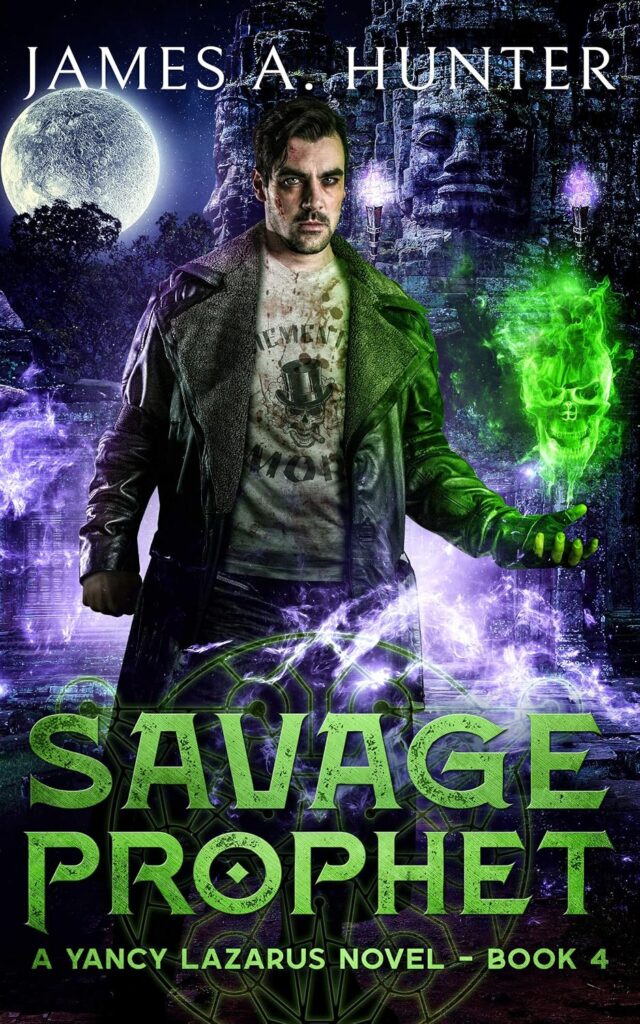
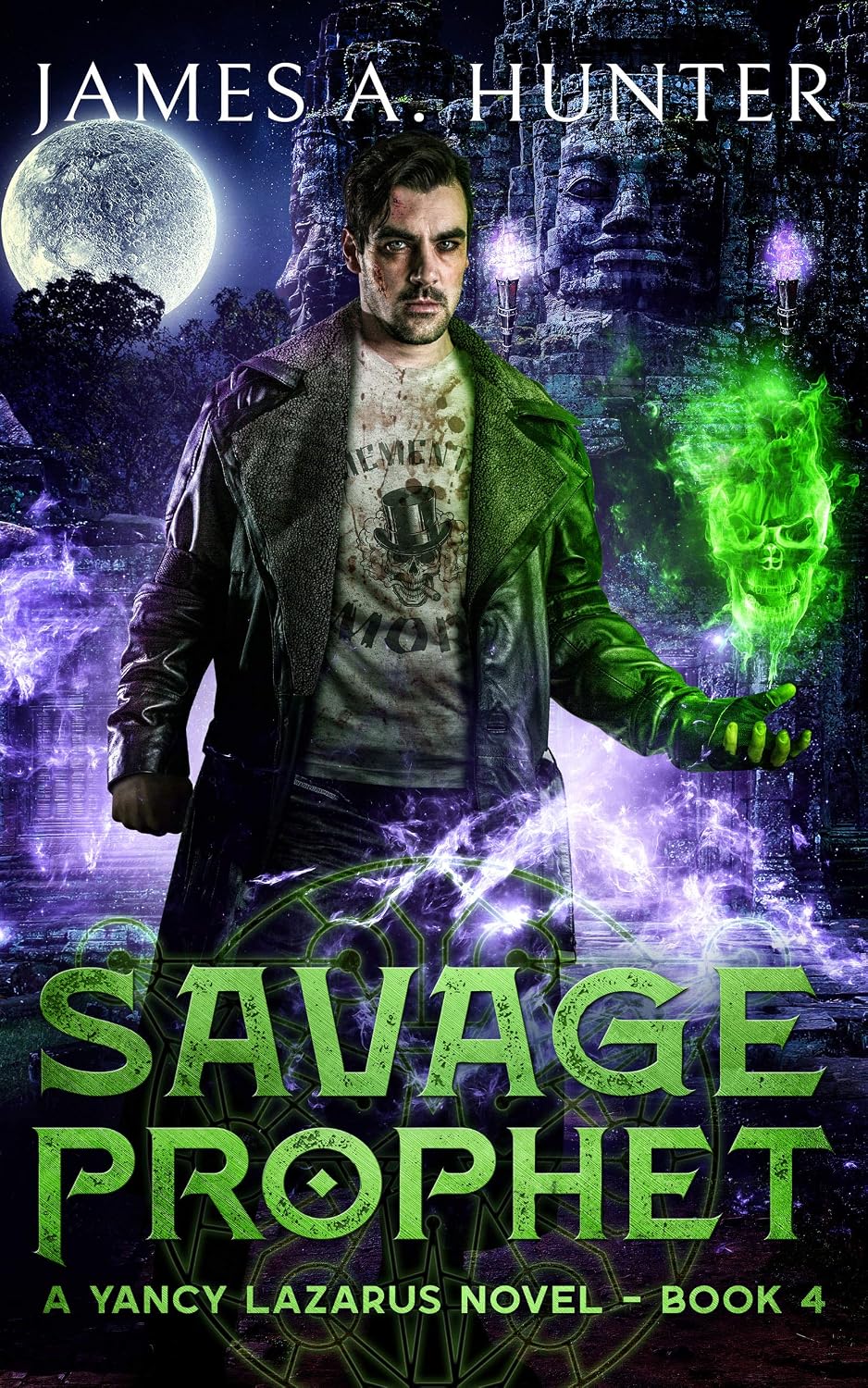
Savage Prophet thrusts its reluctant protagonist, anti-establishment mage Yancy Lazarus, into a cascading series of supernatural crises that immediately upend any notions of routine stability. Fresh off facing mortal judgment from the Guild he despises, Yancy finds himself…
Quick Verdict
Savage Prophet doubles down on everything that defines the Yancy Lazarus series, trading slow-burn contemplation for a frantic, high-stakes collision of ancient gods, rival mages, and personal peril. It is a satisfying, unrelenting ride for established fans of James A. Hunter's urban fantasy style, provided you are prepared for a darker, bloodier journey that refuses to let up from the first page to the final climax.
Disclosure: As an Amazon Associate, LiaGuide earns from qualifying purchases. Affiliate relationships do not determine our editorial conclusions.
Premise and Setup
The primary narrative catalyst arrives when the pale Rider—Death, one of the legendary Horsemen of the Apocalypse—turns up in an old haunt of Yancy's. Tracking this monumental threat requires dragging up deadly nightmares from Yancy's distant past, all while a powerful rival mage chases the Fourth Seal with reckless disregard for collateral damage, specifically targeting those closest to him, including FBI Agent Nicole Ferraro.
Reading Experience and Pacing
Authored by James A. Hunter, known for his work on Rogue Dungeon and Viridian Gate Online, the novel delivers a relentless, high-octane urban fantasy thrill ride. Reader feedback highlights a narrative structure characterized by breathless momentum, kicking off with high-stakes tension—such as a life-or-death tribunal—and refusing to slow down as it moves through the realms of the Guild, the Hub, Buddhism, and Haiti.
The journey offers very little breathing room for the characters or the audience. Action sequences range from relentless supernatural skirmishes to more precarious predicaments, such as Yancy strapped to a zombie-maker's table, maintaining an aggressive forward drive that favors constant conflict over quiet exposition.
The overall momentum of the book receives widespread praise for refusing to let up once the action starts. Multiple readers mention being compelled to cover parts of the page just to keep themselves from accidentally reading ahead, trapped in a relentless roller coaster of suspense and high-stakes magical scrapping. The narrative pace is described as breathless and consistently engaging from cover to cover.
However, a notable cluster of technical complaints focuses on digital formatting and distribution errors. A few frustrated buyers point out severe structural flaws in specific e-book editions, such as mislabeled, duplicated, or entirely out-of-sequence chapters—including instances where a chapter is swapped out for a duplicate of the previous one. These technical glitches hindered readability for affected fans, though many noted that the underlying story quality managed to salvage their overall reading experience despite the frustrating digital layout.
- Delivers relentless pacing with virtually no filler or stagnant moments
- Triggers formatting complaints regarding mislabeled or duplicated e-book chapters
- Maintains high reader engagement even when technical presentation stumbles
Reader Fit and Audience Expectations
This book suits readers who prefer fast-paced, action-heavy urban fantasy featuring snarky antiheroes, supernatural conspiracies, and high-stakes supernatural mechanics. Those who enjoy genre mashups incorporating mythological entities, ancient deities, and modern magical law enforcement will find plenty to latch onto.
Conversely, sensitive readers or those who prefer slower character-driven mysteries should note the intensity of the violence and dark elements, such as voodoo body horror and bloody confrontations. If you prefer low-stakes cozy fantasy or sprawling epic worldbuilding with lengthy passages of quiet introspection, you may want to look toward alternative urban fantasy styles that prioritize detective procedural pacing over non-stop kinetic action.
If your ideal urban fantasy features a hardened anti-establishment mage, non-stop kinetic pacing, and a high-octane blend of supernatural mythologies, this installment delivers squarely on those fronts. It fits readers who enjoy cinematic, shoot-'em-up storytelling backed by a deep bench of demonic and divine adversaries. On the other hand, anyone sensitive to intense dark elements, visceral horror imagery, or a complete absence of downtime should approach with caution.
Readers who find themselves preferring more deliberate pacing, quieter investigative procedural elements, or localized urban mysteries might want to explore alternative fantasy subgenres or slower supernatural detective series rather than diving straight into this particular apocalyptic thrill ride.
For followers of contemporary urban fantasy, readers frequently compare this series to the works of Jim Butcher, Kevin Hearne, and Benedict Jacka. Fans of hard-luck urban mages, cynical protagonists, and intricate supernatural politics will find an immediate sense of familiar comfort here. Reviewers stress that while the book can be appreciated on its own merits, it rewards investment in the broader series continuity and supplementary novellas.
Regarding reader satisfaction, the book resonates most strongly with audiences who enjoy high-octane action combined with moral ambiguity and personal sacrifice. The primary point of contention among satisfied readers is the inevitable, suspense-inducing cliffhanger ending, which leaves fans eagerly—and sometimes agonizingly—anticipating the next installment in the saga.
- Draws strong favorable comparisons to popular urban fantasy investigator tropes
- Rewards long-term series fans with deeper lore revelations and shifting alliances
- Leaves readers hanging on an intense cliffhanger that demands a sequel
Pacing and Narrative Mechanics
Savage Prophet immediately rejects slow burn in favor of continuous momentum. Reader feedback consistently highlights how the narrative bypasses traditional runway building, plunging the protagonist into high-stakes peril right from the opening pages. Rather than saving the highest tension for a final sequence, the plot stacks confrontations back-to-back, moving rapidly across sprawling global settings and supernatural tiers.
This relentless velocity leaves very little narrative downtime. Characters are constantly reacting to shifting threats, which creates an exhilarating reading experience for fans of rapid-fire urban fantasy. However, readers looking for quiet character moments or extensive world-building exposition between action beats will find the pacing exhausting rather than invigorating.
World-Building and Lore Integration
James A. Hunter expands the scope of the Yancy Lazarus universe significantly in this installment by weaving together disparate mythological threads. The narrative juxtaposes bureaucratic magical guilds with ancient theological forces, including Haitian voodoo practices and the ominous presence of the Fourth Seal of Revelation.
While this eclectic mix provides a rich sandbox for supernatural action, it relies heavily on established context from earlier series entries. Readers jumping straight into this volume without prior background may find themselves navigating dense supernatural politics and historical grudges on the fly, as the story prioritizes forward motion over recapping previous lore.
Pace, Scale, and Structural Trade-Offs
James A. Hunter shifts the narrative gears immediately in Savage Prophet, launching the plot with a high-stakes tribunal before plunging into a global sweep involving Haitian voodoo, Buddhist philosophy, and the Seals of Revelation. Reader feedback highlights an unrelenting cadence where quiet moments are practically nonexistent, save for a rather tense encounter on a zombie-maker's operating table. While this breathless momentum satisfies thriller enthusiasts looking for constant motion, it creates a distinct structural trade-off for readers who prefer slower world-building and room to breathe between action sequences.
That relentless scale means the story spans multifaceted magical dimensions and ancient mythological threats all at once. For some, this dense collision of supernatural factions provides an exciting expansion of the Yancy Lazarus mythos. For others, the breakneck velocity leaves little opportunity to unpack the heavier emotional beats introduced by threats against characters like FBI Agent Nicole Ferraro, making it wise to weigh whether you prefer expansive lore drops or focused, room-to-breathe character studies.
Escalated Stakes and Darker Narrative Tone
Several supplied reviews describe how this installment pivots sharply into a much darker, grittier atmosphere than previous outings in the series. While readers have grown accustomed to seeing the protagonist scrape by through sheer stubbornness and clever retorts, this narrative introduces threats that genuinely test whether our foul-mouthed, spell-slinging hero can survive. The tension is ramped up from the opening pages, which immediately bypass standard exposition or gentle re-introductions to place the protagonist in life-or-death peril.
Observers note that the emotional gravity matches the physical danger, incorporating elements of grief, sorrow, and intense moral pressure. Rather than maintaining a lighthearted romp throughout, the story makes readers feel as though the bottom of the stomach is dropping out. The sense of overwhelming odds creates an environment where even longtime fans will question the protagonist's survival, marking a distinct maturity in the overarching series arc.
- Shifts tone to be noticeably darker and more uncompromisingly violent
- Puts the main character under heavier emotional and physical pressure than ever before
- Elicits genuine anxiety from readers regarding character survival
Mythology Blending and World-Building Depth
Readers repeatedly point to the seamless integration of diverse mythologies and global belief systems as a core strength of the book. The narrative effortlessly bridges traditional Western fantasy elements with Buddhism, Haitian voodoo, zombie lore, and the ominous imagery of the Seals of Revelation. This eclectic mix expands the scope of the universe significantly, taking readers through distinct realms including the Guild and the Hub.
Another group responds favorably to how historical and religious legends are re-imagined. The inclusion of colossal entities, such as a massive serpent god, alongside intricate magical factions demonstrates an imaginative world-building approach. Reviewers emphasize that this eclectic blending grounds the fantasy elements, making the sprawling supernatural ecosystem feel cohesive, dangerous, and startlingly real.
- Weaves together Haitian voodoo, Buddhist principles, and apocalyptic lore
- Expands familiar territory into fresh supernatural domains and dimensions
- Features imposing mythical creatures that heighten the scale of conflict
Character Dynamics, Humor, and Combat Realism
At the center of the chaos is a protagonist whom fans describe as a lovable, wisecracking badass who manages to remain grounded despite wielding immense power. Several supplied reviews note that his snarky internal monologue and childish wit provide essential comic relief against the relentless backdrop of danger and demonic internal battles. He is portrayed not as an infallible, hyper-skilled deity, but as a reluctant hero who continually gets the short end of the stick.
Furthermore, readers highlight the authentic depiction of combat sequences. Drawing on real-world military experience, the author crafts magical battles and physical confrontations that feel visceral and grounded in human terms. The juxtaposition of laugh-out-loud humor with brutal, fast-paced mayhem keeps audiences fully invested in the character's personal growth and interpersonal relationships.
- Balances heavy peril with sharp, wisecracking humor
- Portrays the protagonist as powerful yet wonderfully flawed and relatable
- Infuses magical combat with gritty, realistic tactical pacing
Pros and Cons
✓ Pros
- Fearlessly raises the emotional and physical stakes for the main character
- Masterfully combines disparate mythologies like voodoo and apocalyptic lore
- Delivers visceral, tactically grounded combat scenes backed by military insight
- Maintains breakneck pacing that prevents any lull in suspense
✕ Cons
- Some digital editions suffer from glaring chapter sequencing and duplication errors
- The relentless cliffhanger ending leaves key narrative threads unresolved
Frequently Asked Questions
Can I read this book as a standalone, or should I read the previous books first?
While the book contains enough context to follow the immediate conflict, reviewers strongly recommend reading the series and its accompanying novellas in order to fully appreciate the character dynamics, ongoing loyalties, and cumulative world-building.
Does the story maintain the same lighthearted tone as earlier installments?
No. Several reviews emphasize that this particular installment is significantly darker, grittier, and more emotionally demanding than its predecessors, placing the protagonist under unprecedented levels of danger and stress.
Final Verdict
Savage Prophet has a clear case for readers whose tastes line up with its strongest supported qualities. Two strengths stand out. One strength is its fearlessly raises the emotional and physical stakes for the main character. Another strength is its masterfully combines disparate mythologies like voodoo and apocalyptic lore. The main reason to hesitate is some digital editions suffer from glaring chapter sequencing and duplication errors. If that trade-off conflicts with your reading preferences, this is an easy title to skip; otherwise, the review evidence supports keeping it on your reading list.
See current book details
Check the current formats and listing details for Savage Prophet on Amazon.
View on AmazonAffiliate link. Product details may change.