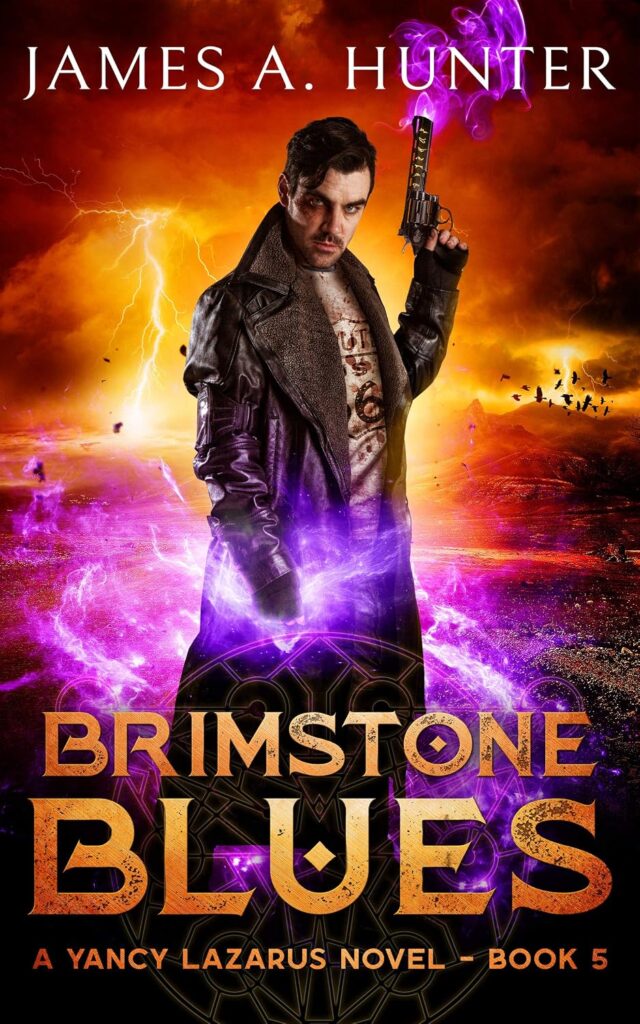
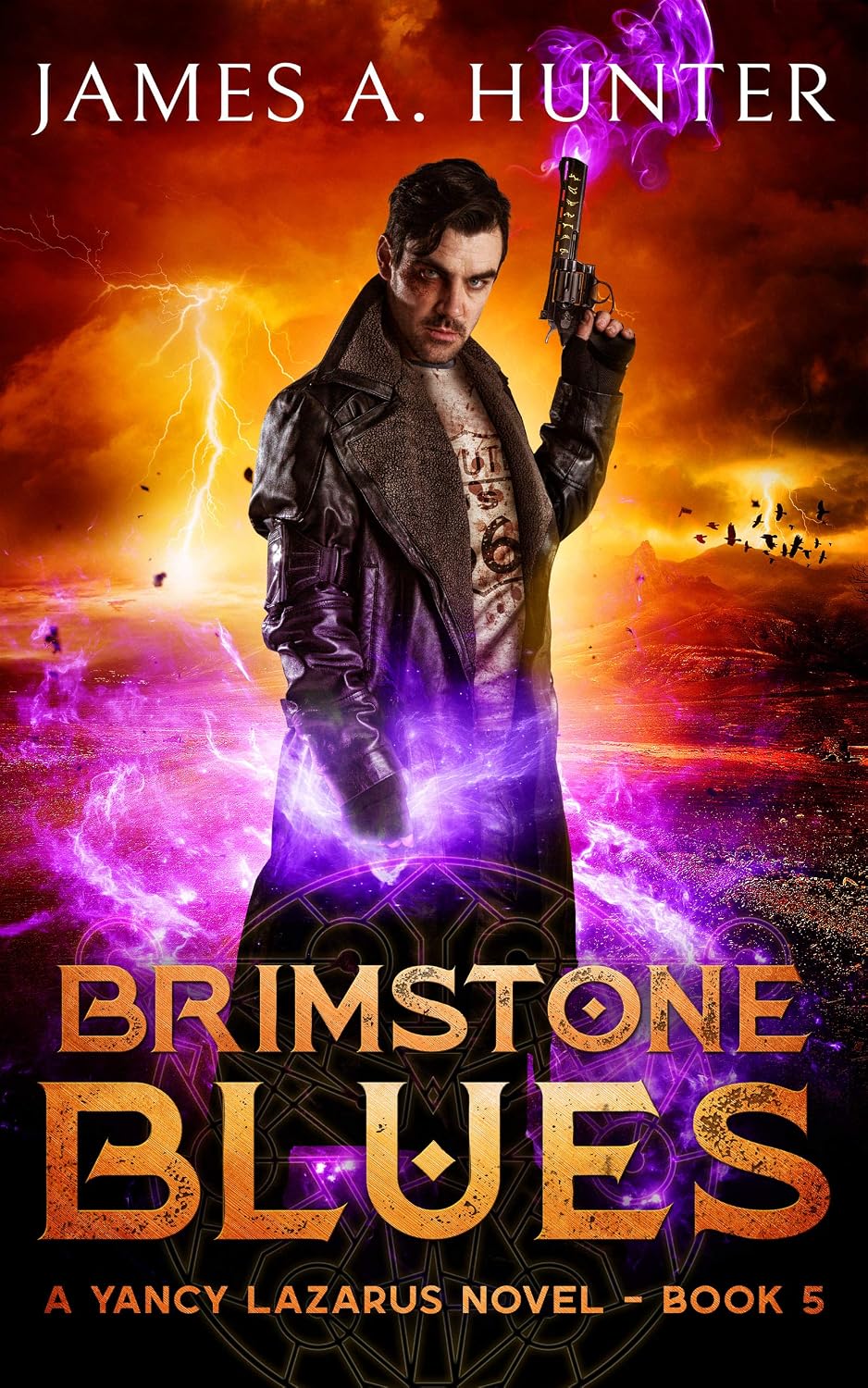
James A. Hunter drops readers directly into a disorienting supernatural hangover with Brimstone Blues. Protagonist Yancy Lazarus—described as a mage, bluesman, and demon-souled wanderer—wakes up in a dingy hotel room located in literal Hell. He is missing one…
Quick Verdict
Brimstone Blues succeeds as an adrenaline-fueled urban fantasy thrill ride that leans heavily into its chaotic underworld premise, flawed protagonist, and high-stakes supernatural conflict. While its rapid momentum leaves less room for quiet world-building, reader reception confirms its strength as an intensely addictive page-turner. If you enjoy gritty magical showdowns, high-concept demon politics, and a protagonist struggling against impossible odds in literal Hell, this installment delivers a satisfying punch.
Disclosure: As an Amazon Associate, LiaGuide earns from qualifying purchases. Affiliate relationships do not determine our editorial conclusions.
An Infernal Awakening and a Missing Memory
He is missing one eye, sports an arm covered in swirling golden tattoos, and carries absolute zero memory of the preceding six months.
Instead of enjoying a quiet recovery, Yancy quickly realizes he is the most wanted man in the Infernal city of Pandæmonium. Demonic cutthroats are actively hunting him for a string of high-profile murders he cannot recall committing. To survive, he must forge an uneasy alliance with a shapeshifting stranger and battle a legion of freakish Hellions and the murderous Derby-Girl Nation.
The overarching mission centers on reclaiming a weapon powerful enough to kill immortals, all while orchestrating a daring escape from the Abyss. If Yancy fails, the King of Pandæmonium promises to roast his soul for eternity, leaving his friends vulnerable to terrifying forces like the Savage Prophet and the Morrigan.
Pacing and Reading Experience
Reader feedback highlights a breakneck narrative momentum that favors continuous, rapid consumption over slow-burn worldbuilding. The adventure combines urban fantasy tropes with high-octane action beats, structured around relentless escapes, supernatural combat, and high-stakes heists.
Fans of fast-moving genre fiction will find a protagonist whose flaws and vulnerabilities anchor the chaotic plot. Rather than an infallible hero, Yancy feels pain and fear, giving emotional weight to the supernatural spectacle without slowing down the shoot-'em-up pace.
A recurring sentiment across the readership highlights the breakneck speed and sheer compulsive readability of the narrative. Several supplied reviews describe finishing the text in a single sitting, driven by high-octane action sequences, relentless physical trials, and an atmospheric backdrop that paints vivid scenes in the reader's mind.
While some observers note that the foundational formula stays close to established urban fantasy traditions rather than reinventing the subgenre's structural blueprints, the kinetic momentum easily overrides any desire for slow-burn world exposition. The pacing ensures that the protagonist's constant cycle of getting beaten down and forcing himself back up translates into a breathless, adrenaline-fueled reading experience.
The book's conclusion generates a potent mix of high satisfaction and immediate yearning for the next chapter. Multiple reviews describe a powerful cliffhanger or an unexpected reappearance of old 'frienemies' that neatly sets the stage for subsequent crossovers and expanded arcs.
The primary complaint voiced by devoted followers is simply the inevitable frustration of having to wait for the next release once the final page is turned. This eagerness underscores how thoroughly the narrative hooks its audience, leaving them invested in both the immediate survival of the cast and the broader trajectory of the interconnected universe.
- Unrelenting action tempo encourages binge-reading habits.
- Vivid environmental descriptions help readers visualize the chaotic infernal setting instantly.
- Physical stakes remain high, sustaining tension from opening chapters through final pages.
- Strong closing momentum leaves active plot threads primed for future exploration.
- Cliffhanger elements effectively stimulate long-term series loyalty.
- Readers report immediate desires to pick up subsequent books in the sequence.
Reader Fit and Genre Expectations
This novel suits readers who enjoy hard-boiled urban fantasy infused with mythological chaos, snappy dialogue, and heavy action set-pieces. Those looking for meticulous magical hard systems or gentle character studies may find the relentless kinetic energy exhausting.
If you prefer expansive epic fantasy with traditional political intrigue, skip this title in favor of a sprawling secondary-world epic. However, if you want a high-velocity supernatural thrill ride with a distinct blues-mage aesthetic, Brimstone Blues delivers precisely that brand of entertainment.
Brimstone Blues is a strong match for fans of fast-moving supernatural thrillers, gritty noir-infused magic, and protagonists who fight through impossible odds with a mix of grit and bluesman attitude. Readers who enjoy James A. Hunter's broader catalog, such as Rogue Dungeon or Viridian Gate Online, will recognize a similar penchant for high-stakes survival and kinetic combat sequences. It fits best as an engaging, unputdownable session-turner for an afternoon or weekend escape.
Readers who prefer slow-paced, cozy fantasy or heavily methodical magic systems should look toward traditional epic fantasy series instead. Those seeking lighter comedic romps through the supernatural may also want to explore alternative urban fantasy subgenres that lean into detective procedurals rather than full-scale infernal rebellions.
Despite overwhelmingly enthusiastic feedback, a nuanced critique surfaces regarding genre innovation. One detailed review argues that while the execution is exceptionally entertaining, the author does not necessarily break entirely new ground in terms of overarching urban fantasy plotting or structural tropes.
For readers seeking radical subgenre deconstruction, this adherence to time-tested hard-boiled paranormal investigations might feel slightly familiar. However, the prevailing counter-argument among fans is that the sheer execution quality, charming character quirks, and polished stylistic delivery more than compensate for any lack of revolutionary conceptual framework.
- Acknowledges reliance on classic urban fantasy building blocks.
- Satisfaction depends on whether a reader prioritizes polish over narrative experimentation.
- Core formula remains comforting to established genre veterans.
Pacing and Narrative Mechanics
Brimstone Blues moves at a relentlessly accelerated speed, matching its protagonist's chaotic situation with breakneck chapter turns and high-octane action sequences. James A. Hunter constructs an Infernal landscape that constantly pushes the main character forward, leaving little room for quiet exposition. Readers who prefer sprawling world-building sessions might find themselves swept along by sheer momentum before they can fully unpack the rules of the Abyss.
The narrative structure leans heavily into classic urban fantasy tropes mixed with rapid-fire shoot-out choreography. Feedback from the reading community points to an almost addictive forward drive, with many noting that the book demands a single-sitting commitment once the opening setup takes hold. However, that same rapid tempo means secondary subplots and peripheral denizens occasionally receive a lighter touch than purists of intricate fantasy lore might prefer.
- High-velocity plot progression favoring constant momentum over lingering exposition
- Action-heavy set pieces that keep the narrative moving without unnecessary structural drag
Characterization and Voice
At the center of the chaos is Yancy Lazarus, defined as much by his vulnerabilities as his supernatural capabilities. Rather than portraying an untouchable urban fantasy powerhouse, the text leans into his severe hangover, missing memories, and genuine fears. This grounding gives the protagonist an emotional weight that anchors the otherwise over-the-top infernal backdrop.
Reader reception highlights Yancy's flawed humanity as a primary anchor for the series' appeal. He hurts, hesitates, and stumbles through his predicament, creating a distinct contrast with the sleek, invincible protagonists common in modern action-heavy speculative fiction. Paired with a shapeshifting companion carrying her own baggage, the dynamic provides a welcome friction that prevents the dialogue from devolving into pure punchlines.
- Protagonist features genuine flaws, physical pain, and memory gaps rather than instant mastery
- Companion dynamics add effective interpersonal friction and depth to the journey
Tone, Humor, and the Infernal Setting
Pandæmonium is rendered not as a solemn theological wasteland, but as a neon-soaked, gritty underworld populated by demonic cutthroats, freakish Hellions, and the formidable Derby-Girl Nation. This blend introduces a distinct genre flavor that mixes dark urban grit with an irreverent, shoot-'em-up swagger. The humor arrives sharp and cynical, puncturing moments of mounting dread just as the tension threatens to peak.
Audience reactions show that this stylistic gamble largely pays off for readers who enjoy genre mashups, though those seeking traditional, atmospheric horror might find the wisecracking tone occasionally undercuts the gravity of the peril. It is a balancing act between survival thriller and dark comedy that ultimately decides whether the book clicks for an individual reader.
The blending of dark, torturous underworld perils with an irreverent, music-infused comedic undertone earns consistent praise from followers of the series. Readers frequently emphasize how the protagonist's bluesman identity shapes the voice of the book, introducing a distinct cultural touchstone that separates it from standard contemporary magical thrillers.
Several comments suggest that the humor hits a particularly satisfying sweet spot, often drawing favorable comparisons to other prominent modern-day wizard protagonists while maintaining a sharper, more sardonic wit. The juxtaposition of corporate-style or bureaucratic infernal hazards with hard-boiled supernatural wisecracks establishes a distinct tonal fingerprint that keeps the violence from feeling overly bleak.
- Blends high-stakes infernal peril with cynical humor and pop-culture-adjacent underworld factions
- Alternative style option: readers wanting somber, atmospheric dark fantasy may find the tone too breezy
- Blues music history and motifs integrated organically into the protagonist's magical style and attitude.
- Humor effectively balances out the grittier elements of torture and demonic hostility.
- Dialogue carries a snappy, energetic cadence that resonates with urban fantasy enthusiasts.
Navigating the Trade-Offs
James A. Hunter delivers a high-velocity urban fantasy experience in Brimstone Blues, but readers diving into this installment should anticipate the genre-specific compromises that come with fast-paced action. The narrative prioritizes relentless momentum, cinematic shootouts, and snappy dialogue over slow-burn world-building exposition. For some, this pacing style creates an exhilarating, page-turning ride through the Infernal city of Pandæmonium; for others, the breakneck progression leaves less room to deeply digest the sprawling supernatural mechanics.
Character depth is anchored largely by Yancy Lazarus's internal struggles—his painful hangover, missing memories, and demon-souled burdens—rather than exhaustive multi-perspective subplots. Reader feedback highlights a strong emotional connection to Yancy's vulnerabilities, though strictly traditional fantasy purists who prefer intricate political machinations or meticulous lore mapping may find the frantic underworld coup moving too quickly for its own good.
- Fast-paced urban fantasy focus trading slow lore exposition for relentless action.
- Character-driven perspective centering on Yancy's personal stakes and physical recovery.
- High-octane plot mechanics involving rival factions like the Derby-Girl Nation and demonic cutthroats.
Character Dynamics, Complex Allies, and the 'Brutal Pacifist'
Readers repeatedly point to the rich roster of companions and adversaries as a primary anchor for the narrative's emotional weight. While the protagonist occupies center stage as a heavily battered, blues-slinging magical survivor, several supplied reviews describe particular fascination with supporting figures like Levi—affectionately or analytically categorized by readers as a complex, brutal pacifist whose depth commands significant attention.
Furthermore, multiple evaluations highlight the dynamic interplay between contrasting personalities introduced early in the experience, such as the golem or Mudman companion, whose presence injects unique flavor and camaraderie into the gritty underworld expedition. Readers find that these secondary figures avoid falling into flat archetypes, offering enough internal contradiction and quirky behavioral traits to make the hazardous journey through infernal landscapes feel genuinely shared rather than solitary.
- Support cast features standout entities like the Mudman, frequently cited as a major comedic and tactical highlight.
- Protagonist functions as a supernatural punching bag who maintains real vulnerability and emotional stakes.
- Complex secondary motivations keep the character ecosystem unpredictable and engaging.
Pros and Cons
✓ Pros
- Imaginative fusion of blues music culture and hard-boiled urban fantasy magic.
- Fast, compulsive pacing that easily accommodates single-sitting reading sessions.
- Standout supporting cast members, including the complex pacifist Levi and the popular golem companion.
✕ Cons
- Relies on established genre formulas rather than pioneering completely novel structural frameworks.
- Leaves readers desperate for the next installment due to sharp cliffhanger momentum.
Frequently Asked Questions
Do I need to read the previous books in the series to enjoy this installment?
While the book features an ongoing narrative arc with recurring characters from earlier entries, readers consistently praise the immersive nature of the world, though following the sequence from the beginning maximizes appreciation for character relationships and history.
What kind of humor and tone can a prospective reader expect?
Readers describe a high-octane mix of gritty supernatural violence, dark infernal settings, and sharp, humorous wisecracks anchored by the protagonist's distinct bluesman persona.
Final Verdict
Brimstone Blues has a clear case for readers whose tastes line up with its strongest supported qualities. Two strengths stand out. One strength is its imaginative fusion of blues music culture and hard-boiled urban fantasy magic. Another strength is its fast, compulsive pacing that easily accommodates single-sitting reading sessions. The main drawback is that it relies on established genre formulas rather than pioneering completely novel structural frameworks. If that trade-off conflicts with your reading preferences, this is an easy title to skip; otherwise, the review evidence supports keeping it on your reading list.
See current book details
Check the current formats and listing details for Brimstone Blues on Amazon.
View on AmazonAffiliate link. Product details may change.